
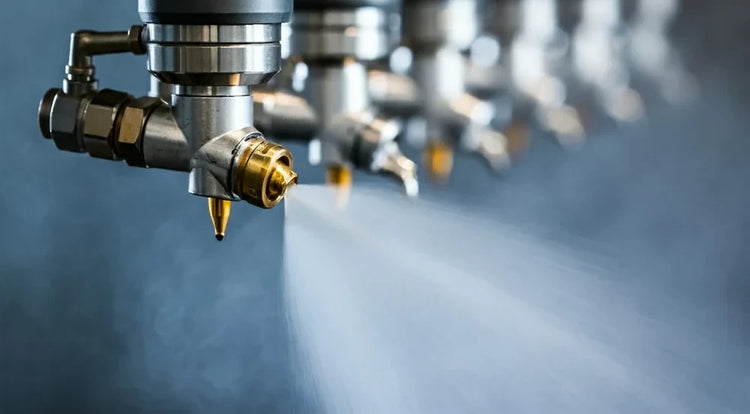

Cinco errores costosos que comienzan con la boquilla incorrecta
Los contratistas pierden miles de dólares al año por una decisión que solo toma cuatro segundos para acertar. Esto es lo que los mejores en el negocio saben sobre la selección de boquillas, y por qué es más importante que casi cualquier otra variable en una operación profesional de lavado a presión.
Un equipo de lavado a presión es un sistema de variables interconectadas: salida de la bomba, diámetro de la manguera, relación del inyector químico, distancia de separación de la superficie, técnica del operador. Cada una de esas variables converge en el mismo componente de dos pulgadas atornillado al final de la lanza. La boquilla no solo rocía agua. Determina la presión, el caudal, la geometría del rociado, la extracción de productos químicos y la fuerza entregada a la superficie. Equivocarse no solo afecta los resultados de limpieza. Afecta el desgaste del equipo, el costo de los productos químicos, el tiempo de trabajo y, en algunos casos, la integridad estructural de lo que se está limpiando.
Los cinco errores
Las puntas de ángulo estrecho —chorros de lápiz de cero grados y abanicos de cincel de quince grados— existen por una razón. En concreto, mampostería en bruto y acero pesado, proporcionan la energía concentrada necesaria para cortar depósitos incrustados que los abanicos más anchos simplemente no pueden desalojar. El error es usar estas mismas puntas de alta presión por costumbre en superficies donde la concentración de impacto es destructiva: revestimiento de madera, superficies pintadas, cubiertas compuestas, ladrillos viejos con mortero deteriorado, o cualquier material con un recubrimiento superficial que tenga un valor comercial significativo. El daño físico causado por la punta incorrecta en una superficie frágil rara vez está cubierto por el seguro del contratista y casi nunca es reversible en el lugar. La regla es simple: identifique la superficie primero, luego seleccione la punta. No al revés. Para aplicaciones de baldosas y techos, esta disciplina es especialmente crítica.
Cada bomba de lavado a presión tiene un rango de operación, una ventana de caudal y presión donde funciona de manera eficiente y confiable. El orificio de la boquilla debe dimensionarse dentro de esa ventana o el sistema funcionará fuera de sus parámetros de diseño. Un orificio demasiado pequeño para el caudal de la bomba genera contrapresión que obliga a la válvula de descarga a ciclar constantemente, generando calor y acelerando el desgaste de los componentes. Un orificio demasiado grande reduce la presión por debajo del umbral efectivo para la tarea y priva de suministro a los inyectores de químicos que dependen de un diferencial de presión para extraer la solución. Los contratistas que dimensionan las boquillas por familiaridad visual en lugar de por tablas de orificios y especificaciones de la bomba lo pagan en longevidad del equipo y resultados inconsistentes. NozzlePro publica datos completos de caudal y presión para cada boquilla de su catálogo, porque la coincidencia del orificio con la bomba debe ser un cálculo, no una suposición.
El hipoclorito de sodio (lejía) es el agente activo en prácticamente todas las mezclas de limpieza suave utilizadas en la limpieza exterior profesional. Es eficaz, asequible y ampliamente disponible. También es corrosivo para las aleaciones de latón y para ciertos grados de acero inoxidable con exposiciones repetidas. Los contratistas que construyen sistemas de lavado suave con boquillas de cuerpo de latón o acero inoxidable de baja calidad experimentan una erosión temprana del orificio que se ensancha con el tiempo, alterando el caudal y la geometría del rociado para los que calibraron el sistema. La falla es gradual y fácil de pasar por alto hasta que la calidad de la cobertura disminuye notablemente. Las boquillas de cuerpo de polímero y las configuraciones de acero inoxidable 316 son las selecciones de material correctas para cualquier aplicación donde el hipoclorito de sodio forma parte de la mezcla, y la diferencia de costo entre una boquilla compatible y una incompatible es una fracción del costo de reemplazar un sistema de inyección descendente o volver a limpiar un trabajo que se dosificó inadecuadamente. Consulte las boquillas de desinfección y sanitización de NozzlePro para opciones con clasificación química, y la colección de limpieza y lavado para configuraciones completas de limpieza exterior.
Una punta de abanico de cuarenta grados y una punta de remojo de sesenta y cinco grados parecen similares. No son intercambiables. La de cuarenta grados produce un abanico más ajustado y potente, adecuado para el enjuague general de superficies a distancias moderadas. La de sesenta y cinco grados distribuye la solución en un arco mucho más amplio con un perfil de impacto más suave, apropiado para aplicar productos químicos de contacto en superficies delicadas donde se desea cobertura sin acción mecánica. Usar una de cuarenta grados donde se necesita una de sesenta y cinco aplica demasiada fuerza mecánica y acelera el escurrimiento químico antes de que se logre el tiempo de contacto adecuado. Usar una de sesenta y cinco donde se necesita una de cuarenta deja residuos y rayas en superficies que necesitaban más energía cinética para romper la unión de los depósitos superficiales. La selección importa y la etiqueta en la punta no es solo una sugerencia.
Los orificios de las boquillas se erosionan. Esto no es un defecto, es física. Las partículas abrasivas en suspensión en el agua de suministro, la exposición química y el ciclo mecánico del agua a alta velocidad agrandan gradualmente el orificio más allá de su geometría especificada. Una boquilla que se ha desgastado de su tamaño nominal a un diez por ciento más grande entrega significativamente más flujo a menor presión, lo que altera el punto de operación del sistema, reduce la efectividad de la limpieza y, en los sistemas de inyección química, produce relaciones de dilución incorrectas. Las boquillas desgastadas son una fuente común de trabajos de devolución, quejas por exceso de químicos y desgaste de la bomba que los operadores atribuyen incorrectamente a otras causas. Las operaciones profesionales inspeccionan y reemplazan las boquillas en un ciclo programado, no cuando notan que algo anda mal. El costo de una nueva punta NozzlePro se mide en dólares. El costo de una devolución o una reconstrucción de la bomba no lo es. Las boquillas para talleres de servicio y mantenimiento de NozzlePro están en stock precisamente para este propósito: reemplazo rápido e idéntico en un horario profesional.
La selección de boquillas no es una preferencia, es una decisión de ingeniería con consecuencias reales para la superficie, el equipo y el negocio. Los contratistas que entienden esto son los que construyen reputaciones que generan referencias.
— Ingeniería Técnica de NozzleProLa ciencia del ángulo de pulverización: una referencia práctica
El ángulo de pulverización es la variable más visible en la selección de boquillas y también una de las más incomprendidas. El ángulo no solo describe qué tan ancho es el abanico, sino que describe la relación entre la energía de impacto y el área de cobertura de la superficie. A medida que el ángulo se ensancha, la presión de impacto por pulgada cuadrada disminuye proporcionalmente para una determinada salida de la bomba. Esa relación es lo que hace que las puntas de gran ángulo sean seguras en superficies delicadas y las puntas de ángulo estrecho sean esenciales para la eliminación de depósitos pesados. Consulte la guía de patrones de pulverización y tipos de boquillas de NozzlePro para una referencia visual completa de cada configuración de punta.
| Color de la punta | Ángulo de pulverización | Impacto relativo | Mejores superficies | Extracción de químicos |
|---|---|---|---|---|
| Rojo | 0° (Lápiz) | Máximo | Hormigón, acero, depósitos pesados | No – presión demasiado alta |
| Amarillo | 15° | Muy alto | Hormigón, entradas de vehículos, eliminación de grafitis | Limitado |
| Verde | 25° | Moderado | Exterior general, vehículos, vallas | Sí |
| Blanco | 40° | Bajo–Moderado | Revestimiento, madera pintada, enjuague general | Sí |
| Negro | 65° (Remojo) | Mínimo | Aplicación de químicos, azulejos, superficies delicadas | Optimizado para SH |
La codificación de colores anterior refleja el estándar de consumo y comercial ligero más utilizado. Las boquillas de calidad profesional de NozzlePro están disponibles con marcas de ángulo estampadas directamente en el cuerpo para una rápida identificación en el campo, un pequeño detalle que elimina el costoso error de campo de sacar una punta roja de un cubo cuando el trabajo requiere una blanca.
Dos boquillas etiquetadas con 40° de diferentes fabricantes pueden producir patrones de pulverización significativamente distintos. Las tolerancias de la geometría del orificio, el diseño de la trayectoria del flujo interno y el material del cuerpo influyen en si el ángulo y el caudal indicados coinciden realmente con el rendimiento en el mundo real. NozzlePro mantiene tolerancias dimensionales estrictas en toda su producción, lo que significa que los caudales son consistentes de punta a punta, los patrones de pulverización coinciden con las especificaciones y una boquilla de reemplazo funciona idénticamente a la que reemplaza, en lugar de requerir que el operador recalibre su distancia de separación y técnica desde cero.
Por qué la selección de materiales es una decisión química, no solo de durabilidad
La mayoría de los contratistas piensan en el material de la boquilla en términos de longevidad. El acero inoxidable dura más que el latón. Las puntas con inserto de carburo de tungsteno superan al acero inoxidable. Eso es preciso, pero incompleto. La selección de materiales también rige cómo la boquilla interactúa con la química de limpieza que pasa a través de ella, y en aplicaciones de lavado suave, esa interacción determina si las relaciones de dilución del sistema permanecen precisas durante la vida útil de la boquilla.
El hipoclorito de sodio ataca el latón a través de un proceso de deszincificación, una corrosión selectiva que lixivia el zinc de la aleación de latón, dejando una matriz de cobre porosa que es dimensionalmente inestable. Incluso en las diluciones comúnmente utilizadas en la limpieza exterior, la exposición repetida hace que la geometría del orificio se desvíe con el tiempo. El contratista que opera un sistema de pluma de seis puntas en un equipo de lavado suave que comienza con boquillas de latón y nunca las reemplaza, casi con certeza está entregando concentraciones inconsistentes de lejía en la superficie al final de una temporada ocupada, sin ningún indicador obvio de que el sistema está fuera de especificación.
El acero inoxidable de grado 316 y los cuerpos de polímero químicamente inertes son las especificaciones correctas para el servicio de hipoclorito de sodio. NozzlePro designa la compatibilidad química explícitamente en su documentación de producto, no oculta en letra pequeña, sino declarada como una especificación principal, porque la decisión sobre de qué está hecha una boquilla es inseparable de la decisión sobre para qué se utilizará la boquilla.
Lo que los mejores contratistas hacen diferente
Las operaciones de lavado a presión más consistentemente exitosas comparten un rasgo común: tratan las boquillas como componentes de precisión con vidas útiles definidas, en lugar de como suministros desechables. Mantienen un inventario de puntas organizado con especificaciones de caudal registradas para cada tipo de boquilla. Inspeccionan la geometría del orificio a intervalos regulares utilizando una prueba de flujo calibrada en lugar de depender únicamente de la inspección visual. Y estandarizan a un único proveedor de boquillas de confianza para que las puntas de reemplazo funcionen idénticamente a las originales, eliminando la desviación de rendimiento que proviene de mezclar fabricantes en un inventario de trabajo.
Ese nivel de disciplina operativa no es excesivo para un negocio profesional. Es lo que separa a los contratistas que ofrecen resultados consistentes a escala de aquellos que producen un trabajo excelente en trabajos pequeños pero tienen dificultades para mantener la calidad a medida que aumentan su flota y el número de equipos. La estandarización de boquillas es uno de los puntos de apalancamiento más simples de toda la operación, y es uno de los más pasados por alto.
El catálogo de NozzlePro abarca más de 9,500 configuraciones de boquillas en abanico plano, cono completo, cono hueco, niebla y neblina, atomización de aire y diseños especiales. Para los integradores OEM que construyen sistemas de lavado automatizados, plataformas de pulverización montadas en drones o equipos de limpieza industrial de alto rendimiento, la ingeniería personalizada está disponible cuando las especificaciones estándar no son lo suficientemente precisas para la aplicación. El hilo conductor en todos los productos es el mismo: tolerancias estrictas, especificaciones documentadas e integridad de los materiales que resisten las condiciones en las que realmente operan los profesionales.
Todo trabajo que un contratista asume comienza con decisiones sobre el equipo tomadas en el taller antes de que el remolque salga. La decisión de la boquilla toma cuatro segundos y cuesta unos pocos dólares. Sus consecuencias se extienden a lo largo de cada hora de trabajo que sigue. Hacerlo bien no es complicado, pero requiere saber cuáles son las variables y por qué importan. Para eso está NozzlePro.
Encuentre la boquilla exacta que su sistema necesita
Más de 9,500 configuraciones en stock. Mecanizado de precisión. Completamente documentado. Diseñado para profesionales que no pueden permitirse el lujo de adivinar.
Explorar boquillas de lavado a presión NozzlePro →


