
Sprühdüsen für
Walzenbearbeitung & Wartungsreinigung
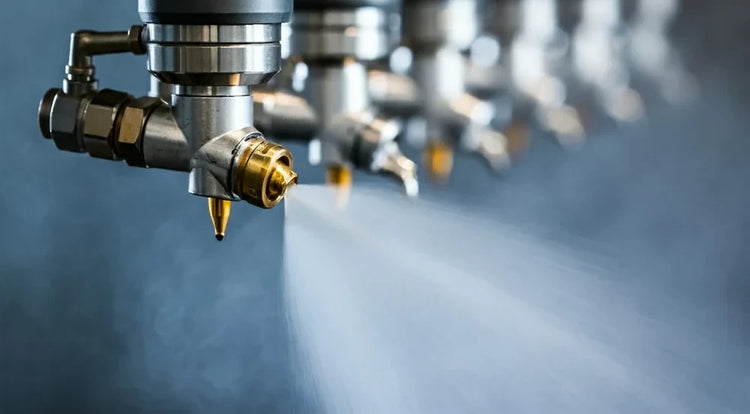
In der Walzenbearbeitung werden Walzen von Millionenwert auf die Toleranzen geschliffen, die die Genauigkeit des Bandprofils und die Oberflächenqualität im Kaltwalzwerk bestimmen. Hier müssen auch Lagergehäuse, Walzgerüste und Walzenkomponenten, die mit schwerem Walzwerksfett, Zunder und Hydrauliköl bedeckt sind, gereinigt werden, bevor die Walzen wieder in Betrieb genommen werden können. Beide Vorgänge teilen eine technische Anforderung, die Sprühsysteme für die Walzenbearbeitung von der allgemeinen Industriereinigung unterscheidet: Präzision ist wichtiger als Volumen. Eine Schleifkühldüse, die einen ungleichmäßigen Fluss liefert, verursacht einen Temperaturgradienten, der eine Walze zerstört. Eine Entfettungsdüse, die einen Restfilm in einer Lagerbohrung hinterlässt, verursacht einen vorzeitigen Lagerausfall im Walzwerk.
Bei den meisten industriellen Sprühanwendungen sind Durchflussrate und Abdeckung die primären Spezifikationen. In der Walzenbearbeitung sind sie sekundär gegenüber Präzision und Gleichmäßigkeit. Ein Schleifkühlsystem, das die korrekte Gesamtdurchflussrate liefert, diese aber ungleichmäßig verteilt – mehr in der Mitte der Walze als an den Rändern, oder mit Pulsation aufgrund turbulenter interner Düsengeometrie – erzeugt während des Schleifens einen Temperaturgradienten über die Walzenfläche. Dieser Gradient erzeugt eine differentielle thermische Ausdehnung der Walzenoberfläche: Die heißeren Abschnitte dehnen sich stärker aus als die kühleren Abschnitte, was das Schleifrad als hohe Stellen interpretiert und aggressiver entfernt. Das Ergebnis ist eine Walze mit einem geschliffenen Profil, das vom Ziel abweicht – eine Abweichung, die erst als Bandkrone oder Kantenwelle im Kaltwalzwerk sichtbar wird, nicht während des Schleifvorgangs selbst.
Die Entfettungsanwendung unterscheidet sich im Mechanismus, ähnelt aber in den Konsequenzen einer unzureichenden Spezifikation. Ein Lagergehäuse mit restlichem emulgiertem Walzwerksfett in den Lagerbohrungsflächen verursacht einen beschleunigten Lagerverschleiß ab der ersten Umdrehung nach der Wiederinstallation. Schweres Walzwerksfett bei niedriger Temperatur ist extrem viskos und wird nicht durch Niederdruckspray weggespült – es erfordert die Kombination von Hochdruck-mechanischem Aufprall, heißer alkalischer Chemie und ausreichender Kontaktzeit, um die Fettbasis zu verseifen und zu entfernen. Die Düsenwahl für die Entfettung hängt von der Aufprallgeschwindigkeit und der chemischen Kompatibilität ab, nicht von der Abdeckungsfläche.
Zufuhr von Schleifkühlmittel und Entfettung von Lagergehäusen
Platzierung des Walzenschleifkühlmittels
Laminarer Vollstrahl und schmaler Flachstrahl – gleichmäßiges thermisches Profil über die gesamte WalzenlängeWalzenschleifmaschinen bearbeiten Arbeitswalzen, indem sie eine gebundene oder CBN-Schleifscheibe (kubisches Bornitrid) über die gesamte Länge der rotierenden Walze bewegen und eine präzise Metalltiefe entfernen, um das Walzenprofil wiederherzustellen. Der Schleifprozess erzeugt intensive lokale Hitze im Schleifscheiben-Walzen-Kontaktbogen – einer Zone von ca. 2–5 mm Länge und der Breite der Schleifscheibe entsprechend – wo Schnittkräfte und Reibung Temperaturen von 800–1.200 °C an der Schleifscheibenfläche erzeugen können. Diese Wärme muss abgeführt werden, bevor sie in die Walzenoberfläche unterhalb der Oberfläche gelangt, wo Temperaturen über dem Phasenumwandlungspunkt (ca. 720 °C für Kohlenstoff-Werkzeugstahl) Martensitbildung in der Oberflächenschicht verursachen, die spröder ist als das Walzenmaterial.
Wenn diese Martensitschicht anschließend durch die Druckspannungen des Kaltwalzens belastet wird, entstehen Mikrorisse in der versprödeten Oberflächenschicht – der thermische Beschädigungsmodus, der eine Walze dauerhaft außer Betrieb setzt. Die Funktion der Schleifkühlmitteldüse besteht darin, die Kühlflüssigkeit mit ausreichender Kohärenz und Gleichmäßigkeit in die Schleifscheiben-Walzen-Kontaktzone zu bringen, um eine gleichmäßige Wärmeabfuhr über die gesamte Schleifstrecke zu gewährleisten. Ein inkonsistenter oder turbulenter Kühlmittelstrom erzeugt lokale Hot-Spots entlang der Walzenfläche, die genau die Martensitbildung hervorrufen, die das Kühlmittel eigentlich verhindern soll.
Entfettung von Lagergehäusen & Komponenten
Hochdruck-Rotationsreiniger und Flachstrahldüsen in automatischen WaschanlagenDie Lagergehäuse eines Walzwerks kommen nach einer Betriebszeit von 4–16 Stunden im Walzwerk in die Walzenwerkstatt, während derer sie eine Schicht aus schwerem Walzwerksfett (typischerweise ein Lithiumkomplex- oder Calciumsulfonatfett mit NLGI-Klasse 2 oder 3), Eisenoxid-Zunderpartikeln vom gewalzten Band, Resten einer Walzwerkskühlmittelemulsion und Hydrauliköl von den Walzwerksausgleichs- und Kronensteuerungssystemen angesammelt haben. Diese Verunreinigungsmischung ist nicht durch einfaches Spülen zu entfernen – das Fett erfordert eine chemische Verseifung durch heiße alkalische Lösung, um das seifenverdickte Grundöl in eine wasserdispergierbare Form umzuwandeln, und der Zunder erfordert die mechanische Einwirkung eines Hochgeschwindigkeitsstrahls, um die Partikel von der Gehäusebohrung und den Gehäuseoberflächen zu lösen.
Automatisierte Waschanlagen für die Walzenbearbeitung verwenden einen programmierten Waschzyklus: typischerweise eine heiße alkalische Waschstufe bei 60–80°C mit 2–5% Ätznatron- oder alkalischem Entfetterkonzentration, gefolgt von einer Heißwasser-Spülstufe und in einigen Fällen einer Korrosionsinhibitor-Anwendungsstufe. Die Düsen in diesen Kammern müssen während dieser Zyklen hohe Durchflussraten bei erhöhtem Druck aufrechterhalten und gleichzeitig dem kombinierten Angriff von heißer alkalischer Lösung und den abrasiven Eisenzunderpartikeln im Waschwasser widerstehen. Die Düsenmaterialspezifikation für den Einsatz in Waschanlagen ist ein Kompromiss zwischen chemischer Beständigkeit gegen heiße Alkalien und mechanischer Verschleißfestigkeit gegen abrasiven Zunder.
Thermische Beschädigung: Der Walzenversagensmodus, der an der Kühldüse beginnt
Thermische Beschädigung – die Bildung einer spröden Martensit-Oberflächenschicht während des Schleifens – ist der kostspieligste und am besten vermeidbare Walzenschadensmodus in der Walzenbearbeitung. Jeder Fall von thermischer Beschädigung ist ein Versagen des Kühlsystems, bevor es ein metallurgisches Versagen ist. Das Verständnis des Mechanismus macht deutlich, warum die laminare Kühlmittelzufuhr und die konsistente Düsenausrichtung keine technischen Präferenzen sind – sie sind der Unterschied zwischen einer wiederaufbereiteten Walze und einer verschrotteten.
Der Martensitbildung-Mechanismus beim Schleifen
Kaltwalzenarbeitswalzen werden typischerweise aus hochchromiertem Eisen oder geschmiedetem Stahl mit einer Oberflächenhärte im Bereich von 60–75 Shore C hergestellt. Diese Härte wird durch eine kontrollierte Wärmebehandlung erreicht, die eine spezifische Mikrostruktur im Walzenballen erzeugt – ein angelassener Martensit mit feiner Karbidverteilung, der die für den Kaltwalzbetrieb erforderliche Verschleißfestigkeit bietet. Das Hauptmerkmal dieser Mikrostruktur ist ihre Metastabilität: Wird sie über die Austenitisierungstemperatur (ca. 700–750°C für hochchromierten Walzenstahl) wiedererhitzt und schnell abgekühlt, wandelt sie sich wieder in frischen, nicht angelassenen Martensit um – eine härtere, aber sprödere Phase.
Beim Schleifen erreichen die Rad-Walzen-Kontaktzone an der Walzenoberfläche Temperaturen von 800–1.200°C in den Millisekunden, in denen die Schleifscheibe vorbeiläuft. Ist die Kühlmittelzufuhr ausreichend – kohärent, hochgeschwindig, präzise auf die Kontaktzone gerichtet – kühlt sie diese Oberflächenschicht unter die Martensit-Starttemperatur (Ms, typischerweise 200–300°C für Walzenstahl) ab, bevor sie Zeit zur Umwandlung hat. Die Walzenoberfläche bleibt in ihrem angelassenen Martensitzustand. Ist das Kühlmittel unzureichend – wenn der Strahl turbulent ist und von der Kontaktzone abgelenkt wird, wenn der Düsenabstand zu groß ist und der Strahl vor Erreichen des Kontakts in Tropfen zerfällt, oder wenn ein Temperaturgradient entlang der Walzenfläche durch ungleichmäßige Kühlmittelverteilung besteht – werden Abschnitte der Walzenoberfläche nicht ausreichend abgeschreckt und wandeln sich in frischen, nicht angelassenen Martensit um.
Diese frische Martensitschicht – typischerweise 10–100 µm dick – ist in der Querschnittsmetallographie als helle „weiße Schicht“ mit einer Vickershärte von typischerweise 100–150 HV über dem umgebenden angelassenen Martensit nachweisbar. Unter der Druckbelastung des Kaltwalzens reißt die weiße Schicht an ihrer Grenzfläche zum darunterliegenden angelassenen Martensit, wodurch die Abplatzung fortschreitet, die schließlich eine Walze mit sichtbaren Oberflächenfehlern erzeugt, die als periodische Markierungen am Walzenumfang auf das Band übertragen werden.
Der thermische Schaden tritt unterhalb der geschliffenen Oberfläche in einer Tiefe von 10–100 µm auf und ist bei der normalen Walzenprüfung nach dem Schleifen nicht sichtbar. Die Walze besteht die Dimensions- und Oberflächenrauheitsprüfung, wird im Walzwerk installiert und erzeugt dann nach typischerweise 2–8 Stunden Walzbetrieb Oberflächenfehler am Band – umlaufende Markierungen in regelmäßigen Abständen, die dem Walzenumfang entsprechen. Eine Untersuchung der Walze zu diesem Zeitpunkt zeigt die Martensit-Weißschicht und das beginnende Rissnetzwerk. Die Gesamtkosten einer thermisch beschädigten Walze umfassen: die Schleifkosten (Zeit und Schleifmittelverbrauch für eine Walze, die ohnehin hätte verschrottet werden müssen), die Stillstandszeit des Walzwerks für den Walzenwechsel (typischerweise 30–90 Minuten), das Ausschussprodukt der Bandstillstandszeit und die Walzenersatzkosten. All dies kann durch die richtige Auswahl und Wartung der Kühldüse verhindert werden.
Düsenkonfiguration für ein gleichmäßiges Temperaturprofil
Das Temperaturprofil über eine geschliffene Walze hängt von zwei Variablen ab: dem Schleifenergieeintrag (gesteuert durch die Parameter der Schleifmaschine) und der Kühlmittelabführrate (gesteuert durch das Düsensystem). Für einen bestimmten Schleifdurchgang ist der Schleifenergieeintrag im Wesentlichen gleichmäßig entlang der Walzenlänge (unter Annahme einer gleichmäßigen Schleifscheibenabrichtung und Walzenhärte). Ungleichmäßige Temperaturprofile entstehen daher durch eine ungleichmäßige Kühlmittelzufuhr – mehr Kühlmittel an einigen Walzenpositionen als an anderen.
Die häufigsten Ursachen für eine ungleichmäßige Kühlmittelzufuhr in Schleifdüsensystemen sind: Schwankungen des Düsen-zu-Düsen-Flusses in Mehrfachdüsenköpfen (weshalb ein Abgleich des Düsensatzes wichtig ist), winklige Fehlausrichtung der Düse relativ zur Rad-Walzen-Kontaktzone (die den Kühlmittelstrahl an einigen Positionen vom Kontaktpunkt ablenkt) und Verschleiß der Düsenöffnung, der den Austrittsdurchmesser im Laufe der Zeit vergrößert (was die Strahlgeschwindigkeit reduziert und den kohärenten Strahl bei gleichem Versorgungsdruck aufbricht).
- Prüfen Sie die Kohärenz des Kühlmitteldüsenstrahls nach der Düseninstallation, indem Sie den Strahl bei dem vorgegebenen Versorgungsdruck visuell überprüfen – eine korrekt funktionierende Vollstrahl-Kühlmitteldüse erzeugt eine transparente, kohärente Flüssigkeitssäule; eine turbulente oder beschädigte Düse erzeugt einen weißen, mit Luft durchsetzten Strahl oder zerfällt innerhalb von 100 mm aus der Austrittsöffnung in Tropfen; ersetzen Sie jede Düse, die diesen visuellen Test nicht besteht, bevor mit dem Schleifen begonnen wird
- Führen Sie einen Durchflusstest von Kühlmitteldüsensätzen einzeln gegen einen Nennfließstandard am Versorgungsdruck der Schleifmaschine durch – Düsen, die eine Abweichung von mehr als ±5 % vom Nennfluss bei Betriebsdruck liefern, erzeugen die differentielle thermische Belastung entlang der Walzenoberfläche, die den Temperaturgradienten erzeugt; ersetzen Sie den vollständigen Satz, wenn eine Position diesen Schwellenwert überschreitet
- Richten Sie den Austrittswinkel der Düse so aus, dass er direkt auf die Rad-Walzen-Kontaktzone zielt – markieren Sie die Position der Kontaktzone an der Schleifmaschinenhalterung unter den Auslegungsbetriebsbedingungen und überprüfen Sie, ob jede Düse im Verteiler auf diese Markierung ausgerichtet ist; Winkelabweichungen von mehr als 5° reduzieren den Anteil des Kühlmittels, der die Kontaktzone erreicht, erheblich
- Verwenden Sie 316L SS Glattbohrung-Kühlmitteldüsen – die Glattbohrung eliminiert die turbulenz erzeugenden internen Merkmale (Drall-Einsätze, raue Passagen), die den Kühlmittelstrahl aufbrechen; im Kühlmittelbetrieb bei den moderaten Drücken, die beim Walzenschleifen verwendet werden (typischerweise 5–15 bar), bietet eine 316L SS Glattbohrung-Düse die beste Strahlkohärenz aller Düsenkonstruktionen zu einem praktischen Preis
Waschkabinen-Engineering: Chemischer Angriff plus mechanischer Aufprall zur Entfernung von starkem Walzenschmierfett
Schwere Walzenschmierfette sind speziell so formuliert, dass sie gegen Auswaschen durch Wasser beständig sind – sie sind darauf ausgelegt, auf der Lagerfläche in einer heißen, feuchten Walzenumgebung zu verbleiben. Diese Eigenschaft macht sie in der Walzerei schwer zu entfernen. Der Prozess der Fettentfernung erfordert ein Zusammenspiel von Chemie und Mechanik: heiße alkalische Lösung zur chemischen Aufspaltung der Fettstruktur und Hochdrucksprühstrahl zur physikalischen Verdrängung des aufgeweichten Fetts von den inneren Lagerbohrungsflächen.
Fettsaponifikation und die Rolle des Düsenaufpralldrucks
Der chemische Entfettungsmechanismus für metallseifengedickte Fette (Lithium-, Kalzium- und Kalziumsulfonat-Typen) ist die Verseifung – die alkalische Lösung (typischerweise 2–5 % NaOH oder ein Natriumsilikat-basierter Entfetter) wandelt die Fettsäurekomponenten des Fettdickungsmittels durch die Reaktion: RCOOH + NaOH → RCOONa + H₂O in wasserlösliche Seife um. Diese Reaktion verläuft stark temperaturabhängig – bei 70 °C ist die Verseifung 5–8-mal schneller als bei 40 °C, weshalb eine heiße alkalische Wäsche bei 65–75 °C anstelle einer Entfettung bei Umgebungstemperatur spezifiziert wird.
Die chemische Verseifung allein entfernt das aufgeweichte Fett jedoch nicht von der Lagerbohrfläche – es muss durch die mechanische Wirkung des Sprühstrahls physikalisch verdrängt werden. Der Sprühstrahl erzeugt eine Scherspannung an der Fett-Metall-Grenzfläche, die die Adhäsionskraft zwischen der aufgeweichten Fettschicht und der Stahloberfläche übersteigt. Der zum Verdrängen von verseiftem Fett von einer Stahloberfläche erforderliche Aufpralldruck beträgt an der Oberfläche ungefähr 0,5–2,0 MPa – dies ist bei den Abständen innerhalb einer Waschkabine mit Düsenversorgungsdrücken von 80–150 bar erreichbar.
Auswahl rotierender Strahlenreiniger für den Zugang zur Lagerbohrung
Die innere Geometrie einer Lagergehäusebohrung stellt eine besondere Reinigungsherausforderung dar: Die zylindrische Bohrungsoberfläche, der Sitz des Kegelrollenlagers und die Dichtungsnut sind allesamt vertiefte Oberflächen, die nicht direkt von einer festen Flachstrahl- oder Vollstrahldüse aus dem Sprühbalken der Kabine beaufschlagt werden können, ohne entweder physisch in die Bohrung einzudringen oder den Strahl über einen weiten Winkelbereich zu fegen. Ein rotierender Strahlenreiniger – ein Gerät, das zwei oder vier Hochgeschwindigkeitsstrahlen erzeugt, die sich in einem kontrollierten 3D-Muster drehen – löst diese Herausforderung, indem er die interne Bohrungsgeometrie systematisch von einer Montageposition außerhalb oder am Bohrungseingang aus abtastet. Die Rotation erzeugt einen vollständigen Kontakt mit der inneren Oberfläche, ohne dass die Düse in der Bohrung sein muss. NozzlePro bietet rotierende Strahlenreiniger in 316L SS und gehärteten Edelstahlkonfigurationen für Lagerbohrungsdurchmesser von 200 mm bis 900 mm. Kontaktieren Sie unsere Anwendungsingenieure mit Ihren Abmessungen der Lagergehäusebohrung und Ihrer Waschchemie für eine Größenempfehlung.
Düsenverschleiß im alkalischen Waschbetrieb bei hohem Druck
Die Kombination aus heißer alkalischer Lösung (pH 11–13), in den gewaschenen Oberflächen eingeschleusten Eisenzunderpartikeln und Betriebsdrücken von 80–150 bar schafft eine aggressive Verschleißumgebung für Düsen in Waschkabinen. Bei einem Versorgungsdruck von 100 bar beträgt die Flüssigkeitsgeschwindigkeit am Düsenaustritt etwa 40–50 m/s – hoch genug, damit die eingeschleusten Zunderpartikel innerhalb weniger Monate Dauerbetrieb messbare Erosionsschäden an der Öffnung von Standard-Edelstahl verursachen. Die daraus resultierende Vergrößerung der Öffnung reduziert den Strahlenaufpralldruck in der Reinigungsdistanz und verändert die Strahlform von einem kohärenten Hochgeschwindigkeitsstrahl zu einem breiteren Kegel mit geringerer Geschwindigkeit – genau das Gegenteil dessen, was für eine effektive Entfernung von schwerem Fett erforderlich ist.
Zwei Materialansätze begegnen diesem Verschleißmechanismus: gehärtete Düsenkörper aus martensitischem Edelstahl 410/420 (28–35 HRC, verglichen mit 17–20 HRC für 316L), die eine 3–5-mal längere Lebensdauer im alkalischen Waschdienst mit mäßiger abrasiver Belastung bieten; und TC-Einsätze, die in einen gehärteten Edelstahlkörper an der Austrittsöffnung gepresst werden, welche die maximale Verschleißfestigkeit (10–20-mal länger als Standard-Edelstahl) an Stellen bieten, an denen die Zunderpartikelbelastung im Waschwasser am höchsten ist.
- Überprüfen Sie die Strahlqualität der Waschkabinen-Düse, indem Sie das Sprühbild auf einer flachen Testplatte im vorgeschriebenen Waschabstand beobachten – eine verschlissene oder teilweise blockierte Düse erzeugt ein verzerrtes, asymmetrisches Aufprallmuster; dieser Test dauert 30 Sekunden und identifiziert verschleißbehaftete Düsen, bevor sie unvollständig gereinigte Chocks wieder in Betrieb nehmen lassen
- Halten Sie die alkalische Waschchemie innerhalb des angegebenen Konzentrations- und Temperaturbereichs — unter 2 % Entfetterkonzentration oder unter 60 °C verlangsamt sich die Fettverseifung erheblich und es verbleiben nach dem Waschzyklus Restfette auf den Chock-Oberflächen; eine regelmäßige Titration der Alkalinität des Waschtanks bestätigt, dass die Chemie innerhalb des effektiven Betriebsbereichs liegt
- Installieren Sie 100-Mesh-Siebe vor der Hochdruckwaschpumpe — Zunderpartikel über ca. 150 µm verursachen bei hohem Druck eine schnelle Erosion von Pumpendichtungen und Düsenöffnungen; Siebe verlängern die Lebensdauer von Pumpe und Düsen und sind im Vergleich zu den von ihnen geschützten Geräten wartungsarm
- Ersetzen Sie Düsensätze nach einem vorbeugenden Wartungsplan, der an Waschzyklen gebunden ist, nicht an sichtbaren Ausfällen – eine Waschkabinen-Düse, die 500 Chocks bearbeitet hat, ist nicht mehr dieselbe Düse wie im Neuzustand; legen Sie ein Austauschintervall basierend auf empirischen Verschleißdaten für Ihre spezifische Zunderpartikelbelastung fest und überprüfen Sie es durch Durchflusstests einer Stichprobe entfernter Düsen bei jeder geplanten Wartung
Düsenwahl nach Walzwerksanwendung
Kontaktieren Sie NozzlePro mit Ihrem Walzenschleifmaschinenmodell, den Schleifscheibenabmessungen, der Kühlmitteldurchflussrate, dem Lagerschildbohrungsdurchmesser und dem Waschkabinen-Druck. Die Düsenwahl für Walzwerke ist eine präzise Spezifikation – geben Sie die tatsächlichen Betriebsparameter an, nicht die Standardwerte aus dem Katalog.
| Anwendung | Düsentyp | Druck / Durchfluss | Kritisches Erfordernis | Material |
|---|---|---|---|---|
| Walzenschleifkühlmittel — Standard-Öl-basiertes Kühlmittel | Glattbohr-Vollstrahl | 5–15 bar / 5–15 L/min pro Düse | Laminarer, kohärenter Strahl; 20–60 mm Abstand; steifer, vibrationsisolierter Verteiler; ±5 % Durchflusstoleranz über den gesamten Düsensatz | 316L SS Glattbohrung |
| Walzenschleifkühlmittel — Wasserlösliches Kühlmittel | Glattbohr-Vollstrahl oder schmaler Flachstrahl (10°–20°) | 5–15 bar / 8–20 L/min pro Düse | Höherer Durchfluss als bei Ölbasis – wasserlösliche Kühlmittel haben eine geringere spezifische Wärmekapazität; gleiches Erfordernis an laminare Kohärenz; schmaler Fächer für breite Radflächenabdeckung | 316L SS Glattbohrung |
| CBN-Schleifen — hochpräzise Walzen | Glattbohr-Vollstrahl, präzisionsgeschliffene Öffnung | 10–20 bar / 5–10 L/min | CBN-Schleifen erzeugt höhere spezifische Energie als keramisch gebundene Schleifscheiben; engere Kühlmittelplatzierungstoleranz erforderlich; den gesamten Düsensatz auf ±3 % Durchfluss anpassen | 316L SS, präzisionsgeschliffener Auslass |
| Lagergehäuse-Bohrungsreinigung — Rotationsstrahl | Rotationsstrahlreiniger, 3D-Schwenk | 80–150 bar / 50–200 L/min | An Bohrungsdurchmesser und -tiefe angepasst; vollständige interne Oberflächenabdeckung; gehärtetes SS-Gehäuse für heißen alkalischen Service mit abrasiver Zunderbelastung | 410/420 SS gehärtet oder TC-Einsätze |
| Chock-Außenflächen — Hochdruckwaschbalken | Flachstrahl, traversierender Verteiler | 80–150 bar / 10–30 L/min | Systematische Oberflächenabdeckung durch Traversierung des Verteilers; TC-Einsätze an den Positionen mit dem höchsten Druck; vorgeschaltetes 100-Mesh-Sieb obligatorisch | TC-Einsätze (über 100 bar) / 410 SS (unter 100 bar) |
| Walzgerüst- und Walzenhalsreinigung — starker Zunder | Hochwirksamer Flachstrahl oder Rotationsstrahl | 100–200 bar / 20–60 L/min | Die Zunderpartikelbelastung ist an Walzgerüstoberflächen am höchsten; TC-Einsätze obligatorisch über 100 bar; 100-Mesh-Sieb vor der Pumpe | TC-Öffnungseinsätze |
| Korrosionsschutzmittel-Endspülung | Vollkegel, feine Abdeckung | 1–3 bar / geringer Durchfluss | Gleichmäßige Abdeckung aller Lagerschildoberflächen mit Schutzfilm; niedriger Druck – Inhibitor muss benetzen, nicht strahlen; 316L SS; chemische Verträglichkeitsprüfung mit Inhibitorformulierung | 316L SS |
Materialien für den Sprühdienst im Walzwerk
316L SS Glattbohrung für Schleifkühlmittel — Strahlkohärenz vor chemischer Beständigkeit. Gehärteter 410/420 SS für alkalischen Waschkabinenbetrieb mit abrasiver Zunderbelastung. TC-Einsätze für Positionen über 100 bar, wo Strahlerosion von Edelstahl innerhalb weniger Monate auftritt.
Thermische Verfärbungen und defekte Lagergehäuse beginnen beide an der Sprühdüse.
Die Kohärenz des Schleifkühlmittels, die präzise Ausrichtung des Sprühstrahls und der Aufpralldruck in der Waschkabine sind keine zweitrangigen Überlegungen – sie bestimmen direkt die Qualität der Walzenoberfläche und die Sauberkeit des Lagerschilds. Kontaktieren Sie NozzlePro mit Ihrem Schleifmaschinenmodell, Walzenabmessungen, Lagerschildbohrungsgröße und Waschkabinen-Druck.