
Pharmazeutische Staubkontrolle,
Kühlung & Umweltspray
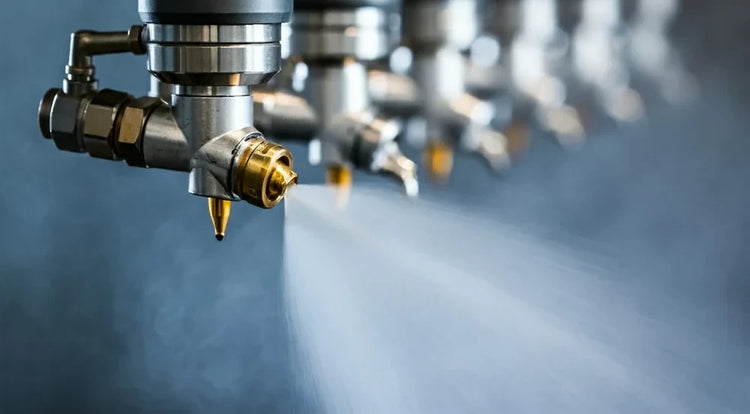
Pharmazeutische und biowissenschaftliche Einrichtungen haben Sprühdüsenbedürfnisse, die über das Abwaschen und die Behälterreinigung hinausgehen. Die Staubunterdrückung an Sackentleerungsstationen reduziert die Exposition gegenüber luftgetragenem Pulver beim Einfüllen von Rohmaterialien. Die Gerätekühlung steuert die Wärme von exothermen Verarbeitungsmaschinen und Druckluftsystemen. Die allgemeine Befeuchtung unterstützt die Bedingungen bei der Verpackung und Lagerung. NozzlePro liefert langlebige, chemikalienbeständige Sprühdüsen und Zerstäubungsgeräte für diese Anwendungen zur Unterstützung der Anlagen in Edelstahl, PVDF und Polypropylen.
Nicht jede Sprühdüse in einer pharmazeutischen Einrichtung ist Teil eines produktberührenden Reinigungssystems. Eine beträchtliche Anzahl von Sprühanwendungen in Anlagen befasst sich mit der Betriebsumgebung selbst – Steuerung von luftgetragenem Staub an Rohmaterialhandhabungsstationen, Steuerung der Wärme von Verarbeitungsgeräten und Aufrechterhaltung der allgemeinen Luftfeuchtigkeit, wo dies für die Verpackung oder Lagerung von Massenprodukten erforderlich ist. Diese Anwendungen verwenden Standard-Industriesprühdüsen, die für die Flüssigkeit, den Durchfluss und den Montageort spezifiziert sind. Sie erfordern keine pharmazeutische Dokumentation, Reinigungsvalidierung oder spezielle Zertifizierung – sie erfordern die richtige Düse an der richtigen Position, hergestellt aus einem Material, das den Umgebungsbedingungen der Anlage standhält.
NozzlePros Stärke in diesen Anwendungen ist zuverlässige, wiederholbare Sprühtechnik aus Materialien, die den aggressiven Reinigungschemikalien widerstehen, die in Pharmaanlagen verwendet werden. Wenn eine Nebeldüse an einer Sackentleerungsstation ausgetauscht werden muss, muss der Ersatz genau der ursprünglichen Öffnungsgröße und dem Sprühwinkel entsprechen, um die Staubunterdrückungsleistung aufrechtzuerhalten, die bei der Einrichtung der Station festgelegt wurde. Unsere ISO 9001 zertifizierte Fertigung ermöglicht diese Wiederholbarkeit.
Staubunterdrückung, Gerätekühlung, Feuchtigkeitsmanagement und Außenbereiche der Anlage
Staubunterdrückung an Sackentleerungs- & IBC-Entladestationen
Feine Nebeldüsen zur Niederschlagung von luftgetragenem Pulver an RohmaterialfüllpunktenDas Einfüllen von Rohmaterialien – das Aufschneiden von Säcken mit API, Hilfsstoffen oder Bulk-Zutaten und deren Entleerung in Trichter, Behälter oder Verarbeitungsgeräte – erzeugt luftgetragenes Pulver, das sowohl eine Exposition des Bedienpersonals als auch Kreuzkontaminationsrisiken birgt. Feine Nebeldüsen, die über und um die Sackentleerungsstation positioniert sind, erzeugen einen Nebelvorhang, der luftgetragene Partikel abfängt und einfängt, bevor sie sich im Produktionsbereich verteilen. Die Wassertröpfchen kollidieren mit Staubpartikeln, wodurch diese agglomerieren und aus der Luft fallen, anstatt in der Luft zu bleiben. Dies ist eine praktische, wenig technische Staubkontrollmaßnahme, die die sichtbare Pulvererzeugung an Füllstationen reduziert, ohne eine vollständig geschlossene, belüftete Einhausung zu erfordern.
Gerätekühlung — Prozessmaschinen & Versorgungssysteme
Wassersprühkühlung für exotherme Geräteaußenflächen und Wärmeabfuhr von VersorgungssystemenVerarbeitungsgeräte in pharmazeutischen Einrichtungen erzeugen Wärme, die gemanagt werden muss – Granulatoren, High-Shear-Mischer, Tablettenüberzugspfannen und Luftkompressoren erzeugen alle thermische Leistung, die gekühlt werden muss, wenn das Gerät kontinuierlich oder in heißen Anlagenumgebungen betrieben wird. Die Sprühkühlung von Geräteaußenflächen mittels Wassernebel oder gezieltem Sprühen reduziert die Oberflächentemperaturen und verlängert die Lebensdauer der Geräte in Anwendungen, bei denen eine integrierte wassergekühlte Kühlung nicht verfügbar oder unzureichend ist. Drucklufttrockner und Kühlgeräte in Versorgungsräumen profitieren ebenfalls von zusätzlicher Sprühkühlung während Perioden hoher Belastung.
Allgemeine Raumbefeuchtung — Verpackung & Lagerung
Sprühdüsen für das Feuchtigkeitsmanagement in nicht klassifizierten Verpackungs- und LagerbereichenVerpackungsbereiche und Lagerhallen für Schüttgüter in pharmazeutischen Einrichtungen erfordern eine kontrollierte Luftfeuchtigkeit, um die Brüchigkeit von Verpackungsmaterialien, die statische Aufladung von Folienverpackungen und die feuchtigkeitsbedingte Zersetzung hygroskopischer Schüttgüter zu verhindern. Die allgemeine Raumbefeuchtung mittels feiner Nebeldüsen hält die relative Luftfeuchtigkeit innerhalb akzeptabler Betriebsbereiche in nicht klassifizierten Bereichen, wo ein dampfbasiertes Befeuchtungssystem unpraktisch oder zu kostspielig ist. Sprühbefeuchtung in diesen Bereichen ist keine sterile oder WFI-gerechte Anwendung – sie verwendet normales Trinkwasser mit geeigneter Aufbereitung für die Lebensdauer der Düse, und die Düsen sind industrietaugliche Hardware, die für die Anlagenumgebung geeignet ist.
Außenbereiche der Anlage — Laderampen, Abfallentsorgung & Betriebshöfe
Kühlung und Staubkontrolle in Außenbereichen angrenzend an pharmazeutische ProduktionsgebäudeAußenbereiche von Pharmazeutischen Produktionsstätten – Laderampen, Abfallentsorgungsbereiche, Außenlager und Kühlturmbereiche – haben Sprühdüsenanforderungen, die vollständig den standardmäßigen industriellen Anwendungen entsprechen. Die Nebelkühlung an Laderampen kühlt die Umgebung der Rampe und unterdrückt Staub durch Fahrzeug- und Materialbewegung. Abfallentsorgungsbereiche können Nebel zur Geruchsunterdrückung und Reduzierung von luftgetragenen Partikeln an Abfallsammelstellen verwenden. Außenkühltürme verwenden Sprühdüsen für Tropfenabscheider, Beckenfüllungsdüsen und zusätzliche Verdunstungskühlung. Dies sind industrielle Außenanwendungen, die Messing-, Edelstahl- oder Polypropylendüsen verwenden, abhängig von der spezifischen Wasserchemie und den Expositionsbedingungen.
Anpassung des Düsentyps an die Umweltsprühanwendung
Die drei Umweltsprühkategorien – Staubunterdrückung, Gerätekühlung und Befeuchtung – erfordern jeweils unterschiedliche Düseneigenschaften. Hier ist der praktische Auswahlrahmen.
Staubunterdrückung: Feine Tröpfchen bei geringem Durchfluss
Eine effektive Staubunterdrückung erfordert Tröpfchen im feinen bis mittleren Bereich – groß genug für eine effiziente Trägheitskollision mit luftgetragenen Partikeln, klein genug, um lange genug in der Luftsäule zu schweben, um Staub abzufangen, bevor er sich verteilt. Standard-Hydraulikvollkegel- und Flachstrahldüsen bei typischen Industriedrücken (30–80 PSI) erzeugen Tröpfchen im Bereich von 200–600 Mikrometer, was für eine effiziente Staubabscheidung feiner pharmazeutischer Pulver zu grob ist. Hohlkegeldüsen bei niedrigeren Drücken erzeugen feinere Tröpfchen im Bereich von 100–250 Mikrometer, die für pharmazeutische Staubpartikelgrößen besser geeignet sind. Luftzerstäubungsdüsen erzeugen die feinsten Tröpfchen (20–80 Mikrometer), benötigen aber neben Wasser auch eine Druckluftversorgung.
Für Sackentleerungs- und IBC-Entladungsanwendungen ist das Ziel ein feiner, umgebender Nebel bei sehr geringem Gesamtdurchfluss – ausreichend, um einen effektiven Abfangvorhang zu erzeugen, ohne dem Produktstrom nennenswerte Feuchtigkeit zuzuführen oder eine Wassergefahr an der Bedienerstation zu verursachen. Gesamtnassdurchflussraten von 0,1–0,5 GPM sind typisch für eine Einzelpunkt-Sackentleerungsstation. Mehrere Düsen mit geringeren Einzeldurchflussraten bieten eine bessere Abdeckung als eine einzelne Düse mit hohem Durchfluss.
Gerätekühlung: Ausreichende Benetzungsabdeckung ohne übermäßigen Durchfluss
Die Außenkühlung von Geräten ist ein Verdunstungsprozess – das Spray soll die Oberfläche nicht überfluten, sondern einen dünnen, feuchten Film aufrechterhalten, der kontinuierlich verdunstet und Wärme von der Geräteoberfläche ableitet. Die richtige Düsenauswahl und Durchflussrate erzeugt eine sichtbar feuchte, aber nicht tropfende Oberfläche; überschüssiger Durchfluss läuft ab, ohne zusätzliche Kühlung zu bewirken, und verschwendet Wasser. Vollkegeldüsen bieten die beste Abdeckungs-gleichmäßigkeit für unregelmäßige Geräteoberflächen. Die Durchflussrate sollte aus der Schätzung der Wärmebelastung dimensioniert werden, nicht willkürlich – eine Überdimensionierung des Durchflusses für eine Kühlanwendung verschwendet Wasser, ohne die Kühlleistung zu verbessern.
Was NozzlePro bietet und was nicht
Für Umweltsprühanwendungen in pharmazeutischen Einrichtungen liefert NozzlePro die Sprühdüsen, Sprühbalken und zugehörige Hardware. Wir liefern keine Ventilatoren, Gebläse, RH-Regelsysteme, Drucklufttrockner oder die zur Automatisierung dieser Systeme erforderliche Steuerungsinstrumentation. Für Staubunterdrückungs-, Kühl- und Befeuchtungsanwendungen ist die Düsenauswahl eine Komponente eines vollständigen Systems, das Ihr Anlagenbau- oder HVAC-Team entwirft. NozzlePro kann Ihnen helfen, den richtigen Düsertyp, die Öffnungsgröße, den Sprühwinkel und das Material zu spezifizieren – kontaktieren Sie unser Anwendungsteam mit Ihrem Versorgungsdruck, der Zieldurchflussrate und der Montagegeometrie.
- Bestimmen Sie die Düsengröße anhand Ihres Versorgungsdrucks und der erforderlichen Durchflussmenge – wählen Sie eine Düse nicht nur anhand der Katalogbeschreibung aus; bestätigen Sie die Durchflussmenge bei Ihrem Betriebsdruck unter Verwendung der Katalog-Durchflussdruckdaten oder kontaktieren Sie NozzlePro für Unterstützung bei der Größenbestimmung
- Installieren Sie ein Sieb vor allen Vernebelungs- und Feinsprühdüsen – Düsen mit feinen Öffnungen verstopfen schnell durch Partikel im Wasser; ein 100-Maschen-Sieb unmittelbar vor dem Düsenverteiler verhindert die meisten Verstopfungen der Öffnungen und verlängert die Wartungsintervalle erheblich
- Verwenden Sie 316-Edelstahldüsen in Bereichen, die regelmäßig alkalisch gereinigt werden – Edelstahlgehäuse und EPDM-Dichtungen widerstehen den in Reinigungsprogrammen von Pharmaanlagen verwendeten Reinigungsmitteln; Messingdüsen in Bereichen, die routinemäßiger alkalischer oder oxidierender Reinigung ausgesetzt sind, zeigen innerhalb weniger Monate eine beschleunigte Korrosion
- Ersetzen Sie Umweltsprühdüsen nach einem präventiven Zeitplan – Vernebelungsdüsen sammeln im Laufe der Zeit mineralische Ablagerungen, biologische Verschmutzungen und Partikel an der Öffnung an; legen Sie ein Ersatzintervall basierend auf Wasserqualität und Betriebsstunden fest, anstatt auf sichtbare Verstopfungen oder Spritzbildverzerrungen zu warten
Umweltsprühdüsen-Auswahl nach Anwendung
Kontaktieren Sie NozzlePro mit Ihrem Versorgungsdruck, der gewünschten Durchflussrate, der Montagegeometrie und der Exposition gegenüber der Reinigungschemie. Wir bestätigen Ihnen den richtigen Düsertyp, die richtige Düsengröße und das richtige Material.
| Anwendung | Düsertyp | Muster | Wesentliche Überlegung | Material |
|---|---|---|---|---|
| Staubunterdrückung beim Sackentleeren | Hohlkegel-Vernebelungsdüse | Feiner Nebel, 50–150 µm | Position an der Peripherie, nicht über der Öffnung; insgesamt 0,1–0,5 GPM; 316 SS oder PVDF-Gehäuse | 316 SS oder PVDF |
| Staubkontrolle beim IBC-Entleeren | Luftzerstäubung oder Hohlkegel | 20–80 µm (Luftzerstäubung) oder 100–200 µm (Hohlkegel) | Erfordert Druckluftversorgung für Luftzerstäubung; feinere Tropfen = bessere Erfassung feiner Pulver | 316 SS |
| Außenkühlung von Verarbeitungsgeräten | Vollkegeldüse | Vollkegel, 60°–90° | Durchflussmenge nach Wärmelast bemessen; Oberfläche benetzen, nicht überfluten; Thermostat- oder Sensorsteuerung empfohlen | 316 SS / EPDM |
| Drucklufttrockner / Versorgungskühlung | Flachstrahl oder Vollkegel | Anwendungsspezifisch | Bestätigen Sie die Materialverträglichkeit der Düse mit der Reinigungschemie der Anlage; Edelstahl bevorzugt | 316 SS |
| Luftbefeuchtung in allgemeinen Bereichen (Verpackung, Lager) | Luftzerstäubungs-Vernebelungsdüse | 20–80 µm Tropfen | Feuchtigkeitssensorsteuerung erforderlich; Wasseraufbereitung vorgeschaltet; 100-Maschen-Sieb obligatorisch | 316 SS oder Messing (Nicht-GMP-Bereiche) |
| Vernebelung am Laderampenbereich | Vollkegel oder Hohlkegel | Mittlerer Nebel | Perimeterringinstallation; Timer- oder Docktür-Aktivierung; Edelstahl für Außen-/Waschbereich | 316 SS oder PP |
| Spritzbereich für Außenabfälle | Vollkegeldüse | Vollkegel | PVDF oder PP bei Vorhandensein von Lösungsmitteldämpfen; Messing in Abfallbehandlungsbereichen nicht empfohlen | PVDF oder PP |
Materialien für Umweltsprühdüsen
316 SS für GMP-Anlagenbereiche, die alkalischer Reinigung unterliegen. PVDF für Bereiche mit oxidierenden Desinfektionsmitteln oder Lösungsmittelbelastung. Polypropylen für allgemeine Außenanwendungen mit milder Wasserchemie. Messing für Nicht-GMP-Verpackungs- und Lagerbefeuchtung, wo die Reinigungschemie kein Faktor ist.
Sprühdüsen für jede Umweltkontrollanwendung in Ihrer Anlage.
Staubunterdrückung, Gerätekühlung, Raumbefeuchtung oder Außenvernebelung – kontaktieren Sie NozzlePro mit Ihren Versorgungsbedingungen, Montagegeometrie und den Anforderungen an die Reinigungschemie Ihrer Anlage.