
Reinigung & Spülung:
Leitfaden zur Auswahl von Sprühdüsen
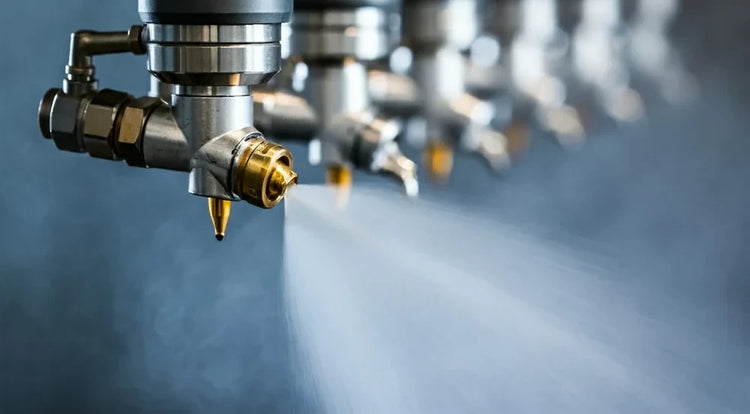
Die am häufigsten angewandte Sprühanwendung in industriellen Umgebungen. Egal, ob Sie einen Hallenboden abwaschen, Förderbänder reinigen, Teile vor der Montage spülen oder einen CIP-Zyklus an Prozessanlagen durchführen, die Prinzipien der Düsenwahl sind dieselben – Aufprallenergie, gleichmäßige Abdeckung und das richtige Material für die Reinigungschemie.
Was die Reinigungsleistung wirklich antreibt
Effektive Sprühreinigung kombiniert drei Elemente: die richtige chemische Wirkung, ausreichende Einwirkzeit und genügend mechanischen Aufprall durch das Spray. Die Sprühdüse steuert den mechanischen Aufprall und die Abdeckung – dies richtig zu machen, lässt die Chemie und die Zeit effizienter arbeiten.
Sprühreinigung funktioniert, indem kinetische Energie durch den Aufprall von Wasser- oder Reinigungslösungströpfchen auf die Oberfläche übertragen wird. Dieser Aufprall löst Schmutz physikalisch von der Oberfläche und spült ihn weg. Die Reinigungschemie wirkt dann auf die Rückstände, die der Aufprall gelockert hat – Tenside lösen Öle und Fette, Laugen verseifen Fette, Säuren lösen Mineralablagerungen. Wenn die mechanische Energie aus dem Spray unzureichend ist, kann die Chemie allein dies nicht kompensieren: Die Einwirkzeit verlängert sich, die chemische Konzentration erhöht sich, oder die Reinigung schlägt vollständig fehl.
Die zentrale Erkenntnis ist, dass eine Düse mit mehr Durchfluss nicht unbedingt eine bessere Reinigungsdüse ist. Was zählt, ist die Aufprallenergie pro Flächeneinheit – wie viel kinetische Energie pro Zeiteinheit an jedem Punkt der Oberfläche ankommt. Eine Weitwinkeldüse, die denselben Durchfluss über eine große Fläche verteilt, liefert weniger Aufprall pro Quadratzoll als eine Engwinkeldüse, die denselben Durchfluss über eine kleinere Fläche konzentriert. Die Auswahl einer Düse für die Reinigungseffektivität bedeutet die Auswahl der richtigen Kombination aus Durchfluss, Druck, Winkel und Abstand – nicht nur der maximalen Durchflussrate.
Boden-, Wand- & Anlagenreinigung
Die breiteste Reinigungsanwendung – wird in der Lebensmittelverarbeitung, Milchwirtschaft, Getränkeindustrie, Pharmazie, Chemie und allgemeinen Industrie eingesetzt, um Produktionsrückstände zu entfernen, Oberflächen zu desinfizieren und Hygienestandards einzuhalten.
Die Anlagenreinigung erfordert eine gleichmäßige Abdeckung großer ebener Flächen – Böden, Wände, Geräteoberflächen, Abflusskanäle – mit ausreichendem Aufprall, um Rückstände aus der täglichen Produktion zu lösen. Das Flachstrahlmuster ist die richtige Wahl, da es einen breiten linearen Bereich von einer einzigen Düse abdeckt, und mehrere Düsen, die entlang eines Verteilerrohrs angeordnet sind, sorgen für eine vollständige, überlappende Abdeckung jeder Oberfläche.
Der korrekte Sprühwinkel für die Anlagenreinigung hängt von der Montagehöhe über dem Boden ab. Für fest installierte Deckenverteiler in 1,8–3 Metern Höhe ist ein Winkel von 65–80° typisch – er bietet eine sinnvolle Abdeckungsbreite bei gleichzeitig ausreichendem Aufprall auf den Boden. Für Handdüsen oder niedriger montierte Düsen, die näher an der Oberfläche sind, reduzieren größere Winkel (80–95°) die Anzahl der benötigten Durchgänge. Überprüfen Sie die Abdeckung immer mit einem Nässetest, bevor Sie das Verteilerdesign festlegen.
NozzlePro ist nach ISO 9001:2015 zertifiziert. Es werden keine Produktzertifizierungen (NSF, FDA 3-A, ATEX, CE, RoHS) beansprucht. Überprüfen Sie die anwendbaren behördlichen oder Zertifizierungsanforderungen für Ihre spezifische Anlage mit Ihrem Compliance-Team, bevor Sie Düsenmaterialien spezifizieren.
Förderband- & Kettenreinigung
Die Förderbandreinigung erfordert einen kontinuierlichen, gleichmäßigen Sprühstrahl über die gesamte Band- oder Kettenbreite, während diese sich bewegt. Die Düsenanordnung muss die Bandbewegung kompensieren – es zählt die Abdeckungsgleichmäßigkeit pro Einheit der Bandfläche, die durch die Sprühzone läuft.
Für die Förderbandreinigung werden Flachstrahldüsen auf einem quer zum Band verlaufenden Verteilerrohr montiert, wobei der Sprühstrahl senkrecht zur Förderrichtung ausgerichtet ist. Der Flachstrahl deckt die Bandbreite ab – die Düsen werden entlang des Verteilers so angeordnet, dass ihre Sprühbilder an der Bandoberfläche um 10–15 % überlappen. Während sich das Band durch die Sprühzone bewegt, durchläuft jeder Punkt auf dem Band den überlappenden Sprühbereich und erhält Reinigungsflüssigkeit.
Die wichtigste Überlegung bei der Dimensionierung für bewegliche Förderbänder ist die Kontaktzeit – die Zeit, die jeder Punkt auf dem Band innerhalb der Sprühzone verbringt. Ein Förderband, das sich mit 30 Metern pro Minute durch eine 30 cm lange Sprühzone bewegt, erhält nur 0,6 Sekunden Kontaktzeit. Wenn für hartnäckigen Schmutz eine längere Einwirkzeit erforderlich ist, ist die Verlängerung der Sprühzone mit mehreren Düsenreihen effektiver als die Erhöhung des Drucks auf eine einzelne Reihe.
Berechnung der Länge der Förderbandsprühzone
Erforderliche Zonenlänge (cm) = Bandgeschwindigkeit (cm/min) × Erforderliche Kontaktzeit (min). Für ein Band mit 60 m/min, das 1,5 Sekunden Kontaktzeit benötigt: Zone = 7200 cm/min × 0,025 min = 180 cm Sprühzone. Düsenreihen in einem Abstand von 20–25 cm innerhalb dieser Zone anordnen.
Industrielles Teilewaschen & Entfetten
Das Teilewaschen entfernt Bearbeitungsöle, Schneidflüssigkeiten, Montageschmierstoffe und Oberflächenverunreinigungen vor der weiteren Verarbeitung, Inspektion, Beschichtung oder Montage. Die Herausforderung besteht darin, alle Oberflächen dreidimensionaler Teile zu erreichen – nicht nur die direkt dem Sprühstrahl ausgesetzten Flächen.
Die Teilewaschung in geschlossenen Kabinenwaschanlagen verwendet mehrere Düsenbänke, die um das Teil herum angeordnet sind, um gleichzeitig eine Abdeckung aus verschiedenen Winkeln zu gewährleisten – oben, unten, seitlich und durch Öffnungen. Flachstrahldüsen decken ebene Flächen effizient ab; Vollkegeldüsen werden für die Abdeckung von unten, in Hohlräumen und für Teile mit komplexer dreidimensionaler Geometie hinzugefügt. Die Anordnung der Düsenbank sollte so konzipiert sein, dass mindestens zwei Sprührichtungen jede zu reinigende Oberfläche erreichen.
Die Teilewaschung erfolgt typischerweise in zwei oder drei Stufen: eine Heißwaschstufe mit alkalischem Reinigungsmittel bei mäßigem bis hohem Druck (60–120 PSI zum Entfetten), gefolgt von ein oder zwei Spülstufen mit sauberem Wasser bei niedrigerem Druck (40–60 PSI). Die Verwendung derselben Düsen und des gleichen Verteilers für beide Stufen spart Kosten, erfordert aber, dass die Materialien sowohl mit der Reinigungschemie als auch mit dem Spülwasser kompatibel sind – Edelstahl und PTFE-Dichtungen sind die sicherste Wahl für zweistufige Systeme.
Clean-in-Place & Anlagenreinigung
CIP-Systeme (Clean-in-Place) reinigen die Innenflächen von Prozessanlagen – Rohrleitungen, Behälter, Wärmetauscher und Mischer – ohne Demontage. Die Aufgabe der Düse ist es, alle Innenflächen mit Reinigungslösung bei ausreichender Geschwindigkeit zu beaufschlagen, um Verschmutzungen zu lösen und in den Abfluss zu leiten.
CIP-Sprühanwendungen verwenden statische Sprühkugeln oder rotierende Sprühköpfe, die an festen Positionen in Tanks und Behältern installiert sind. Statische Sprühkugeln verteilen Flüssigkeit durch ein festes Muster von Präzisionslöchern auf der Kugeloberfläche und decken die innere Behälterwand durch eine Kombination aus direktem Sprühstrahl und Flüssigkeitsfluss entlang der Behälteroberfläche ab. Rotierende Sprühköpfe bewegen das Abdeckungsmuster während des Betriebs im Inneren, was eine gründlichere Abdeckung komplexer Geometrien und größerer Behälter ermöglicht.
Die Wahl zwischen einer statischen Sprühkugel und einem rotierenden Kopf hängt hauptsächlich vom Behälterdurchmesser und der Verschmutzung ab. Statische Sprühkugeln eignen sich für kleinere Behälter (bis ca. 1,8 Meter Durchmesser) mit leichter bis mäßiger Verschmutzung. Für größere Behälter, starke Verschmutzung oder Geometrien mit internen Hindernissen (Rührflügel, Leitbleche, Heizschlangen) bietet ein rotierender Sprühkopf oder eine Tankreinigungsmaschine eine vollständigere Abdeckung mit besserer mechanischer Wirkung an der Oberfläche.
Statische Sprühkugel vs. rotierender Kopf – wichtiger Entscheidungspunkt
Faustregel: Behälter unter 1,8 m Durchmesser mit mäßiger Verschmutzung → statische Sprühkugel. Behälter über 1,8 m oder jeder Behälter mit starker Produktanhaftung, Rührwerksinterna oder dokumentierten Reinigungsfehlern mit einer statischen Kugel → rotierender Sprühkopf oder Tankreinigungsmaschine. Kontaktieren Sie NozzlePro mit Behälterdurchmesser, Schmutzart und erforderlicher Reinigungsfrequenz für eine spezifische Geräteempfehlung.
Transport-, Behälter-, Kisten- & Containerwäsche
Die Containerwäsche – Mehrwegbehälter, IBCs, Transportbehälter, Kisten und Kunststoffbehälter – erfordert eine Innen- und Außenabdeckung von einer festen Düsenposition oder einer automatischen Waschstation. Die Reinigungsherausforderung besteht darin, alle Innenflächen, einschließlich Ecken, Rippen und Deckelvertiefungen, von einer begrenzten Anzahl von Düsenpositionen aus zu erreichen.
Containerwaschanlagen stellen den Behälter typischerweise umgekehrt über eine fest installierte, nach oben gerichtete Sprühdüse oder einen Düsencluster. Vollkegeldüsen werden für die Innenreinigung verwendet, da der kreisförmige Abdeckungsbereich alle inneren Seitenwände von einer zentralen Position aus erreicht. Weitwinkel-Vollkegeldüsen (80–120°) bieten die beste Abdeckung im Nahbereich – wenn die Düse nahe am Behälterboden ist, sorgt der weite Winkel dafür, dass der Sprühstrahl die Seitenwände und den oberen Innenbereich erreicht.
Für die externe Behälterwäsche decken Flachstrahldüsen an einem Seitenverteiler die Außenflächen ab, während der Behälter den Waschtunnel durchläuft. Hier gelten dieselben Überlappungs- und Abstandsprinzipien wie bei der Förderband- und Anlagenreinigung. Einige Containerwaschanlagen kombinieren interne, nach oben gerichtete Vollkegeldüsen mit externen Flachstrahl-Sprühbalken in einer einzigen automatisierten Station.
Reinigung & Waschen — Parameterübersicht nach Teilanwendung
Schnellreferenz für die Spezifikation von Düsen über alle fünf Reinigungs-Teilanwendungen hinweg.
| Teilanwendung | Muster | Winkel | Druck | Gehäusematerial | Dichtung | Anschluss |
|---|---|---|---|---|---|---|
| Anlagenreinigung | Flachstrahl | 65°–95° | 40–100 PSI | 316 SS oder Messing | EPDM oder PTFE | 1/4" NPT |
| Förderbandreinigung | Flachstrahl | 65°–80° | 40–80 PSI | 316 SS | EPDM oder PTFE | 1/4" NPT |
| Teilewäsche – Waschstufe | Flachstrahl + Vollkegel | 65°–110° | 60–120 PSI | 316 SS | PTFE | 1/4" oder 3/8" NPT |
| Teilewäsche – Spülstufe | Flachstrahl + Vollkegel | 65°–110° | 40–60 PSI | 316 SS | PTFE oder EPDM | 1/4" NPT |
| CIP – statische Sprühkugel | Vollkegel (Mehrlochkugel) | 360° innen | 20–60 PSI | 316 SS | PTFE oder EPDM | 1/4"–1/2" NPT |
| CIP – rotierender Kopf | Rotierender Vollkegel-Sweep | 360° innen | 30–80 PSI | 316 SS | PTFE | 3/8"–1/2" NPT |
| Containerwäsche – innen | Vollkegel (Weitwinkel) | 95°–120° | 40–80 PSI | 316 SS oder Messing | EPDM oder PTFE | 3/8" oder 1/2" NPT |
| Containerwäsche – außen | Flachstrahl | 65°–80° | 40–60 PSI | 316 SS oder Messing | EPDM | 1/4" NPT |
Reinigungsanwendung — Spezifikationscheckliste
Bestätigen Sie diese Parameter, bevor Sie eine Düsenbestellung für eine Reinigungs- oder Waschanwendung aufgeben.
- Art und Grad der Verschmutzung ermitteln – leicht, mittel oder stark. Stärkere Verschmutzungen erfordern eine höhere Aufprallenergie: engerer Sprühwinkel, höherer Druck oder geringerer Montageabstand.
- Die Reinigungschemie bestätigen – alkalisch, sauer, lösungsmittelbasiert oder oxidierendes Desinfektionsmittel. Dies bestimmt die Auswahl des Gehäusematerials und der Dichtung. Wählen Sie kein Messing für Anwendungen, die starke Ätzmittel oder Säurereiniger verwenden.
- Den Versorgungsdruck am Düseneinlass bei vollem Betriebsfluss messen – nicht an der Pumpe. Druckverluste in der Versorgungsleitung reduzieren den Düseneinlassdruck unter den Pumpenausgangsdruck.
- Gesamt-Systemdurchflussbedarf berechnen: Anzahl der Düsen × Durchfluss pro Düse bei Betriebsdruck. Bestätigen Sie, dass Pumpe und Versorgungsleitung diesen Durchfluss bei dem erforderlichen Druck aufrechterhalten können.
- Bestätigen Sie, dass die Düsengröße mit dem Verteiler- oder Anschlussgewindetyp und der Größe (NPT) übereinstimmt. Überprüfen Sie, ob der Gewindetyp NPT ist – nicht BSPT oder metrisch –, falls das Gerät aus einer nicht-nordamerikanischen Quelle stammt.
- Bei Krümmerinstallationen den Düsenabstand für 10–15 % Überlappung an der Zielfläche berechnen. Verwenden Sie das Spritzbereichsplanungstool, um die Abdeckungsbreite und den Abstand vor der Bestellung zu überprüfen.
- Installieren Sie ein Sieb vor dem Düsenverteiler – mindestens 50 Mesh. Partikel in der Reinigungsflüssigkeit verstopfen die Düsen und verringern die Leistung oder verursachen eine vollständige Blockierung von Düsen mit kleinen Öffnungen.
Bereit zur Spezifizierung von Reinigungsdüsen?
Teilen Sie uns Ihre Unteranwendung (Waschen, Förderband, Teilewaschen, CIP oder Behälterwaschen), Reinigungschemie, Betriebsdruck, Oberflächenabmessungen und Anschlussgröße mit – das Anwendungsteam von NozzlePro identifiziert die richtigen Düsenoptionen.