
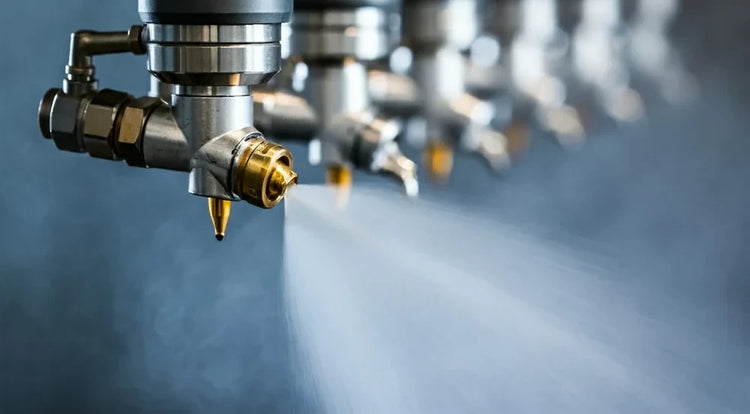
Sprühdüsen für Zellstoffgewinnung und chemische Verarbeitung
Korrosionsbeständige Sprühdüsen für die Zellstoffgewinnung nach dem Kraft- und Sulfitverfahren – Digester-Laugenverteilungsdüsen, Schwarzwasser-Sprühdüsen, Düsen für Wasch- und Extraktionsstufen sowie Bleichereidüsen – in Hastelloy C-276, Titan, Duplex-Edelstahl, PTFE und PVDF für aggressive Alkali-, Säure- und oxidierende chemische Anwendungen
Sprühdüsen in der chemischen Zellstoffgewinnung versagen durch Korrosion, nicht durch Verschleiß. Die Kraft-Kochlauge, die in einen kontinuierlichen Kocher-Laugenverteiler gelangt, ist Weißlauge – Natriumhydroxid und Natriumsulfid bei pH 13–14 und 160–180 °C. Das Schwarzwasser im Sprühsystem des Rückgewinnungskesselverdampfers enthält gelöste Ligninsulfonatverbindungen, Natriumcarbonat und Sulfat bei hoher Temperatur. Das Filtrat der Waschstufe ist alkalisch und enthält gelöste organische Schwefelverbindungen. Jede Düse im Kraft-Prozess, die mit Prozesslauge benetzt wird, ist einem chemisch aggressiven Dienst ausgesetzt, und die Materialauswahl, die auf "Edelstahl" als Kategorie und nicht auf einer spezifischen Legierung gegen eine spezifische Chemie bei einer spezifischen Temperatur basiert, ist ein vorhersehbarer Weg zum Versagen.
NozzlePro liefert Sprühdüsen für die chemische Zellstoffgewinnung in den Materialien, die die Chemie tatsächlich erfordert – Hastelloy C-276 für sulfidhaltige Kraftlaugen und Sulfit-Säureströme, Duplex-Edelstahl 2205 für alkalische Anwendungen bei moderater Temperatur, Titan für Chlordioxid- und Peroxidbleichstufen, PTFE- und PVDF-Gehäusedüsen für stark oxidierende Positionen und 316L SS, wo die Chemie dies tatsächlich zulässt. ISO 9001 zertifizierte Fertigung mit Materialzertifikaten, rückverfolgbar nach Charge und Los.
Sprühdüsen für die chemische Zellstoffgewinnung dienen vier Hauptprozessbereichen, jeder mit unterschiedlichen Materialanforderungen: Digester-Laugenverteilungsdüsen verteilen Weißlauge (NaOH + Na₂S, pH 13–14, 160–180 °C) gleichmäßig in kontinuierlichen oder Batch-Digestern – Hastelloy C-276 oder hochlegierter Duplex-Edelstahl erforderlich; Standard 316L SS leidet unter Loch- und Spaltkorrosion durch den Sulfidgehalt bei erhöhter Temperatur; Schwarzwasser-Sprühdüsen zerstäuben verbrauchte Kochlauge (gelöstes Lignin, Natriumverbindungen, schwefelhaltige Organika) in Rückgewinnungskesselfeuerungen oder Verdampferstufen – Hastelloy C-276 Gehäuse mit Keramik-Düseneinsätzen für den abrasiven, hoch-TDS-haltigen Schwarzwasserstrom; Wasch- und Extraktionsstufendüsen bringen Waschwasser und Extraktionsflüssigkeiten über die Rohzellstoffwäscher (Trommel-, Druckdiffusor- oder Bandwäscherkonfigurationen) auf – Duplex-Edelstahl 2205 oder 316L SS je nach Temperatur und Chloridgehalt der spezifischen Waschstufe; und Bleichereidüsen bringen Chlordioxid (ClO₂), Wasserstoffperoxid (H₂O₂), Lauge (NaOH) und Peressigsäure über die Bleichsequenzstufen auf – Titan für ClO₂- und H₂O₂-Oxidationsstufen, PTFE- oder PVDF-Gehäusedüsen mit Hastelloy-Innenteilen für aggressive oxidierende Anwendungen, 316L SS nur für Tieftemperatur-Laugestufen. PTFE-Dichtungen in der gesamten Bleicherei – EPDM-Dichtungen degradieren schnell im Chlordioxid-Dienst.
Düsengruppen für Zellstoffgewinnung und chemische Verarbeitung
Nach Anwendung oder Düsentyp einkaufen
Sprühdüsenanwendungen für Zellstoffgewinnung und chemische Verarbeitung
Anwendungsspezifische Düsenempfehlungen – mit der Materialspezifikation, die jede Chemie tatsächlich erfordert
Digester-Laugenverteilungsdüsen
Hastelloy C-276 Duplex 2205Verteilen Weißlauge (NaOH + Na₂S bei pH 13–14, 160–180 °C in kontinuierlichen Kochern; 170–175 °C in Batch-Kraftkochern) gleichmäßig über den Kocherquerschnitt durch interne Verteilungsrohre und Düsensiebe, wodurch ein Imprägnierflüssigkeits-Holz-Verhältnis innerhalb von ±3–5 % über den Behälterdurchmesser erreicht wird, um eine konsistente Kappa-Zahl und Zellstoffausbeute zu gewährleisten. Die gleichmäßige Laugenverteilung ist die primäre Prozessregelgröße für den Kocherbetrieb – ein Verteilungsrohr mit blockierten oder korrodierten Düsenpositionen erzeugt eine Laugenkanalbildung: Einige Hackschnitzelzonen erhalten überschüssige Weißlauge (Überkochen, Festigkeitsverlust, Ausbeuteverlust), während unterversorgte Zonen ungekochte Rückstände produzieren, die als Späne in den Siebraum gelangen. Materialversagensmodus für Standardedelstahl: Der Natriumsulfidgehalt der Weißlauge (Na₂S typischerweise 8–12 % als Na₂O-Äquivalent) verursacht Sulfid-Spannungsrisskorrosion in 316L SS unter Spannung bei erhöhter Temperatur – Schweißnähte, Gewindeverbindungen und gebogene Rohrbereiche sind die anfälligsten Geometrien. Hastelloy C-276 ist das Standardmaterial für kontinuierliche Kraft-Kocher-Laugenverteiler; Duplex 2205 ist akzeptabel für Geometrien mit geringer Spannung und moderatem Na₂S-Gehalt; weder 316L noch 304 SS sind für den Kraft-Weißlaugenbetrieb über 130 °C geeignet.
VollkegeldüsenSchwarzwasser-Sprühdüsen
Hastelloy C-276 KeramikdüseZerstäuben konzentriertes Schwarzwasser (verbrauchte Kraft-Kochlauge bei 65–75 % Trockensubstanz, enthaltend gelöste Ligninsulfonate, Natriumcarbonat, Natriumsulfat und reduzierte Schwefelverbindungen) in Rückgewinnungskesselfeuerungen zur Verbrennung und chemischen Rückgewinnung und verteilen Schwarzwasser gleichmäßig über Mehrfacheffekt-Verdampferrohrbündel zur Konzentration. Rückgewinnungskessel-Sprühdüsen auf Ofenebene arbeiten im anspruchsvollsten kombinierten Betrieb einer Kraftzellstoffanlage: heiße korrosive Schwarzwasser auf der Flüssigkeitsseite und Verbrennungsgas mit reduzierten Schwefelverbindungen (H₂S, Dimethylsulfid) auf der Gasseite. Die gelösten Schwefelverbindungen im Schwarzwasser – hauptsächlich Natriumsulfid, Natriumthiosulfat und organische Schwefelverbindungen – verursachen sowohl direkte sulfidische Korrosion als auch bei höheren Temperaturen geschmolzene Sulfatablagerungen, die schwere Korrosion des Grundmetalls verursachen. Hastelloy C-276 Düsenkörper mit Keramik- (Aluminiumoxid) oder Wolframkarbid-Düseneinsätzen ist die Standardpezifikation – Schwarzwasser bei 65–75 % Feststoffgehalt hat eine hohe Viskosität und führt kristalline Natriumverbindungen mit sich, die Düsenoberflächen schnell erodieren. Sprühwinkel und Tröpfchengröße sind entscheidend für die Stabilität der Rückgewinnungskesselverbrennung: zu große Tröpfchen (über 800 µm Dv50) verbrennen unvollständig und erzeugen Koksaustrag; zu kleine Tröpfchen (unter 200 µm) verdampfen zu schnell und erreichen möglicherweise nicht die Schmelzbetttemperatur, die für eine vollständige Schwefelreduktion erforderlich ist.
Hydraulische ZerstäubungsdüsenWasch- & Extraktionsdüsen für Rohzellstoff
Duplex 2205 316L SSTragen Waschwasser auf die Trommeloberflächen von Rohzellstoffwäschern (rotierende Trommelwäscher, Druckdiffusoren, Verdrängungswäscher und Bandwäscher) auf, um restliche Kochchemikalien, gelöstes Lignin und Schwarzwasser aus dem gewaschenen Zellstoff zu entfernen – direkt bestimmend für die Zellstoffsauberkeit, die Effizienz der Chemikalienrückgewinnung und den nachgeschalteten Bleichchemikalienverbrauch. Die Effizienz der Rohzellstoffwäsche wird als Verdünnungsfaktor (m³ Frischwasser pro atro Tonne Zellstoff) und Waschverlust (kg Na₂O pro atro Tonne Zellstoff, das mit dem Zellstoff mitgeführt wird) gemessen – jedes Kilogramm pro Tonne Waschverlust, das als Restalkali in die Bleicherei gelangt, erhöht den Bedarf an Bleichchemikalien und beeinflusst die Helligkeitsziele. Die Gleichmäßigkeit der Duschdüsenverteilung über die gesamte Wäscher-Trommelfläche oder Filterbandbreite ist entscheidend – eine ungleichmäßige Waschwasserverteilung erzeugt Zonen unzureichender Wäsche, die als alkalische Hotspots im Zellstoffstrom erscheinen. Materialauswahl: Rohzellstoffwaschwasser ist verdünntes Alkali mit etwas Rest-Sulfid – pH 8–10, typischerweise unter 80 °C auf der Trommelwäscher-Duschstufe. Duplex 2205 bietet ausreichende Korrosionsbeständigkeit bei höherer Festigkeit als 316L SS und ist das bevorzugte Material; 316L SS ist akzeptabel für Waschphasen bei Umgebungstemperatur mit Waschwasser mit geringem Chloridgehalt. Duschrohrdesign: Flachstrahl- oder Vollkegeldüsen bei 0,5–3 bar über die Trommelfläche oder Bandbreite mit überlappender Abdeckung für eine Gleichmäßigkeit von ±5 % – die Wäscher-Trommeldusche ist das primäre Werkzeug zur Verteilung des Waschwassers über das Faservlies.
FlachstrahldüsenBleichereidüsen
Titan Gr. 2 PTFE / PVDF Hastelloy C-276Tragen Chlordioxid (ClO₂), Wasserstoffperoxid (H₂O₂), Natriumhydroxid (NaOH), Ozon (O₃) und Peressigsäure (PAA) über die Bleichsequenzstufen (D₀, E/EO/EP, D₁, P in ECF; O, O₃, ZE, P in TCF) auf – die korrosionsgefährdetsten Sprühpositionen in der gesamten Anlage. Die Materialanforderung variiert je nach Stufenchemie: Chlordioxid (D-Stufen, 0,3–1,0 % ClO₂ bei pH 2–4 und 60–80 °C) ist eine der aggressivsten oxidierenden Umgebungen in der industriellen Prozesschemie – es greift sowohl 316L SS (Loch- und Spaltkorrosion innerhalb weniger Tage) als auch Hastelloy C-276 (beschleunigter oxidativer Angriff bei Konzentrationen über 0,5 %) an – Titan Grade 2 ist das richtige Material für ClO₂-Düsenkörper und PTFE für alle Dichtungen. Wasserstoffperoxidstufen (P-Stufen, 1–5 % H₂O₂ bei pH 10–12 und 70–90 °C) erfordern PTFE- oder PVDF-Gehäusedüsen – H₂O₂ zersetzt sich katalytisch an Metalloberflächen und konzentriertes H₂O₂ ist ein starkes Oxidationsmittel, das die meisten Metalle einschließlich Edelstahl angreift. Alkaliextraktionsstufen (E/EO-Stufen, 1–3 % NaOH bei pH 11–13 und 70–90 °C) sind die am wenigsten aggressiven Bleichereipositionen – 316L SS ist bei moderater Temperatur ausreichend; Hastelloy für Hochtemperatur-Alkalien oder wo sauerstoffverstärkte Extraktion (EO) oxidierende Bedingungen einführt. PTFE-Dichtungen in der gesamten Bleicherei – EPDM zersetzt sich innerhalb weniger Tage in ClO₂ und konzentriertem H₂O₂.
VollkegeldüsenSprühdüsen für Sulfit-Zellstoffgewinnung
Hastelloy C-276 Hochsilizium-EisenVerteilen sulfitische Kochsäure (SO₂, gelöst in Bisulfit- oder Sulfitbase – pH 1–5 je nach Säure-/Bisulfit-/Bisulfatprozess; Kochtemperatur 130–160 °C) in Sulfitkochern und bringen Waschlösungen über Sulfit-Rohzellstoffwäscher auf. Sulfit-Kochlauge ist gleichzeitig stark sauer (Bisulfitprozess bei pH 1–2) und reich an gelöstem SO₂ – die Kombination schafft eine Umgebung, die alle gängigen Edelstähle durch kombinierte Wasserstoffentwicklung und Schwefeldioxidoxidation angreift. Hastelloy C-276 bietet die beste Korrosionsbeständigkeit über den gesamten pH-Bereich von Sulfitprozessen – es widersteht sowohl der stark sauren Bisulfit-Kochsäure als auch den moderateren Bisulfatsystemen. Hochsilizium-Eisen (14,5 % Si-Eisenlegierung) ist eine Alternative für Positionen mit geringer Strömungsgeschwindigkeit und ohne Aufprall in sauren SO₂-Umgebungen, wo seine Sprödigkeit keine Einschränkung darstellt. Für saure Sulfitprozesse (pH unter 2) stellen PTFE-Gehäusedüsen mit Keramikdüseneinsätzen die korrosionsbeständigste Lösung dar, wo die mechanischen Festigkeitsanforderungen dies zulassen. Materialprüfung: Die spezifische Sulfitbase (Calcium, Natrium, Magnesium oder Ammonium) beeinflusst das Korrosionsverhalten zusätzlich zur SO₂-Konzentration und dem pH-Wert erheblich – geben Sie Prozesschemie-Details für die Materialempfehlung an.
VollkegeldüsenChemikalienrückgewinnungs- & Rekalzinierungsdüsen
316L SS Duplex 2205Tragen Schmelzlöse-Duschwasser in Schmelzlösetanks (Umwandlung von geschmolzenem Schmelz aus dem Rückgewinnungskessel in Grünlauge) auf, verteilen Kalkmilch in den Rekalzinierungsreaktoren (Löscher, Rekalzinierungsgefäße) und tragen Waschwasser auf die Oberflächen von Kalkschlammfiltertrommeln auf, um Calciumcarbonat zur Wiederverbrennung zurückzugewinnen. Schmelzlösetank-Duschdüsen sind eine kritische Sicherheitsposition – unzureichender Wasserfluss zum Lösetank birgt das Risiko einer Dampfexplosion durch trockenen Schmelz, der mit nassen Tankoberflächen in Kontakt kommt. Vollkegeldüsen (316L SS-Körper, 2–5 bar, hohe Durchflussrate) im Duschverteiler des Lösetanks müssen für die Auslegungsschmelzflussrate mit Redundanz dimensioniert sein – ein Ausfall des Duschflusses in einem Schmelzlösetank ist ein Prozesssicherheitsereignis. Rekalzinierungs-Kalkmilch-Sprühdüsen und Kalkschlammwäscher-Duschdüsen arbeiten in hoch-pH-Calciumcarbonat-Slurry – die abrasiven Calciumcarbonatpartikel erfordern TC-Düseneinsätze in Duschrohrpositionen. 316L SS-Körper ist ausreichend für die pH 12–13 Rekalzinierungsbedingungen; Duplex 2205 für erhöhte Temperaturpositionen. Die Effizienz des Rekalzinierungskreislaufs beeinflusst direkt die Kosten für die Chemikalienzugabe im Rückgewinnungszyklus – die Effizienz des Grünlaugenklärers und des Kalkschlammwäschers hängt von einer konsistenten Duschverteilung über die Filtertrommeloberflächen ab.
VollkegeldüsenDüsenauswahl nach Prozesschemie
Das richtige Düsenkörper- und Dichtungsmaterial hängt von der spezifischen Chemikalie, Konzentration, Temperatur und dem pH-Wert an jeder Position ab – nicht von einer einzigen "chemikalienbeständigen" Bezeichnung
| Prozessstrom | Bedingungen | 316L SS | Duplex 2205 | Hastelloy C-276 | Titan Gr. 2 | PTFE / PVDF | Empfohlene Dichtung |
|---|---|---|---|---|---|---|---|
| Weißlauge (Kraft) | pH 13–14, Na₂S 8–12%, 160–180°C | ✗ Sulfid-SCC-Risiko | ⚠ Nur geringe Spannung | ✓ Bevorzugt | ✓ Akzeptabel | ⚠ Hohe Temperaturgrenzen PTFE | Graphit oder PTFE |
| Schwarzlauge | 65–75% TS, reduzierte S-Verbindungen, 100–140°C | ✗ Sulfidkorrosion | ⚠ Begrenzte Lebensdauer | ✓ Bevorzugter Körper | ✓ Akzeptabel | ⚠ Abriebbedenken bei TS >60% | PTFE oder Graphit; TC/Keramikdüse |
| Rohzellstoff-Waschwasser | pH 8–10, Rest-Na₂S, unter 80°C | ✓ Akzeptabel | ✓ Bevorzugt | ✓ Überdimensioniert | ✓ Überdimensioniert | ✓ Akzeptabel | EPDM oder PTFE |
| Chlordioxid (ClO₂) – D-Stufe | 0,3–1,0 % ClO₂, pH 2–4, 60–80 °C | ✗ Schnelle Lochfraßbildung | ✗ Nicht akzeptabel | ⚠ Oberhalb von 0,5 % ClO₂ grenzwertig | ✓ Bevorzugt | ✓ PTFE-Körper bevorzugt | Nur PTFE – EPDM zersetzt sich schnell |
| Wasserstoffperoxid (H₂O₂) – P-Stufe | 1–5 % H₂O₂, pH 10–12, 70–90 °C | ⚠ Katalytische Zersetzung auf Metall | ⚠ Risiko katalytischer Zersetzung | ✓ Akzeptabel | ✓ Bevorzugt | ✓ PVDF oder PTFE bevorzugt | PTFE oder FKM (Viton) |
| Ätzende Extraktion (E/EO-Stufe) | 1–3 % NaOH, pH 11–13, 70–90 °C | ✓ Akzeptabel (moderate Temperatur) | ✓ Bevorzugt | ✓ Akzeptabel | ✓ Akzeptabel | ✓ Akzeptabel | EPDM, PTFE oder FKM |
| Sulfit-Kochsäure (Bisulfit) | pH 1–5, SO₂ 4–7 %, 130–160 °C | ✗ Schwefelangriff | ✗ Schwefelangriff | ✓ Bevorzugt | ✓ Akzeptabel | ✓ PTFE für pH <2 | PTFE oder Graphit |
| Kalkmilch / Kaustifizierer | pH 12–13, Ca(OH)₂-Suspension, unter 100 °C | ✓ Akzeptabler Körper | ✓ Bevorzugt | ✓ Überdimensioniert | ✓ Akzeptabel | ✓ Akzeptabel | EPDM oder PTFE; TC-Düse für Ca(OH)₂-Abrieb |
| Schmelzlösebehälter-Dusche | pH 12–13, Hochtemperatur-Schmelzkontakt, hoher Durchfluss | ✓ Akzeptabel mit Spielraum | ✓ Bevorzugt | ✓ Akzeptabel | ✓ Akzeptabel | ⚠ Überprüfung der mechanischen Festigkeit | EPDM oder PTFE; hoher Durchfluss – Größe für Sicherheitsredundanz |
Referenz zur Düsenkonfiguration — Chemische Zellstoffherstellung
Empfohlener Düsentyp, Betriebsparameter und Materialspezifikation nach Prozessposition
| Anwendung | Düsentyp | Druck / Durchfluss | Material | Wichtiger Hinweis |
|---|---|---|---|---|
| Kontinuierliche Kocherflüssigkeitsverteilung | Vollkegel-Verteilerkopf | 3–10 bar, ausgelegt für ±3–5 % Querschnitts-Gleichmäßigkeit | Hastelloy C-276 Körper und Öffnung; PTFE- oder Graphitdichtungen | Na₂S verursacht Sulfid-Spannungsrisskorrosion in 316L SS bei erhöhter Temperatur – mindestens Hastelloy C-276; die Gleichmäßigkeit der Verteilung beeinflusst direkt die Kappa-Zahl und die Ausbeute-Gleichmäßigkeit |
| Chargenkocher-Spanbefüllung & Flüssigkeitszugabe | Vollkegel oder Flachstrahl | 2–8 bar, zeitgesteuerter Zyklus pro Charge | Hastelloy C-276; PTFE-Dichtungen | Thermische Zyklen (Befüllung/Kochen/Entleerung) erzeugen Ermüdungsspannungen an den Dichtflächen – Hastelloy mit flexiblen Graphitdichtungen bevorzugt gegenüber spiralförmigen PTFE-Dichtungen für Batch-Betrieb mit hoher Zyklenzahl |
| Schwarzlauge-Verdampfer-Sprühen | Hydraulische Zerstäubung | 5–20 bar, Tröpfchen Dv50 200–600 µm | Hastelloy C-276 Körper; Keramik (Al₂O₃) oder TC-Düseneinsatz | Schwarzlauge bei 65–75 % Feststoffgehalt ist viskos und abrasiv – Keramikdüseneinsatz für Abriebfestigkeit; Tröpfchengröße steuert Verdampfungsrate und Mitriss in den Dampfkörper; Dv50 über 600 µm führt zu Rohrverstopfung |
| Rückgewinnungskessel-Schwarzlauge-Sprühen | Hydraulische Zerstäubung – rotierend oder fest | 8–30 bar, Dv50 300–800 µm für stabile Verbrennung | Hastelloy C-276 Körper; Keramikdüse; wassergekühlter Mantel | Verbrennungsstabilität erfordert Dv50 innerhalb des Auslegungsbereichs – zu große Tröpfchen führen zu Verkohlungsmitriss und Bettinstabilität; geschmolzene Schwefelverbindungen verursachen schwere Korrosion an unbenetzten Metallflächen bei Ofentemperatur |
| Braunstoffwäscher-Duschleisten | Flachstrahl-Duschleiste | 0,5–3 bar, ±5 % Gleichmäßigkeit über die Trommelfläche oder Bandbreite | Duplex 2205 oder 316L SS Körper; EPDM- oder PTFE-Dichtungen | Die Gleichmäßigkeit der Verteilung bestimmt den Waschverlust (kg Na₂O/Tonne atro) – jeder kg/Tonne Verlust erhöht den Chemikalienbedarf für die Bleiche; der Abstand der Duschleisten wird für die Trommelbreite und den Düsenabdeckungsdurchmesser bei Betriebsdruck berechnet |
| D-Stufe Bleiche (ClO₂) | Vollkegel oder Flachstrahl | 1–5 bar, Konzentrationskontrolle kritisch | Titan Gr. 2 Körper; durchgängig PTFE-Dichtungen und Gehäusedichtungen | ClO₂ greift 316L SS innerhalb von Tagen an; greift Hastelloy C-276 bei >0,5 % Konzentration an; Titan Grade 2 ist das einzige gängige technische Metall mit akzeptabler Beständigkeit – prüfen Sie die Kompatibilität der PTFE-Dichtung mit ClO₂-Konzentration und Temperatur |
| P-Stufe Bleiche (H₂O₂) | Vollkegel oder Sprühbalken | 1–5 bar, alkalische Bedingungen | PVDF- oder PTFE-Körper; FKM (Viton)- oder PTFE-Dichtungen; Titan akzeptabel | H₂O₂ zersetzt sich katalytisch auf Metalloberflächen – Kontakt mit Metall reduziert die Konzentration und erzeugt O₂-Gasdruck; PVDF- oder PTFE-Körper eliminiert den katalytischen Zersetzungsweg; alle Messing- und Kupferlegierungen vermeiden |
| Schmelzlösebehälter-Dusche | Vollkegel-Hochdurchflusskopf | 2–6 bar, voller Kopfdurchfluss >100 % Sicherheitsmarge | 316L SS oder Duplex 2205 Körper; EPDM-Dichtungen; redundante Versorgung | Sicherheitskritisch – Ausfall des Duschflusses bei trockener Schmelze erzeugt das Risiko einer Dampfexplosion; der Kopf muss für den minimalen Auslegungsdurchfluss mit einer blockierten Düsenposition ausgelegt sein; jährliche Überprüfung des Durchflusses; TC-Düse für Grünes-Laugen-Abriebschutz |
Prinzipien der Düsenwahl — Chemische Zellstoffherstellung
Warum die Materialauswahl bei Sprühanwendungen in der chemischen Zellstoffherstellung nicht auf eine einzige "chemisch beständige" Bezeichnung vereinfacht werden kann
- 316L-Edelstahl ist für Kraftweißlaugen über 130 °C nicht geeignet — Sulfid-Spannungsrisskorrosion ist der Versagensmodus — Die in einen kontinuierlichen Kraftkocher eintretende Weißlauge enthält Natriumsulfid (Na₂S) in Konzentrationen von 8–12 % als Na₂O-Äquivalent in stark alkalischer Lösung bei pH 13–14 und Temperaturen von 160–180 °C. In dieser Umgebung versagt 316L SS nicht durch gleichmäßige Korrosion – es versagt durch Sulfid-Spannungsrisskorrosion (SSCC), wobei Sulfidionen unter Zugspannung in die Korngrenzen des Metalls eindringen und bei Spannungsniveaus, die weit unter der Streckgrenze des Materials liegen, einen plötzlichen Sprödbruch verursachen. Die Geometrie, die am anfälligsten für SSCC ist, ist genau das, was ein Düsenverteiler enthält: Schweißverbindungen (Restzugspannung durch Schweißen), Gewindeverbindungen (Spannungskonzentration an Gewindegrund), und gebogene Rohrabschnitte (Kaltverfestigungsrestspannung). Ein 316L SS Kocherflüssigkeitsverteiler in Weißlaugenbetrieb kann 6–12 Monate lang keine sichtbare Korrosion aufweisen, bevor eine gerissene Schweißverbindung plötzlich versagt und heiße Weißlauge in ein unter Druck stehendes Kochgefäß freisetzt. Hastelloy C-276 widersteht SSCC im Kraftweißlaugenbetrieb, weil sein hoher Molybdän- und Chromgehalt einen stabilen passiven Film in sulfidhaltigem Alkali bei Kraft-Kochtemperaturen aufrechterhält – es ist in dieser Umgebung nicht immun gegen Korrosion, aber seine Korrosionsrate ist messbar niedriger und seine Beständigkeit gegen SSCC ist wesentlich besser als die von austenitischem Edelstahl.
- Chlordioxid-Bleichstufen erfordern Titan – Nicht "Edelstahl" oder "Chemiebeständige Legierung" — Chlordioxid (ClO₂), das in den D₀- und D₁-Bleichstufen von ECF-Sequenzen (elementar chlorfrei) verwendet wird, gehört zu den aggressivsten Oxidationsmitteln in der industriellen Prozesschemie. Es greift Materialien durch einen anderen Mechanismus an als die meisten korrosiven Umgebungen: Anstatt einer einfachen Auflösung verursacht ClO₂ oxidatives Passivierungsversagen, bei dem es den schützenden Chromoxid-Passivfilm auf Edelstahloberflächen zerstört und das Grundmetall einer schnellen oxidativen Auflösung aussetzt. Das Ergebnis ist eine beschleunigte Lochfraßbildung, die innerhalb von Tagen bei Betriebs Konzentrationen zu Durchbrüchen in Düsenkörpern führt. Hastelloy C-276 schneidet etwas besser ab als 316L SS, leidet aber immer noch unter beschleunigtem Angriff bei ClO₂-Konzentrationen über 0,5 %. Titan Grade 2 ist das richtige Material, da sein Titandioxid-Passivfilm in der oxidierenden Umgebung, die ClO₂ erzeugt, thermodynamisch stabil ist – ClO₂ kann den TiO₂-Film nicht so stören, wie es den Cr₂O₃-Film auf Edelstahl- und Nickellegierungen stört. Die PTFE-Dichtungsanforderung im ClO₂-Dienst ist ebenso absolut – EPDM-Dichtungen enthalten Doppelbindungen in der Polymerkette, die ClO₂ durch oxidative Spaltung angreift, was innerhalb von Tagen zu Dichtungsverschlechterung und Leckagen führt. PTFE hat keine anfälligen Doppelbindungen und ist in ClO₂ bei Bleichanlagenkonzentrationen und -temperaturen stabil.
- Gleichmäßigkeit der Kocherflüssigkeitsverteilung ist ein Qualitäts- und Ertragsfaktor für Zellstoff – kein Wartungsproblem — Die Verteilung der Kochflüssigkeit über den Querschnitt eines kontinuierlichen Kraftkochers bestimmt direkt die Gleichmäßigkeit der Kappa-Zahl des Zellstoffs (das Maß für den Restligninanteil und damit die Bleichbarkeit) und den Zellstoffertrag. Wenn ein Kocherflüssigkeitsverteiler korrodierte, blockierte oder teilweise ausgefallene Düsenpositionen aufweist, ist das Flüssigkeit-zu-Holz-Verhältnis über den Kocherquerschnitt ungleichmäßig. Zonen mit überschüssiger Flüssigkeit (in der Nähe funktionierender Düsenpositionen) kochen tiefer – niedrigere Kappa-Zahl mit höherer Ligninlösung, reduzierter Ausbeute und potenziell schwächeren Fasern. Zonen mit unzureichender Flüssigkeit kochen flacher – höhere Kappa-Zahl, schwerer zu bleichen und höhere Ausschussmengen (Splitt, ungekochte Späne), die den Sieb saal belasten. Die wirtschaftliche Konsequenz einer ungleichmäßigen Kocherflüssigkeitsverteilung sind nicht die Kosten der ausgefallenen Düse – es sind die kumulierten Kosten der variablen Zellstoffqualität, multipliziert mit der täglichen Produktion des Kochers. Eine Mühle, die 1.000 atro t/Tag verarbeitet und 2 % höhere Ausschussmengen aus ungleichmäßigem Kochen hat, erzeugt 20 atro t/Tag zusätzliche Siebleistung und potenziellen Ausschuss – bei einem Zellstoffwert von 400–600 $/atro t sind dies 8.000–12.000 $/Tag an Ertrags- und Qualitätsauswirkungen, nicht nur Wartungskosten.
- Wasserstoffperoxid-Bleichdüsen müssen Metalloberflächen im Strömungsweg eliminieren – katalytische Zersetzung ist der Mechanismus — Wasserstoffperoxid (H₂O₂), das in P- und EP-Bleichstufen (1–5 % Konzentration bei pH 10–12, 70–90 °C) verwendet wird, unterliegt auf Metalloberflächen einer katalytischen Zersetzung durch eine Fenton-ähnliche Reaktion: Metallionenverunreinigungen (Eisen, Mangan, Kupfer), die von Düsenkörperoberflächen gelöst werden, katalysieren die Zersetzung von H₂O₂ in Wasser und Sauerstoff. Diese Zersetzung erzeugt gleichzeitig zwei Probleme: Die Bleichchemikalie wird verbraucht, bevor sie die Zellstofffaser erreicht (was die Bleicheffizienz verringert und eine zusätzliche H₂O₂-Zugabe zum Ausgleich erfordert), und der bei der Zersetzung entstehende Sauerstoff erzeugt Gasdruck in flüssigkeitsgefüllten Rohrleitungen und Düsenverteilern, was zu unregelmäßigem Fluss und potenziell zur Blockierung von Düsenpassagen durch Sauerstoffansammlung führt. Ein 316L SS Düsenverteiler im H₂O₂-Bleichdienst löst Spuren von Eisenionen, die die Zersetzung an der Verteilerfläche katalysieren – der Effekt ist als anomaler H₂O₂-Verbrauch sichtbar, der sich durch erhöhte Dosierung nicht verbessert. PVDF- oder PTFE-Körperdüsen eliminieren die Metalloberfläche vollständig und entfernen den katalytischen Zersetzungsweg. Schon eine kurze Exposition des H₂O₂-Stroms gegenüber Kupfer oder Messing (üblich in älteren Rohrleitungskomponenten) verursacht eine schwere Zersetzung – prüfen Sie den gesamten H₂O₂-Strömungsweg vom Lager bis zur Düse auf Kupfer- oder Messingkomponenten.
- Schmelzlösebehälter-Duschdüsen sind eine prozesssicherheitsrelevante Position — Dimensionierung für Ausfallredundanz — Die Schmelzlösebehälter-Dusche in einem Kraftrückgewinnungskesselsystem empfängt geschmolzene Schmelze (Natriumcarbonat und Natriumsulfid bei ca. 800 °C) aus dem Schmelzkanal des Rückgewinnungskessels und löst diese in Wasser, um Grünlauge für die Wiederkaustifizierung zu produzieren. Der Duschkopf flutet den Lösebehälter kontinuierlich mit Wasser, um jeglichen Kontakt zwischen Schmelze und Luft zu verhindern, der eine heftige exotherme Reaktion verursachen könnte. Wenn der Duschfluss unterbrochen wird – aufgrund einer blockierten Düse, eines Ausfalls der Versorgungspumpe oder eines Kopfversagens – und trockene Schmelze mit in den Behälter eintretendem Wasser in Kontakt kommt, kann die Dampferzeugung explosiv sein. Dies ist kein theoretisches Risiko: Schmelze-Wasser-Explosionen sind die Ursache für die schwerwiegendsten Unfallereignisse in der Geschichte der Kraftzellstofffabriken. Die Dimensionierung des Duschkopfes, die Düsenwahl und das Redundanzdesign für den Schmelzlösebehälter müssen den schlimmsten Einzelfall berücksichtigen: Welchen Mindestdurchfluss liefert der Kopf, wenn eine Düsenposition vollständig blockiert ist? Der Kopf muss unter diesen verschlechterten Bedingungen das erforderliche Mindestvolumen an Lösewasser liefern. Überprüfen und durchflusstesten Sie jede Düsenposition im Schmelzlösebehälter-Duschkopf bei jeder geplanten Stilllegung – nicht nur bei korrektiver Wartung. Das Düsenmaterial (316L SS oder Duplex 2205) ist für die Chemie ausreichend; die Dimensionierung und das Redundanzdesign sind die sicherheitsrelevanten Spezifikationen.
Warum NozzlePro für die Zellstoff- & chemische Verarbeitung wählen?
Materialspezifische Konstruktion, ISO 9001 zertifizierte Lieferung und Anwendungsentwicklung für jede Prozesschemie der Zellstoffherstellung
Chemisch abgestimmte Düsenmaterialien mit rückverfolgbaren Zertifizierungen — ISO 9001 zertifiziert
NozzlePro liefert Sprühdüsen für die chemische Zellstoffherstellung in der Legierungs- und Polymerkonstruktion, die jede spezifische Prozesschemie erfordert — Hastelloy C-276 für Kraftweißlauge und Schwarzlauge, Titan Grade 2 für ClO₂-Bleichstufen, PTFE- und PVDF-Düsen für H₂O₂- und oxidierende Bleichpositionen, Duplex 2205 für Braunstoffwäsche und Kaustifizierung. ISO 9001 zertifizierte Fertigung mit Materialzertifizierungen, die auf Schmelze- und Chargennummer zurückverfolgbar sind — erforderlich für korrosionskritische Prozesspositionen, wo Materialsubstitution zu Geräteausfällen und Sicherheitsrisiken führt.
Unterstützung bei der Materialspezifikation: Wir überprüfen Ihre Prozesschemie (Chemikaliensorte, Konzentration, pH-Wert, Temperatur und Kontaktdauer) und empfehlen die richtige Gehäuselegierung, das Düsenmaterial und das Dichtungsmaterial für jede Position. Dies ist eine technische Anleitung, die auf veröffentlichten Korrosionsdaten und Betriebserfahrungen in der Fabrik basiert – Ihr Prozesstechnikteam validiert die Auswahl anhand Ihrer spezifischen Laugenchemie, die sich zwischen den Fabriken je nach Holzart, Kochbedingungen und Effizienz der Chemikalienrückgewinnung unterscheidet. NozzlePro stellt keine prozesstechnischen Zertifizierungen aus oder führt keine Korrosionstests an Ihren spezifischen Fabriklaugen durch.
Rückverfolgbare Materialdokumentation: Materialzertifizierungen in Mühlenqualität (EN 10204 3.1 oder gleichwertig) mit Rückverfolgbarkeit von Schmelze- und Chargennummer für Hastelloy C-276, Titan Grade 2 und Duplex 2205 Düsenkomponenten – formatiert zur Unterstützung der Dokumentationsanforderungen Ihrer Mühle für Druckbehälterregister, Versicherungsinspektionen und behördliche Compliance-Aufzeichnungen.
Umfassende Abdeckung der chemischen Zellstoffherstellung: Jede Sprühposition vom Kocherflüssigkeitskopf bis zur Bleichanlage – konsistente, chemisch abgestimmte Konstruktion aus einer einzigen ISO 9001 zertifizierten Quelle, mit Unterstützung durch Anwendungstechnik und dokumentierter Materialqualität über den gesamten Zellstoff- und Chemikalienrückgewinnungsprozess.
Häufig gestellte Fragen
Häufige Fragen zu korrosionsbeständigen Düsenmaterialien für die Kraftzellstoffherstellung, Sulfitzellstoffherstellung und Bleichanlagen
Warum versagt 316L-Edelstahl im Kraftweißlaugenbetrieb und welches Material sollte ihn ersetzen?
Der Edelstahl 316L versagt im Kraft-Weißlauge-Betrieb durch Sulfidspannungsrisskorrosion (SSCC), nicht durch gleichmäßige Korrosion. Weißlauge enthält Natriumsulfid (Na₂S) in einer Konzentration von 8–12 % (ausgedrückt als Na₂O-Äquivalent) bei pH 13–14 und Kochtemperaturen von 160–180 °C. In dieser Umgebung diffundieren Sulfidionen unter Zugspannung – Restschweißspannung, Gewindegrundspannung oder Kaltverformungsspannung aus der Fertigung – in die Korngrenzen des Metalls und verursachen spröden Bruch bei Spannungen weit unterhalb der Streckgrenze des Materials. Die Rissbildung ist oft bis zum Versagen unsichtbar, da sie keine Rostflecken oder Oberflächenlochfraß erzeugt, die bei einer Sichtprüfung auf Korrosion hindeuten würden. Dieser Versagensmodus ist in Kraftzellstofffabriken gut dokumentiert: Flüssigkeitsverteilerköpfe von Kochern, Waschflüssigkeitsverteiler und Weißlaugen-Dosiersysteme aus 316L SS versagen regelmäßig innerhalb von 6–18 Monaten nach der Installation im direkten Weißlaugenbetrieb durch gerissene Schweißnähte. Hastelloy C-276 ist das Ersatzmaterial, da seine Legierungszusammensetzung (16 % Mo, 15,5 % Cr, 4,5 % W, Rest Ni) eine wesentlich bessere Beständigkeit gegen Sulfidangriffe in alkalischen Umgebungen bei Kraftkocher-Temperaturen bietet. Hastelloy C-276 ist nicht immun gegen Korrosion in Weißlauge – es weist eine endliche Korrosionsrate in heißem alkalischem Sulfid auf –, aber seine Korrosionsrate ist in dieser Umgebung 5–20-mal niedriger als die von 316L SS, und es versagt nicht durch SSCC, da seine Mikrostruktur den Mechanismus der Korngrenzen-Sulfidpenetration nicht unterstützt. Duplex-Edelstahl 2205 ist eine Zwischenoption für Weißlaugenpositionen mit niedrigerer Temperatur (unter 130 °C) und geringer Beanspruchung – er bietet eine bessere SSCC-Beständigkeit als 316L SS, ist aber unter Bedingungen mit hoher Beanspruchung, hoher Temperatur und hohem Sulfidgehalt immer noch anfällig. Für Flüssigkeitsverteilerköpfe von Kochern und alle druckbeaufschlagten Weißlaugenrohrleitungskomponenten ist Hastelloy C-276 die technisch vertretbare Spezifikation.
Welche Düsenmaterialien sind für jede Stufe einer ECF-Bleichsequenz erforderlich?
ECF (elementar-chlorfreie) Bleichsequenzen folgen typischerweise einem D₀-E/EO-D₁-E/P- oder D₀-EO-D₁-Schema, und die Chemie jeder Stufe erfordert unterschiedliche Düsenmaterialien. D-Stufen (Chlordioxid, ClO₂): Titan Grade 2 Gehäusedüsen mit PTFE-Dichtungen durchgehend. ClO₂ bei 0,3–1,0 % Konzentration, pH 2–4, 60–80 °C verursacht schnelle oxidative Lochkorrosion von 316L SS und fortschreitenden Angriff von Hastelloy C-276 oberhalb einer ClO₂-Konzentration von 0,5 %. Titan Grade 2 bildet in ClO₂-Umgebungen einen stabilen TiO₂-Passivfilm und ist das einzige gebräuchliche technische Metall mit ausreichender Langzeitbeständigkeit. PTFE-Dichtungen sind erforderlich – EPDM-Dichtungen enthalten polymere Doppelbindungen, die ClO₂ durch oxidative Spaltung angreift, was innerhalb weniger Tage zu Dichtungsversagen führt. E-Stufen (alkalische Extraktion, 1–3 % NaOH, pH 11–13, 70–90 °C): 316L SS ist für die meisten alkalischen Extraktionen bei moderater Temperatur ausreichend; Duplex 2205 wird für höhere Temperaturen über 80 °C bevorzugt. EO-Stufen (sauerstoffverstärkte Extraktion, gleiche Lauge, aber mit gelöstem O₂ bei erhöhtem Druck): die Sauerstoffzugabe in EO-Stufen führt eine oxidierende Komponente ein, die das Korrosionspotenzial erhöht – Duplex 2205 oder Hastelloy für EO-Stufen-Düsenpositionen; 316L SS ist grenzwertig. EP-Stufen (peroxidverstärkte Extraktion): die H₂O₂-Zugabe in EP-Stufen führt zu H₂O₂-Korrosionsproblemen, selbst bei den niedrigen Konzentrationen, die zur Extraktionsverstärkung verwendet werden – Hastelloy C-276 oder Titan bevorzugt. P-Stufen (Wasserstoffperoxid, 1–5 % H₂O₂, pH 10–12, 70–90 °C): PVDF- oder PTFE-Gehäusedüsen zur Eliminierung der katalytischen H₂O₂-Zersetzung auf Metalloberflächen; Titan ist eine akzeptable Alternative. Die praktische Implikation für die Wartung von Bleichanlagen: Der Düsenbestand einer Bleichanlage kann nicht auf ein einziges Material standardisiert werden – separate Bestände an Titandüsen für D-Stufen und PVDF/PTFE-Düsen für P-Stufen pflegen und während der Wartung nicht zwischen den Stufen kreuzweise installieren.
Wie wirkt sich eine ungleichmäßige Flüssigkeitsverteilung in einem kontinuierlichen Kocher auf die Zellstoffqualität und die Wirtschaftlichkeit der Fabrik aus?
Eine ungleichmäßige Flüssigkeitsverteilung in einem kontinuierlichen Kraftzellstoffkocher führt zu lokalen Schwankungen des effektiven Alkalis (EA) und des Flüssigkeits-Holz-Verhältnisses über den Querschnitt des Kochers. Dies erzeugt eine Varianz der Zellstoff-Kappa-Zahl, die sich durch den gesamten nachgeschalteten Prozess zieht. Der Mechanismus: Die in einen kontinuierlichen Kocher eintretenden Holzhackschnitzel benötigen während der Kochzeit bei Temperatur eine minimale effektive Alkalikonzentration im Kontakt mit jedem Hackschnitzel für eine vollständige Entlignifizierung. Wenn der Flüssigkeitsverteilerkopf korrodierte, blockierte oder teilweise defekte Düsenpositionen aufweist, erhalten einige Zonen im Kocher mehr Flüssigkeit (niedrigeres Hackschnitzel-Flüssigkeits-Verhältnis, effektiv überkocht), während andere Zonen weniger Flüssigkeit erhalten (überladen mit Hackschnitzeln im Verhältnis zum verfügbaren Alkali, effektiv unterkocht). Überkochte Zonen erzeugen Zellstoff mit einer niedrigeren Kappa-Zahl (mehr Lignin entfernt als angestrebt), was typischerweise eine geringere Zellstofffestigkeit bedeutet, da der Zelluloseabbau ebenfalls weiter fortgeschritten ist als beabsichtigt. Unterkochte Zonen erzeugen Zellstoff mit einer höheren Kappa-Zahl (weniger Entlignifizierung, mehr Restlignin), einem höheren Faserstoffgehalt (ungekochte Hackschnitzelfragmente) und schwerer zu bleichenden Fasern, die mehr Bleichmittel benötigen, um die angestrebte Helligkeit zu erreichen. Beide Abweichungen stellen einen Ertragsverlust dar: Überkochter Zellstoff hat durch Abbau Zellulose verloren; unterkochter Zellstoff erzeugt Sieb-Rückstände. Für eine Fabrik, die 1.000 ofenfest Tonnen/Tag produziert, bedeutet eine Erhöhung der Zellstoff-Rückstände um 1 % durch ungleichmäßiges Kochen 10 ofenfest Tonnen/Tag, die zur Rückstandsbehandlung oder Wiederaufbereitung umgeleitet werden. Bei 500–600 US-Dollar/ofenfest Tonne Kraftzellstoff sind das 5.000–6.000 US-Dollar/Tag an Ertragsauswirkungen – ohne die zusätzlichen Kosten für Bleichmittel aufgrund variabler Kappa-Zahlen, die in die Bleichanlage gelangen. Ein Hastelloy-Kocherflüssigkeitsverteilerkopf, der Düsenkorrosion eliminiert und eine gleichmäßige Verteilung aufrechterhält, macht sich in den meisten Kraftzellstofffabriken innerhalb seines ersten Betriebsjahres durch vermiedene Ertragsverluste bezahlt.
Was ist die korrekte Düsenspezifikation für die Schwarzlaugenzerstäubung in einem Kraft-Rückgewinnungskessel?
Sprühdüsen für Schwarzlaugen-Rückgewinnungskessel müssen drei gleichzeitige Anforderungen erfüllen: Korrosionsbeständigkeit gegenüber der Schwarzlaugen-Chemie, Abriebfestigkeit gegenüber dem Flüssigkeitsstrom mit hohem Feststoffgehalt und Sprühleistung (Tröpfchengrößenverteilung), die eine stabile Verbrennung im Rückgewinnungskessel unterstützt. Korrosionsanforderung: Schwarzlauge mit 65–75 % Trockenmasse enthält gelöstes Natriumsulfid, Natriumthiosulfat und organische Schwefelverbindungen, die eine kombinierte sulfidische Korrosion und im Ofenbereich geschmolzene Natriumsulfatablagerungen verursachen, die bei Verbrennungstemperaturen zu starker Korrosion ungeschützter Metalloberflächen führen. Das Düsenkörpermaterial muss diesem kombinierten flüssigkeitsseitigen und gasseitigen Angriff standhalten – Hastelloy C-276 ist das Standardkörpermaterial für Schwarzlaugen-Sprühdüsen in Rückgewinnungskesseln. Abriebanforderung: Schwarzlauge mit 65–75 % Trockenmasse enthält kristalline Natriumverbindungen (Natriumcarbonat, Natriumsulfat), die sich an der Düsenöffnung aus der Lösung abscheiden und Standardöffnungsflächen erodieren. Keramische Öffnungseinsätze (Aluminiumoxid, Vickershärte 1.500–1.800 HV) werden für Schwarzlaugen-Düsen in Rückgewinnungskesseln gegenüber Wolframkarbid bevorzugt, da Keramik dem kombinierten chemischen und abrasiven Angriff von hochkonzentrierter alkalischer Schwarzlauge bei erhöhter Temperatur besser standhält – TC funktioniert gut im sauren oder neutralen abrasiven Betrieb, weist aber eine etwas geringere chemische Beständigkeit in heißen alkalischen Umgebungen auf. Sprühleistungsanforderung: Die Verbrennungsstabilität des Rückgewinnungskessels erfordert Schwarzlaugen-Tröpfchen im Bereich von 300–800 µm Dv50, abhängig von der Ofengeometrie und dem Feststoffgehalt der Lauge. Tröpfchen über 800 µm fallen ohne vollständige Verbrennung auf das Schmelzbett (Kohleübertrag, Bettinstabilität, Schmelzausbruchgefahr). Tröpfchen unter 200 µm verdampfen zu schnell im Ofengasstrom und erreichen möglicherweise nicht die Schmelzbett-Temperatur, die für eine vollständige Natriumsulfid-Reduktion zu Na₂S (die zurückgewonnene Kochchemikalie) erforderlich ist. Düsenöffnungsdurchmesser und Sprühdruck müssen so gewählt und beibehalten werden, dass die gewünschte Tröpfchengröße erzeugt wird – verschlissene Öffnungen erzeugen größere Tröpfchen, die die Verbrennung in Richtung einer unvollständigen Reduktion verschieben.
Was verursacht die ungleichmäßige Sprühverteilung von Braunstoffwaschern und wie wird sie korrigiert?
Die ungleichmäßige Verteilung der Braunstoffwascher-Sprühleisten – ungleichmäßige Waschwasserzufuhr über die Trommelfläche oder Bandbreite des Waschers – hat drei häufige Ursachen: hydraulischer Druckabfall entlang des Sprühleistenverteilers, teilweise Düsenverstopfung durch Zellstofffasern oder Ablagerungen und Düsenverschleiß, der die individuellen Durchflussraten der Düsen an verschiedenen Positionen innerhalb der Sprühleiste verändert. Druckabfall entlang des Sprühleistenverteilers: Sprühleisten werden typischerweise an einem Ende mit Wasser versorgt, wobei die Düsenpositionen entlang der Leistenlänge verteilt sind. Der Druck an den Düsen am entfernten Ende ist aufgrund des Reibungsdruckabfalls in der Verteilerleitung geringer als an den Düsen am Zuführende – dies führt zu einem systematisch höheren Durchfluss an den Positionen am Zuführende und einem geringeren Durchfluss an den Positionen am entfernten Ende, wodurch eine trockene Spur am Trommelrand entsteht, der am weitesten von der Wasserzufuhr entfernt ist. Die Lösung ist ein Umkehr-Rücklauf- (oder Schleifen-Rücklauf-) Verteilerdesign, das Wasser von beiden Enden gleichzeitig zuführt und die Druckverteilung über alle Düsenpositionen ausgleicht. Teilweise Verstopfung: Braunstoff-Waschwasser enthält feine Zellstofffasern und, wenn der Waschkreislauf Frischwasser durch eine Kalkproduktionsanlage verwendet, Calciumcarbonat-Ablagerungen. Eine Düsenöffnung, deren Querschnittsfläche durch teilweise Verstopfung um 10–15 % reduziert ist, liefert 5–8 % weniger Durchfluss als benachbarte, nicht verstopfte Positionen – sichtbar auf der Trommelfläche als trockener Streifen unzureichender Wäsche. Geplante Düsenreinigung oder Austausch bei jeder Trommelstilllegung (typischerweise vierteljährlich für den Waschwasserdienst) verhindert die Ansammlung von Verstopfungen. Düsenverschleiß: Duplex 2205 oder 316L SS Düsenöffnungen im sauberen warmen Waschwasserdienst verschleißen langsam, aber Fabriken, die Weißwasser oder teilweise recyceltes Prozesswasser zum Waschen verwenden, werden einen Verschleiß der Öffnungen durch Faser- und Füllstoffgehalt feststellen. Messen Sie die individuellen Düsen-Durchflussraten bei jeder geplanten Wartung, indem Sie den Durchfluss von jeder Position über einen bestimmten Zeitraum sammeln – eine maximale Abweichung von ±5 % ist das Ziel für eine akzeptable Sprühleistenleistung. Positionen außerhalb dieses Bereichs werden als Gruppe und nicht einzeln ersetzt, um einen gleichmäßigen Durchfluss über die gesamte Leiste aufrechtzuerhalten.
Sprechen Sie mit einem NozzlePro Spezialisten für Zellstoff- und chemische Verarbeitung
Teilen Sie uns Ihre Prozesschemie mit – Kochlaugenzusammensetzung, Bleichsequenz, Waschwasserqualität und Temperatur – und wir spezifizieren die korrekte Legierung für das Düsenkörpermaterial, das Düsenmaterial und die Dichtung für jede Sprühposition in der chemischen Zellstoffproduktion mit ISO 9001 zertifizierter Materialdokumentation.