
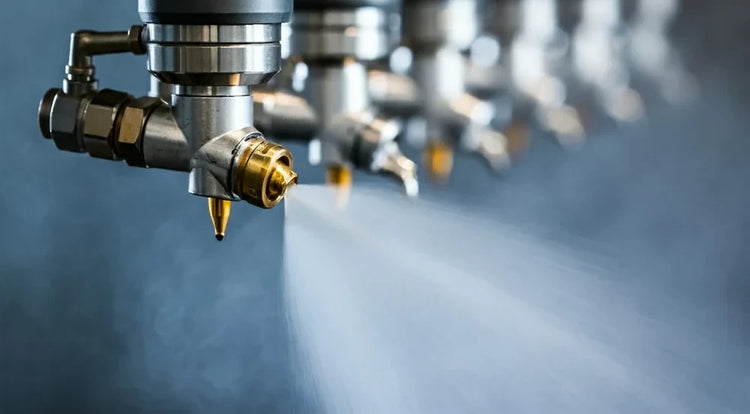
Sprühdüsen für Holzhandling & Entrindung
Hochdruck-Entrindungsdüsen, Stammeswaschdüsen, Hackschnitzelreinigungsdüsen und Rindenentfernungssysteme für Zellstofffabriken, Sägewerke und Holzverarbeitungsanlagen – Wolframkarbid-Verschleißspitzen, Flachstrahl- und Vollkegelsprühbilder, konzipiert für abrasive Siliziumdioxid- und Kieselservice
Sprühsysteme zur Entrindung und Holzvorbereitung arbeiten unter den härtesten Upstream-Bedingungen in einer Zellstoff- oder Papierfabrik. Die Wasserversorgung besteht typischerweise aus Prozesswasser oder Kläranlagenablauf, der Gries, Rindenfeinanteile und Siliziumdioxid enthält – die gleiche abrasive Aufschlämmung, die Standard-Edelstahldüsenöffnungen innerhalb weniger Tage statt Wochen erodiert. Hydraulische Entrindungstrommeldüsen, die bei 10–25 bar gegen einen gemischten Rinden- und Gesteinsstrom arbeiten, sind keine Standard-Industriesprühanwendung – sie sind ein Hochgeschwindigkeits-Erosionstest. Eine Düsenwahl, die dies ignoriert, führt innerhalb weniger Wochen zu Orifizienverschleiß, verbreitert das Sprühbild, reduziert die Aufprallkraft und verringert die Effizienz der Rindenentfernung, genau dann, wenn die Trommel maximal belastet wird.
NozzlePro liefert Hochdruck-Entrindungsdüsen, Stammwaschanlagen, Hackschnitzelbrausen und Rindenentfernungssysteme in Wolframkarbid (WC)-Orifizium-Einsatzkonstruktion für den Einsatz mit abrasivem Prozesswasser. Flachstrahldüsen für gezielten Entrindungsaufprall, Vollkegeldüsen für die Stammwaschabdeckung und luftzerstäubende Düsen für die Konditionierung der Hackschnitzelfeuchte – alle in 316L SS-Gehäusen mit WC-Verschleißeinsätzen, ausgelegt für Betriebsdrücke von 10–80 bar und abrasive Wasserströme. ISO 9001 zertifizierte Fertigung.
Sprühsysteme für die Holzbehandlung und Entrindung in Zellstofffabriken verwenden vier primäre Düsengattungen: Hydraulische Entrindungstrommeldüsen verwenden hochwirksame Flachstrahldüsen (10–25 bar, 15–60 L/min pro Düse, Wolframkarbid-Düseneinsätze), die in rotierenden Trommelverteilern montiert sind – das Flachstrahlmuster konzentriert die hydraulische Kraft auf die Rinden-Holz-Grenzfläche für maximale Schälwirkung bei minimalem Wasservolumen; Stammwaschdüsen verwenden Vollkegeldüsen (5–15 bar, 20–80 L/min pro Position) in Überkopfverteilern über die Breite des Holzdecks, um Sand, Gries, Gestein und Holzrückstände von den Holzoberflächen vor der Entrindung abzuwaschen, um die Trommelinnenausstattung und nachfolgende Zerkleinerungsanlagen vor Abrieb zu schützen; Hackschnitzelwasch- und Reinigungsdüsen verwenden Vollkegel-Brausestangen (3–10 bar) über die Breite des Hackschnitzelförderers, um Rindenfeinanteile, Sand und Gries aus den Hackschnitzelströmen zu entfernen, um die Schmutzpartikelzahl im Zellstoff zu reduzieren und die Innenausstattung des Kochers zu schützen; und Hochdruck-Rindenentfernungsdüsen verwenden Flachstrahl- oder rotierende Düsenbaugruppen (40–80 bar) zur hydraulischen Entrindung schwieriger Holzarten (gefrorene Stämme, dickrindige Laubhölzer), wo die Trommelentrindung allein unzureichend ist. Alle Düsen im abrasiven Holzbehandlungsdienst erfordern Wolframkarbid-Düseneinsätze – Standard-Edelstahl- oder Messingdüsen verschleißen in grieshaltigen Prozesswasserströmen schnell.
Düsenauswahl für Holzhandling & Entrindung
Nach Anwendung oder Düsengattung einkaufen
Anwendungen für Sprühdüsen in der Holzbehandlung und Entrindung
Anwendungsspezifische Düsenempfehlungen für jeden Holzlagerplatz und jede Entrindungsposition
Hydraulische Entrindungstrommeldüsen
Hochwirksame Flachstrahldüsen (10–25 bar, 15–60 L/min pro Düse, WC-Düseneinsätze), die in Verteilern innerhalb oder neben rotierenden Entrindungstrommeln montiert sind, wenden konzentrierte hydraulische Kraft an der Rinden-Holz-Grenzfläche an. Dies ergänzt die mechanische Trommelwirkung, um die gewünschte Entrindungseffizienz (>98 % Rindenentfernung nach Gewicht) über den gesamten Stammdurchmesserbereich zu erreichen. Ein Flachstrahlmuster wird gegenüber einem Vollkegel für die Trommelentrindung bevorzugt, da es die verfügbare hydraulische Energie in eine lineare Aufprallzone im spezifischen Winkel konzentriert, der am effektivsten für das Rindenschälen ist – ein Vollkegel verteilt den gleichen Durchfluss über eine größere Fläche bei geringerem Aufpralldruck. Die Positionierung des Düsenverteilers relativ zur Trommelrotation bestimmt, ob das Spray das Anheben der Rinde unterstützt oder lediglich die Holzoberfläche benetzt – der Sprühvektor sollte entgegen der Holzrotation im für die Rindenart und Holzart spezifischen Rindenhubwinkel ausgerichtet sein. Die Prozesswasserversorgung für Entrindungstrommeln enthält typischerweise Rindenfeinanteile, Gries und Siliziumdioxid aus der Rezirkulation des Trommelsumpfes – WC-Düseneinsätze sind die Mindestanforderung; Keramikeinsätze für Mühlen mit sehr hohem Siliziumdioxidgehalt (Küstenbetriebe im Pazifischen Nordwesten, tropische Hartholzmühlen).
HochdruckdüsenSprühdüsen zur Stammwäsche
Vollkegeldüsen (5–15 bar, 20–80 L/min pro Position) in Überkopfverteileranordnungen über die gesamte Breite des Holzdecks waschen Sand, Gestein, Gries, Holzrückstände und Erde von den Holzoberflächen vor der Entrindung. Die Stammwäsche ist eine vorgeschaltete Schutzinvestition – der Sand und das Gestein, die in Rinde und Holzoberflächen eingebettet ankommen, sind die Hauptursache für den Verschleiß von Hacker-Messern, den internen Trommelverschleiß und den nachfolgenden Abrieb von Siebplatten und Refinerplatten. Ein Stammwaschsystem, das eine 70%ige Griesentfernung vor der Entrindung erreicht, verlängert die Lebensdauer der Hacker-Messer überproportional, da die härtesten, schädlichsten Partikel (Quarz, Feldspat, eingebettetes Gestein) entfernt werden, während sie noch an der Rinde haften, anstatt durch den Trommelaufprall in die Holzoberfläche gedrückt zu werden. Ein Vollkegelstrahlmuster ist für die Stammwäsche korrekt – die Anwendung zielt auf vollständige Oberflächenabdeckung und Griesentfernung ab, nicht auf gerichteten hydraulischen Aufprall. Der Abstand und die Abstandsdistanz des Verteilungsrohrs müssen eine überlappende Abdeckung über den gesamten Stammdurchmesserbereich bei der Auslegungsdurchsatzrate (Stämme pro Stunde) gewährleisten. Die Wasserversorgung für die Stammwäsche ist typischerweise Teichwasser oder Klärüberlauf – filtern Sie Schwebstoffe größer als 3 mm heraus, um ein Verstopfen der Düsenöffnungen zu verhindern.
VollkegeldüsenHackschnitzelwasch- & Reinigungsdüsen
Vollkegel-Brausestangen (3–10 bar, Flachstrahl- oder Vollkegelmuster über die Hackschnitzelfördererbreite) entfernen Rindenfeinanteile, Sand, Siliziumdioxidgries und Holzrückstände aus den Hackschnitzelströmen nach dem Hacker und der Siebung, bevor die Hackschnitzel den Kocher oder das Hackschnitzellager erreichen. Die Hackschnitzelwäsche dient zwei gleichzeitigen Zwecken: der Reduzierung der Schmutzpartikel im Zellstoff (Rinden- und Schmutzflecken, die im fertigen Zellstoff sichtbar sind und zum Versagen der endgültigen Papier- oder Tissuequalität beitragen) und dem Schutz der Kocherinnenflächen und der Kochflüssigkeitsverteilungsdüsen vor Sand- und Griesabrieb. Ein Hackschnitzelwaschsystem, das eine 85%ige Entfernung von Material, das ein 1-mm-Sieb passiert, erreicht, reduziert die Häufigkeit des Austauschs von Kochersiebplatten erheblich – abrasive Feinanteile sind vorzugsweise klein im Durchmesser und konzentrieren sich nach der primären Siebung im Hackschnitzelstrom. Der Düsenabstand und die Durchflussrate der Brausestange müssen auf die Hackschnitzelfördererbreite, die Durchsatzrate (ODt/Tag) und die spezifische Hackschnitzelart und Erntemethode abgestimmt sein – Plantagenhackschnitzel aus entrindeten Stämmen haben geringere Schmutzpartikelzahlen als Resthackschnitzel aus Ernteresten und erfordern eine weniger aggressive Wäsche.
FlachstrahldüsenHochdruck-Rindenentfernungsdüsen
Flachstrahl- oder rotierende Düsenbaugruppen (40–80 bar, 10–40 L/min pro Düse, WC- oder Keramik-Düseneinsätze) für die hydraulische Entrindung von gefrorenen Stämmen, großvolumigen Laubhölzern und schwierigen Holzarten, bei denen die Effizienz der Trommelentrindung unter dem Zielwert liegt. Die hydraulische Entrindung bei 40–80 bar erzeugt eine ausreichende Aufprallkraft, um die Rinden-Kambium-Grenzfläche bei gefrorenen oder dickrindigen Stämmen zu durchdringen und aufzubrechen, die der Trommelwirkung widerstehen – der Mechanismus ist das hydraulische Einklemmen unter der Rinde und nicht das mechanische Anheben und Abschleifen durch die Trommel. Die Düsenstrahlrichtung muss den Hochdruckstrahl parallel zur Rinden-Holz-Grenzfläche im optimalen Winkel für die spezifische Rindenanatomie ausrichten – ein Flachstrahl, der senkrecht zur Holzoberfläche gerichtet ist, entfernt Rindenfragmente durch Aufprall, ist aber weniger effizient als ein Strahl, der so angewinkelt ist, dass er unter die Rindenschicht fährt und diese als Ganzes anhebt. Rotierende Düsenbaugruppen (Spinnerköpfe) wenden den Hydraulikstrahl in einem spiralförmigen Muster an, während der Stamm vorgeschoben wird, und erreichen eine vollständige Abdeckung bei geringerem Wasservolumen als feste Verteiler. Die Wasserfiltration vor hydraulischen Entrindungssystemen mit 40–80 bar ist entscheidend – ein 5 mm großes Sandpartikel im 40-bar-Zustrom trägt ausreichend kinetische Energie, um WC-Einsatzflächen und Pumpendichtungen zu beschädigen.
HochdruckdüsenFeuchtigkeitskonditionierung & Brandverhütung von Hackschnitzellagern
Vollkegel- und Hohlkegel-Sprühdüsen (3–8 bar) in automatisierten Verteileranordnungen über Hackschnitzellagern im Freien bringen Wasser auf, um den Feuchtigkeitsgehalt der Hackschnitzel zu kontrollieren, Staub zu unterdrücken und die Selbstentzündung zu verhindern, die zu Hackschnitzelhaufenbränden führt. Die Selbstentzündung von Hackschnitzeln ist ein biologischer und chemischer Prozess: Mikroorganismen in frischen Hackschnitzeln erzeugen Wärme, wenn sie Holzzucker metabolisieren; diese Wärme beschleunigt die chemische Oxidation von Extrakten und Terpenen, die die Temperatur im Inneren des Haufens weiter erhöht. Die Aufrechterhaltung der Hackschnitzel-Feuchtigkeit über 40–45 Gew.-% durch intermittierendes Oberflächenbesprühen unterdrückt sowohl die biologische Aktivität als auch den chemischen Oxidationsweg – trockene Hackschnitzel unter 30 % Feuchtigkeit haben ein deutlich höheres Risiko der Selbstentzündung und des Brandes. Sprühzyklen (keine kontinuierliche Anwendung) sind der richtige Betriebsmodus – kontinuierliches Besprühen sättigt die Haufenoberfläche und führt zu Feuchtigkeitsabfluss, ohne in die trockenen Innenbereiche einzudringen, wo die Selbstentzündung beginnt. Automatisierte Feuchtigkeitsüberwachung mit Datenlogger-Steuerung der Sprühzykluszeiten erreicht die gewünschte Schüttgutfeuchte bei minimalem Wasserverbrauch und Abfluss. WC-Düseneinsätze sind für die Umwälzung von Prozesswasser erforderlich; Standard-SS ist für Frischwasserversorgungssysteme akzeptabel.
VollkegeldüsenHolzlager-Staubbindung & -Reinigung
Feinstnebel-Düsen (10–50 µm, 20–40 bar) an Förderbandübergabestellen, Hackerhauben und Siebbereichen unterdrücken luftgetragenen Holzstaub, Rindenfeinanteile und Sägemehl, die Explosionsgefahren, Atemwegsgefahren für Arbeiter und Verstöße gegen Genehmigungen verursachen. Holzstaub – insbesondere Feinstaub unter 500 µm von Nadelholzarten – ist brennbar mit einer minimalen Explosionskonzentration (MEK) im Bereich von 40–100 g/m³ und einer minimalen Zündenergie unter 30 mJ, was die Staubkontrolle an Übergabe- und Hackerstellen sowohl zu einer Anforderung der Umweltauflagen als auch zu einer sicherheitskritischen Funktion macht. Die Tröpfchengröße des Nebels, abgestimmt auf die Staubpartikelgrößenverteilung (typischerweise 50–200 µm für Rinden- und Hackschnitzelfeinanteile), erreicht Agglomeration und Abscheidung, ohne Förderbänder zu benetzen oder in kalten Klimazonen gefrorene Ansammlungen zu verursachen. Hochdruck-Flachstrahl-Reinigungsdüsen (100–500 bar fähig, 15–80 bar typisch) reinigen Hackergehäuse, Förderbanddecks, Siebdecks und das Innere von Entrindungstrommeln während geplanter Wartungsintervalle. WC-Düseneinsätze sind für alle Positionen erforderlich, die rezirkuliertes Prozesswasser verwenden.
Wolframkarbid-DüsenDüsenkonfigurationsreferenz — Holzhandling & Entrindung
Empfohlener Düsengattung, Betriebsparameter, Materialspezifikation und wichtige Hinweise
| Anwendung | Düsengattung | Druck / Durchfluss | Material | Wichtiger Hinweis |
|---|---|---|---|---|
| Hydraulische Sprühung in Entrindungstrommeln | Hochwirksamer Flachstrahl | 10–25 bar, 15–60 L/min/Düse | Gehäuse aus 316L SS, WC-Düseneinsatz; Keramik für Mühlen mit hohem Siliziumdioxidgehalt | Flachstrahl konzentriert die hydraulische Kraft an der Rinden-Holz-Grenzfläche; Sprühvektor entgegen der Trommelrotation im Rindenhubwinkel ausgerichtet; WC-Einsatz erforderlich – Prozesswasser transportiert Gries und Rindenfeinanteile aus der Trommelsumpf-Rezirkulation |
| Stammwäsche – vor der Entrindung | Vollkegel Überkopfverteiler | 5–15 bar, 20–80 L/min/Position | Gehäuse aus 316L SS, WC-Einsatz; Versorgungswasser bis 3 mm filtern | Vollkegel für vollständige Oberflächenabdeckung über den gesamten Stammdurchmesserbereich; entfernt Gries und Gestein vor der Trommel – verlängert die Lebensdauer von Hacker-Messern überproportional; überlappende Verteilerabstände berechnet für den Stammdurchmesserbereich und die Durchsatzrate (Stämme/h) |
| Hackschnitzelwaschbrause | Flachstrahl oder Vollkegel-Duschbalken | 3–10 bar über die Förderbreite | Gehäuse aus 316L SS oder HDPE, WC-Einsatz für rezirkuliertes Wasser | Entfernt Rindenfeinanteile und Sand – reduziert die Schmutzpartikelzahl im Zellstoff und schützt die Innenausstattung des Kochers; Düsenabstand und Durchfluss an Förderbreite und Hackschnitzel-ODt/Tag-Durchsatz anpassen; Plantagenhackschnitzel erfordern eine weniger aggressive Wäsche als Hackschnitzel aus Ernteresten |
| Hydraulische Entrindung – gefroren / Hartholz | Flachstrahl oder rotierender Spinner | 40–80 bar, 10–40 L/min/Düse | Gehäuse aus 316L SS, WC- oder Keramik-Einsatz; 5 µm Vorfiltration erforderlich | Strahl parallel zur Rinden-Holz-Grenzfläche für hydraulisches Einklemmen – senkrechter Aufprall ist weniger effizient; rotierende (Spinner-)Baugruppe erreicht spiralförmige Abdeckung bei geringerem Wasservolumen; 5 mm Gries im Zustrom beschädigt Pumpendichtungen und WC-Flächen |
| Feuchtigkeit & Brandverhütung von Hackschnitzellagern | Vollkegel oder Hohlkegelanordnung | 3–8 bar, automatisches Zyklusverfahren | Gehäuse aus 316L SS; WC bei rezirkuliertem Wasser; SS akzeptabel für Frischwasser | Intermittierendes Zyklusverfahren – nicht kontinuierlich – erreicht die gewünschte Schüttgutfeuchte (40–45 %) ohne Oberflächenabfluss; automatisierte Feuchtigkeitsüberwachung steuert die Zykluszeit; unterdrückt biologische und chemische Selbstentzündungswege in frischen Hackschnitzellagern |
| Holzstaubunterdrückung | Feinstnebel / Nebel — WC-Düse | 20–40 bar, 10–50 µm Tröpfchen | Gehäuse aus 316L SS, WC-Einsatz; pneumatische Betätigung in Staubgefahrenzonen | Tröpfchengröße abgestimmt auf Staub-PSD (50–200 µm für Rinden-/Hackschnitzelfeinanteile) zur Agglomeration; Holzstaub-MEK 40–100 g/m³ – Explosionsgefahr an Förderbandübergaben; bedarfsgesteuerte Aktivierung durch Staubmonitore; Bänder in kalten Klimazonen nicht übernässen |
| Hacker & Siebdeck-Reinigung | Hochdruck-Flachstrahl | 15–80 bar, 10–50 L/min/Düse | 316L SS Gehäuse, TC-Einsatz; Keramik für hochkieselige Anwendungen | Reinigung der Hackergehäuse-Innenteile, Siebplatten und Entrindungstrommel-Innenteile während Wartungsfenstern; sequentielle Reinigung von innen nach außen, um das Wiedereintauchen von kontaminiertem Wasser in saubere Zonen zu verhindern; TC-Einsatz Minimum für jeden Umlasswasser-Betrieb |
Prinzipien zur Düsenwahl für Holzhandling & Entrindung
Was die korrekte Spezifikation in der gesamten Holzlagerplatz- und Entrindungsanwendung bestimmt
- Wolframcarbid-Düseneinsätze sind die Mindestspezifikation für jede Entrindungs- oder Stammwaschposition – kein Upgrade — Das Prozesswasser, das durch ein Entrindungstrommelsystem zirkuliert, ist kein sauberes Wasser. Es enthält Rindenfeinteile (mit abrasiven Lignitmineral-Einschlüssen), Siliziumdioxidpartikel, die von Holzoberflächen abgeschliffen wurden, Sand- und Gesteinsfragmente von Holzfällerplätzen und gelegentlich Metallfragmente von Holzfällergeräten. Eine Standard-Düse aus 316L SS hat eine Vickershärte von ca. 200 HV. Siliziumdioxid (Quarz) hat eine Vickershärte von 800–1.000 HV. Wenn schmutzbeladenes Wasser mit 10–25 bar durch eine Edelstahldüse strömt, wirken die Quarzpartikel als kontinuierliches Schleifmittel gegen eine wesentlich weichere Metalloberfläche — die Düse erodiert. Wolframcarbid hat eine Vickershärte von 1.400–1.800 HV und bietet somit die 7–9-fache Härte des Edelstahlgehäuses und übertrifft die Siliziumdioxidhärte bei weitem. TC-Einsatzdüsen im Entrindungsdienst halten typischerweise 6–18 Monate, abhängig von der Schmutzbelastung und dem Betriebsdruck; Standard-Edelstahldüsen im gleichen Dienst halten 1–4 Wochen, bevor sich der Düsendurchmesser so weit erweitert hat, dass die Aufprallkraft messbar reduziert und der Wasserverbrauch erhöht wird. Spezifizieren Sie TC-Einsätze für jede Düsenposition, die Prozesswasser, Teichwasser oder rezirkuliertes Wasser im Holzhandlingsdienst verwendet — nicht nur für die Hochdruckpositionen.
- Flachstrahlmuster für Entrindungsaufprall; Vollkegelstrahlmuster für Stammwaschabdeckung – sie sind nicht austauschbar — Die Wahl des Sprühbildes für Holzhandlingsanwendungen hängt davon ab, ob das Anwendungsziel eine gerichtete hydraulische Kraft (Entrindung) oder eine Flächenabdeckung und Oberflächenspülung (Waschen) ist. Flachstrahldüsen konzentrieren den verfügbaren Fluss und Druck in einer linearen Sprühzone – bei einer gegebenen Durchflussrate und einem gegebenen Druck liefert ein Flachstrahl 3–5 mal höhere Aufprallkraft pro Flächeneinheit an der Zieloberfläche als ein Vollkegelstrahl bei gleichem Fluss und Druck. Diese Konzentration ist genau das, was die Entrindung erfordert: Die Rinden-Holz-Grenzfläche ist eine schmale Zone, und das Anwenden hydraulischer Kraft über eine große Fläche mit geringerer Intensität ist weniger effektiv als das Anwenden in einer fokussierten Linie im spezifischen Hebewinkel. Vollkegeldüsen verteilen den gleichen Fluss und Druck über eine kreisförmige oder elliptische Abdeckungsfläche – bei der Stammwäsche und Spänewäsche ist das Ziel eine vollständige Oberflächenabdeckung und die Entfernung von Schmutz von allen Oberflächen, was von der gleichmäßigen Flächenabdeckung eines Vollkegelstrahls profitiert. Die Verwendung von Vollkegeldüsen für die hydraulische Entrindungsunterstützung reduziert die Aufprallkraft pro Flächeneinheit und verschlechtert die Entrindungseffizienz; die Verwendung von Flachstrahldüsen für die Stammwäsche erzeugt Abdeckungslücken zwischen benachbarten Düsenabdeckungszonen und hinterlässt Schmutz auf den Holzoberflächen in den nicht abgedeckten Bereichen.
- Stammwäsche vor dem Entrinden hat einen unverhältnismäßig großen Einfluss auf den nachgeschalteten Verschleiß im Vergleich zu ihrem offensichtlichen Beitrag — Der wirtschaftliche Nutzen von Stammwaschsystemen wird oft unterschätzt, da der Vorteil indirekt erscheint — die Düsen waschen die Stämme, und das Ergebnis ist eine längere Lebensdauer der Hacker-Messer. Der Mechanismus ist spezifischer: Die schädlichsten abrasiven Partikel auf dem Holzlagerplatz (eingelagerte Gesteinsfragmente, quarzreicher Boden, dichte Silikatmineralien) sind unverhältnismäßig häufig in der Rinde und auf den Holzoberflächen als Holzrückstände vorhanden. Diese Partikel sind härter als der Stahl von Hacker-Messern, Trommel-Innenteilen und Siebplatten, und sie sind härter als das Siliziumkarbid-Schleifmittel in Schleifscheiben, die zum Nachschleifen von Hacker-Messern verwendet werden. Eine Hacker-Messerschneide, die durch ein einziges eingelagertes Gesteinsfragment von 5–10 mm stumpf wird, muss nachgeschliffen werden, um die Geometrie wiederherzustellen — das Nachschleifen entfernt Material und verkürzt die Lebensdauer der Messer. Die Stammwäsche bei 5–15 bar mit Vollkegeldüsen entfernt 70–85 % des Oberflächenschmutzes vor dem Entrinden und dem Trommelaufprall, was sich direkt in verlängerten Messerwechselintervallen niederschlägt. Mühlen, die die Messerlebensdauer als Wartungs-KPI verfolgen, berichten konsequent über 30–60 % längere Messerintervalle nach der Installation oder Verbesserung von Stammwaschsystemen — eine Reduzierung der Wartungskosten, die die Investitionskosten des Waschsystems im ersten Betriebsjahr übertrifft.
- Der Strahlwinkel der hydraulischen Entrindungsdüse relativ zur Rinden-Holz-Grenzfläche bestimmt die Effizienz – nicht der Druck allein — Die hydraulische Entrindung bei 40–80 bar funktioniert über zwei Mechanismen: direkten Aufprall, der das Rindengewebe aufbricht, und hydraulisches Keilen, wo der Strahl die Rinden-Kambium-Grenzfläche durchdringt und die Rinde als Schicht vom darunter liegenden Holz abhebt. Der Keilmechanismus ist effizienter – er entfernt große Rindenabschnitte mit einem einzigen Durchgang – erfordert aber, dass der Strahl parallel oder in einem geringen Winkel (<30°) zur Rindenoberfläche gerichtet ist und nicht senkrecht dazu. Ein Strahl, der direkt senkrecht (90°) zur Holzoberfläche bei 60 bar gerichtet ist, erzeugt maximale Aufprallkraft auf die Rindenoberfläche, aber minimale Penetration der Grenzfläche – Rinde wird als kleine Fragmente durch Aufprall entfernt und nicht als Schichten durch Keilen. Die gleiche Düse bei 60 bar, die in einem Winkel von 15–20° zur Holzoberfläche gerichtet ist, durchdringt die Rinden-Kambium-Grenzfläche, baut hydraulischen Druck zwischen Rinde und Holz auf und hebt Rindenabschnitte von 10–30 cm Länge bei jedem Durchgang ab. Das Design der Düsenanordnung für die hydraulische Entrindung muss den Strahlwinkel für den spezifischen Rindentyp festlegen (Nadelholzrinde mit 0,5–3 mm Dicke reagiert anders als Laubholzrinde mit 5–15 mm Dicke) – die Winkeloptimierung für eine neue Speziesinstallation sollte empirisch mit Teststämmen bei 3–5 Strahlwinkeln durchgeführt werden, bevor eine feste Verteilergeometrie festgelegt wird.
- Die Verhinderung der Selbsterwärmung des Hackschnitzelstapels erfordert intermittierendes Sprühen – kontinuierliches Sprühen ist sowohl ineffektiv als auch verschwenderisch — Die Selbsterwärmung des Hackschnitzelstapels beginnt im trockenen Inneren des Stapels, nicht an der benetzten Oberfläche. Kontinuierliches Oberflächensprühen hält die oberen 0,5–1,0 m des Stapels auf dem Zielfeuchtigkeitsgehalt, während das Innere – wo die Temperaturen in schweren Fällen 60–80 °C erreichen können – trocken bleibt und sich weiter erwärmt. Der richtige Ansatz zur Feuchtigkeitsregulierung ist intermittierendes Sprühen, das darauf ausgelegt ist, Feuchtigkeit in die Stapelmasse einzudringen, anstatt nur die Oberflächenfeuchtigkeit aufrechtzuerhalten. Längere Sprühzyklen (15–30 Minuten an) bei geringerer Frequenz ermöglichen das Eindringen von Wasser, bevor es verdunstet; kürzere Hochfrequenzzyklen halten nur die Oberflächenfeuchtigkeit aufrecht, ohne den inneren Nutzen. Der spezifische Zykluszeitpunkt hängt von der Stapelhöhe und -durchlässigkeit ab (kleinere Hackschnitzel sind weniger durchlässig und erfordern längere Sprühzyklen, um die Feuchtigkeitsdurchdringung zu erreichen), der Holzart (extrakthaltige Arten wie Kiefer neigen eher zur Selbsterwärmung und erfordern ein aggressiveres Feuchtigkeitsmanagement) sowie der Umgebungstemperatur und Luftfeuchtigkeit (höhere Temperatur und niedrigere Luftfeuchtigkeit erhöhen die Verdunstungsrate und Trocknung). Automatisierte Feuchtigkeitsüberwachung in mehreren Stapeltiefen – nicht nur der Oberflächenfeuchtigkeit – ist die einzige zuverlässige Methode, um zu bestätigen, dass das Sprühen die Zielfeuchtigkeitsmenge im Stapelzentrum erreicht, wo die Selbsterwärmung beginnt.
Warum NozzlePro für Holzhandling & Entrindung wählen?
TC-Verschleißteile, Hochdruckkonstruktion und Anwendungstechnik für abrasive Holzlagerplatzanwendungen
Wolframcarbid-Düsen für abrasives Prozesswasser – ISO 9001 zertifiziert
NozzlePro liefert Hochdruck-Entrindungsdüsen, Stammwaschanlagen-Düsen, Hackschnitzelduschen und Sprühausrüstung für Holzlagerplätze mit Wolframcarbid-Düseneinsätzen standardmäßig für Prozesswasseranwendungen. Die ISO 9001 zertifizierte Fertigung gewährleistet eine konsistente TC-Einsatzgeometrie und Düsenabmessungen – ein Ersatzdüsensatz liefert den gleichen Sprühwinkel, die gleiche Aufprallkraft und Durchflussrate wie das Original, wodurch die allmähliche Drift der Entrindungseffizienz vermieden wird, die durch erodierte Düsen entsteht.
Materialauswahl für abrasive Anwendungen: Standard 316L SS Gehäuse mit TC-Einsatz für typische Entrindungs- und Stammwaschanwendungen. Keramikeinsatz (Aluminiumoxid oder Siliziumkarbid) für Mühlen mit sehr hohem Siliziumdioxidgehalt – Pazifischer Nordwesten Küstenholzversorgung, tropische Hartholzbetriebe oder Mühlen, die hochtrübes Klaratorüberlaufwasser als Prozesswasser verwenden. Wir geben Materialempfehlungen basierend auf Ihren Wasserqualitätsdaten (suspendierte Feststoffe, Partikelgrößenverteilung, Siliziumdioxidgehalt) – Ihr Wartungsteam überprüft die Standzeit im Betrieb und passt die Austauschintervalle entsprechend an.
Unterstützung für Hochdrucksysteme: Düsenspezifikationen für 40–80 bar hydraulische Entrindungssysteme, einschließlich Strahlabwinkelungsempfehlungen für gängige Rindensorten, Durchflussdaten zur Pumpenauslegung und Berechnungen der Verteilerabstände für den Stammdurchmesserbereich und den Durchsatz. Düsenleistungsdaten werden für die Systemkonstruktion Ihres Ingenieurteams bereitgestellt – NozzlePro konstruiert keine kompletten Entrindungssysteme, unterstützt aber die Düsenauswahl und -spezifikation innerhalb des Systemdesigns Ihres Ingenieurs oder OEMs.
Vollständige Abdeckung des Holzlagerplatzes: Jede Sprühposition vom Holzdeck bis zur Spänelagerung – konsistente TC-Konstruktion und dokumentierte Durchflussleistung aus einer einzigen ISO 9001 zertifizierten Quelle, die eine planbare Wartungsplanung und terminierte Düsenwechselintervalle unterstützt.
Häufig gestellte Fragen
Häufige Fragen zu Entrindungsdüsen, Stammwaschanlagen und Hackschnitzelreinigung in Zellstofffabriken
Warum verschleißen Entrindungsdüsen so schnell und welches Düsenmaterial verlängert die Lebensdauer?
Der Verschleiß von Entrindungsdüsen wird durch den Gehalt an abrasiven Partikeln im Prozesswasser verursacht, nicht allein durch Druck oder Durchfluss. Entrindungstrommelsysteme rezirkulieren Trommelsumpfwasser, das Rindenfeinteile, Siliziumdioxidpartikel, Holzsand und -schmutz sowie mineralische Einschlüsse von Holzoberflächen enthält. Dieser Wasserstrom ist im Wesentlichen eine verdünnte abrasive Suspension – er enthält Partikel (Quarz, Feldspat, Gesteinsfragmente) mit einer Vickershärte von 800–1.200 HV, die mit hoher Geschwindigkeit unter 10–25 bar Druck durch Düsenöffnungen strömen. Standard-Edelstahl 316L hat eine Vickershärte von ca. 200 HV – das Düsenmetall ist viel weicher als die abrasiven Partikel im Wasserstrom, und die Erosion schreitet schnell voran. Typischer Edelstahl-Düsenverschleiß im Entrindungsdienst: messbare Zunahme des Düsendurchmessers innerhalb von 1–2 Wochen nach der Installation, 15–25% Durchmesservergrößerung innerhalb von 4–6 Wochen und sichtbare Verschlechterung des Sprühbildes (erweiterter Winkel, reduzierte Aufprallkraft) innerhalb von 6–8 Wochen. Wolframcarbid (TC)-Einsätze mit 1.400–1.800 HV verlängern die Lebensdauer im gleichen Dienst um 6–18 Monate – der Härteunterschied relativ zu Siliziumdioxid ist entscheidend, nicht nur die absolute Härte. Für Mühlen mit sehr hohem Siliziumdioxidanteil (pazifische Nordwestküste mit verwitterten Granitböden, tropische Hartholzmühlen mit Laterit-Ton) bieten Siliziumcarbid-Keramikeinsätze (2.000–2.500 HV) eine weitere Lebensdauerverbesserung. Die Entscheidung zwischen TC und Keramik: TC-Einsätze sind zäher (stoßfester) und werden bevorzugt, wenn gelegentlich große Partikel oder Ablagerungen auf die Düsenfläche treffen können; Keramikeinsätze sind härter, aber spröder und eignen sich für konstant feine Abrasiva mit geringerem Risiko von Stoßschäden. Überwachen Sie die tatsächlichen Düsenabmessungen bei jeder geplanten Inspektion (monatlich ist typisch für den Entrindungsdienst) und ersetzen Sie Sätze, wenn der Düsendurchmesser um 10% zugenommen hat – zu diesem Zeitpunkt hat sich die Aufprallkraft um ca. 20% verringert und der Wasserverbrauch um ca. 21% erhöht.
Was ist der richtige Betriebsdruck für hydraulische Entrindungstrommeldüsen?
Der korrekte Betriebsdruck für hydraulische Entrindungstrommeldüsen hängt von der Holzart, dem Rindentyp, dem Stammdurchmesser und davon ab, ob die Stämme frisch oder gefroren sind – der praktische Arbeitsbereich für die meisten Trommelentrindungsbetriebe liegt jedoch bei 10–25 bar am Düseneingang. Unter 10 bar ist die hydraulische Aufprallkraft unzureichend, um die Rindenhaftung zu überwinden, und der Sprühstrahl bewirkt hauptsächlich Benetzung statt Entrindungsunterstützung – die mechanische Wirkung der Trommel muss die gesamte Arbeit ohne hydraulische Unterstützung leisten. Über 25 bar ist die inkrementelle Zunahme der Entrindungseffizienz gering im Verhältnis zur Zunahme des Wasserverbrauchs, der Pumpenenergie und der Düsenverschleißrate – die Rinden-Holz-Grenzfläche hat eine endliche Haftfestigkeit und hydraulische Kraft, die weit über diesem Schwellenwert liegt, verbessert die Rindenentfernung nicht proportional. Die Ausnahmen: Gefrorene Stämme in Winterbetrieben nordischer Mühlen erfordern 20–30 bar, da die Rinden-Holz-Verbindung dramatisch stärker wird, wenn die Kambiumschicht gefroren ist – einige Mühlen schalten saisonal auf eine höhere Druckeinstellung um. Dickrindige Harthölzer (tropische Arten, reife Douglasie, großformatige Eiche) können für eine effiziente Trommelunterstützung 30–40 bar an der Düse erfordern. Praktische Drucküberprüfung: Messen Sie die Entrindungseffizienz (Restrinde als Prozentsatz der eingehenden Rinde nach Gewicht, typischerweise ausgedrückt als Rinde auf Hackschnitzeln in kg Rinde pro Tonne Hackschnitzel, mit einem Zielwert unter 0,3–0,5 kg/atro Tonne für Nadelholz-Sulfat) bei Betriebsdruck, erhöhen Sie dann den Druck inkrementell um 2–3 bar und überprüfen Sie erneut – wenn sich die Effizienz verbessert, ist ein höherer Druck gerechtfertigt; wenn die Effizienz unverändert bleibt, ist der begrenzende Faktor die Trommelverweilzeit oder die Stammzuführung, nicht die hydraulische Kraft. Überwachen Sie den Pumpenauslassdruck und den Düseneingangsdruck separat – der Druckabfall durch die Verteilerrohrleitungen kann dazu führen, dass der Düseneingangsdruck bei hohen Durchflussraten 3–8 bar unter dem Pumpenauslass liegt.
Wie wirkt sich die Stammwäsche vor dem Entrinden auf die Hackschnitzelqualität und den Verschleiß der nachgeschalteten Anlagen aus?
Die Stammwäsche vor dem Entrinden behebt die Hauptursache der anorganischen Verunreinigung im Hackschnitzelstrom: Oberflächenschmutz, eingebettetes Gestein und mineralhaltiger Boden, der während der Holzernte, des Transports und der Lagerung auf dem Holzlagerplatz an Rinde und Holzoberflächen haftet. Diese Verunreinigung gelangt durch die Entrindungstrommel (wo der Trommelaufprall einen Teil davon tiefer in die Holzoberfläche einbettet) in den Hacker, wo sie mit hoher Relativgeschwindigkeit die Schneiden der Hacker-Messer berührt. Der Effekt auf die Hackschnitzelqualität ist messbar als Aschegehalt (anorganischer Mineralrückstand nach der Verbrennung) und Schmutzzahl (dunkle Flecken im Zellstoffblatt, hauptsächlich Rinden- und Mineralursprungs). Mühlen, die den Aschegehalt verfolgen, sehen typischerweise eine Reduzierung des Hackschnitzel-Aschegehalts um 15–30 % nach der Implementierung oder Verbesserung der Stammwäsche – von 0,4–0,8 % Asche auf 0,3–0,5 % Asche bei Nadelholz-Sulfathackschnitzeln – was zu einer saubereren Kochlauge, einer geringeren Ätzlast und einer geringeren Zellstoffschmutzzahl in der Bleicherei führt. Der Effekt auf den nachgeschalteten Verschleiß ist wirtschaftlich signifikanter: Hacker-Messer sind das Verbrauchsmaterial mit den höchsten Stückkosten im Holzraum. Eingebetteter Quarz und Gestein in ungehackten Holzoberflächen berühren die Schneiden der Hacker-Messer direkt, und ein einzelnes großes eingelagertes Gesteinsfragment kann einen Messersatz in einem einzigen Durchgang stumpf machen. Die Stammwäsche, die 70–85 % des Oberflächenschmutzes vor dem Hacker entfernt, reduziert den Kontakt harter Partikel mit den Messer schneiden proportional – Mühlen berichten konsequent über eine Verbesserung der Messerwechselintervalle um 30–60 %, wobei einige eine 2-fache Verbesserung nach dem Upgrade von keiner Wäsche auf vollständige Stammwaschanlagen berichten. Die Investitionskosten einer ordnungsgemäß ausgelegten Stammwaschanlage mit TC-Düsen über einem Standard-Holzdeck werden typischerweise innerhalb der ersten 6–12 Betriebsmonate durch vermiedene Messerbeschaffungs- und Schleifkosten wieder hereingeholt.
Wie sollten Hackschnitzelduschbalken für die Abdeckung von Hackschnitzelförderbändern ausgelegt werden?
Das Design von Hackschnitzelduschbalken erfordert die gleichzeitige Spezifikation von vier Variablen: Abdeckung der Förderbandbreite, Hackschnitzelbetttiefe, Durchsatzrate (ODt/h) und verfügbarer Wasserdruck. Abdeckung der Förderbandbreite: Der Düsenabstand des Duschbalkens sollte eine überlappende Sprühabdeckung über die gesamte Förderbandbreite ohne trockene Spuren gewährleisten – bei Vollkegeldüsen bei 5–10 bar wird ein typischer 0%-Überlappungsabstand (Kante-zu-Kante-Abdeckung) bei einem Abstand erreicht, der dem 0,7-fachen des Abdeckungsdurchmessers an der Hackschnitzelbettoberfläche entspricht. Bei einem 1,2 m breiten Hackschnitzelförderband mit Vollkegeldüsen, die einen Abdeckungsdurchmesser von 0,4 m bei einem Abstand von 0,5 m über dem Hackschnitzelbett bieten, gewährleistet ein Düsenabstand von 0,25–0,30 m eine vollständige Abdeckung mit 20–30 % Überlappung. Hackschnitzelbettdurchdringung: Ein einzelner Duschbalken benetzt die Oberfläche des Hackschnitzelbetts – Hackschnitzel in der Mitte des Betts erhalten weniger Wasser als Oberflächenhackschnitzel. Für eine gründliche Wäsche sorgen zwei Duschbalkenreihen mit einem Abstand von 1,0–1,5 m für eine sequentielle Benetzung und ermöglichen das Ablaufen des Wassers der ersten Reihe durch das Bett, bevor die zweite Reihe angewendet wird. Durchsatzanpassung: Die Durchflussrate pro Duschbalken muss ausreichen, um das Ziel-Wasser-zu-Hackschnitzel-Verhältnis bei der Auslegungsdurchsatzrate zu erreichen. Typische Zielwerte sind 0,5–1,5 m³ Wasser pro ODt Hackschnitzel für eine effektive Sand- und Rindenentfernung. Druck: 3–8 bar ist der Arbeitsbereich für die Hackschnitzelwäsche – über 8 bar kann der Sprühaufprall Hackschnitzel zerbrechen und Feinteile erzeugen, die in den Hackschnitzelstapel gelangen; unter 3 bar ist die Sprühbildentwicklung bei einigen Flachstrahldüsentypen unzureichend. TC-Düseneinsätze sind für Hackschnitzelwaschpositionen erforderlich, die rezirkuliertes Weißwasser, Pressfiltrat oder Klaratorüberlauf verwenden – eine saubere Frischwasserversorgung ermöglicht Standard-SS-Düsen.
Welches Sprühsystemdesign verhindert die Selbsterwärmung und Brandgefahr von Hackschnitzellagern im Freien?
Die Prävention der Selbsterhitzung von Hackschnitzelhäufen durch Sprühfeuchtemanagement adressiert die zwei beitragenden Mechanismen: biologische Wärmeerzeugung durch mikrobiellen Abbau von Holzzuckern und chemische Wärme durch Oxidation von Holzextrakten (Terpene, Harzsäuren). Beide Mechanismen werden bei einem Hackschnitzelfeuchtigkeitsgehalt von über 40–45 Gewichtsprozent deutlich unterdrückt – unter 30 % beschleunigen sich beide Mechanismen, und die Hackschnitzeltemperaturen können im Inneren der Haufen innerhalb weniger Tage nach frischer Hackschnitzelansammlung 60–80 °C erreichen. Die Anforderungen an das Sprühsystemdesign für ein effektives Feuchtigkeitsmanagement: Abdeckung der gesamten Haufenoberfläche mit gleichmäßiger Anwendung, nicht nur der Haufenperimeter; automatisierte Zyklussteuerung, die eine Feuchtigkeitspenetration statt einer Oberflächensättigung erreicht; und Überwachung der Haufenschüttfeuchtigkeit in mehreren Tiefen, nicht nur der Oberflächenfeuchtigkeit. Die praktische Anordnung des Sprühsystems für Hackschnitzelhaufen im Freien: oszillierende oder fest installierte Verteilersprühdüsen (Vollkegel, 3–8 bar) an den Haufenseiten und an Überkopf-Auslegern für Flachdachhaufen, wobei die Sprühabdeckungsdichte für die Haufenoberfläche bei der Zielwasserauftragsrate berechnet wird. Zyklussteuerung: Feuchtigkeitssensoren (Kapazitätssonden oder Neutronenfeuchtemessgeräte) in 1–3 m Haufentiefe liefern Rückmeldungen an die Sprühzyklussteuerung – wenn die Schüttfeuchtigkeit in der Tiefe unter das Ziel fällt (typischerweise 38–42 % für Nadelholzstapel), wird ein Sprühzyklus aktiviert. Die Zyklusdauer und das Intervall werden für die Haufenpermeabilität, Haufenhöhe und Umgebungsbedingungen kalibriert. Integration der Branddetektion: Temperatursensoren in mehreren Haufentiefen, die an dasselbe Steuerungssystem angeschlossen sind – überschreitet die Haufentemperatur an einer beliebigen Sensorposition 55 °C, aktiviert sich das Sprühsystem im Brandunterdrückungsmodus (kontinuierliches Sprühen statt zyklischem) und löst einen Wartungsalarm zur Haufeninspektion aus. Alle Düsenhardware an Hackschnitzelsystemen im Freien sollte aus TC-Einsätzen bestehen – Teichwasser, Oberflächenabflussrezirkulation oder Hackschnitzelplatzentwässerung liefern alle eine ausreichende abrasive Belastung, um Standard-Edelstahldüsen innerhalb einer einzigen Heizsaison zu erodieren.
Sprechen Sie mit einem NozzlePro Holzhandhabungs- und Entrindungsspezialisten
Teilen Sie uns Ihre Holzart, die Konfiguration Ihrer Entrindungstrommel, die Qualität Ihres Prozesswassers und Ihren Hackschnitzeldurchsatz mit – wir spezifizieren TC-Einsatz-Hochdruckdüsen, Holzwaschverteilerdüsen und Hackschnitzelduschen mit anwendungstechnischer Unterstützung für jede Sprühposition im Holzlager.