
Spülung von pharmazeutischen Tanks &
Behältern
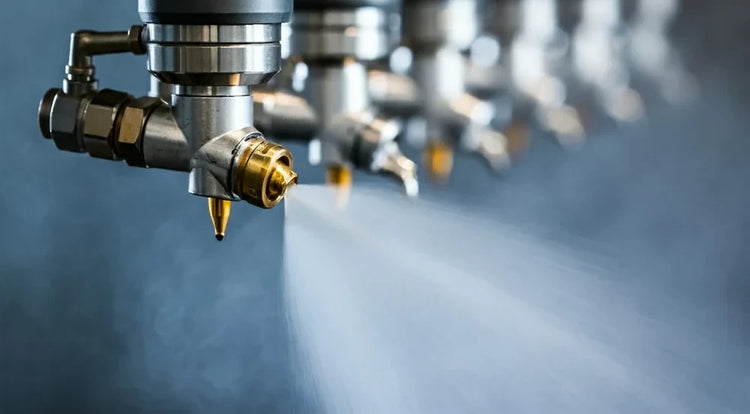
Jeder pharmazeutische Mischbehälter, Vorratstank, Pufferansatzbehälter und Lagertank muss zwischen Chargen, zwischen Kampagnen und im Rahmen der routinemäßigen Anlagenreinigung gespült werden. Eine Sprühkugel oder ein rotierendes Sprühgerät, das durch den Mannloch des Behälters eingeführt und an eine Reinigungszuleitung angeschlossen wird, sorgt für eine Innenabdeckung, die durch manuelles Spülen mit einem Schlauch nicht erreicht werden kann – sie erreicht den oberen Dom, die Seitenwände, den Bereich hinter den Rührwerkswellenabdichtungen und den Behälterboden, ohne dass Personal in den Behälter gelangen muss. NozzlePro liefert statische Sprühkugeln, rotierende Sprühköpfe und Sprühlanzen für die Behälterspülung in der gesamten Bandbreite pharmazeutischer und biotechnologischer Behältergrößen.
Wenn eine Sprühkugel oder ein rotierendes Sprühgerät in einen Behälter eingesetzt und an eine Wasser- oder Reinigungslösungszufuhr angeschlossen wird, verteilt es Flüssigkeit über die innere Oberfläche durch ein Muster präzise dimensionierter Öffnungen. Der Fluss aus diesen Öffnungen benetzt die Behälterwände, transportiert Produktrückstände die Seitenwände hinunter zum Boden und sammelt sich am Behälterablauf. Ein richtig dimensioniertes Sprühgerät bei ausreichendem Versorgungsdruck benetzt die gesamte innere Oberfläche – einschließlich des oberen Doms – ohne manuelles Schrubben oder den Behältereintritt des Bedieners zu erfordern. Die entscheidende Auswahlvariable ist die Anpassung des Sprühgerätetyps und der Größe an den Innendurchmesser, die Höhe und die innere Geometrie des Behälters.
Für einfache Spülanwendungen – Puffervorbereitungstanks, Wassersystem-Vorratstanks und einfache Mischbehälter zwischen Chargen desselben Produkts – ist eine statische Sprühkugel die praktischste Wahl. Für Behälter mit komplexen Innenarmaturen, starken Produktrückständen aus hochkonzentrierten APIs oder viskosen Hilfsstoffen oder für Anlagen, die validierte Reinigungsverfahren verwenden, die eine dokumentierte Sprühbedeckung erfordern, bietet ein rotierendes Gerät eine höhere Aufprallenergie und ein besseres Eindringen in Schattenzonen. NozzlePro bietet beide Gerätetypen in Größen von kleinen Laborbehältern bis hin zu großen Produktionstankformaten.
Mischbehälter, Puffer- und Medientanks, Wassersystemtanks und Prozessbehälter
Spülung von Misch- und Rührbehältern
Produktwechsel und routinemäßige Spülung zwischen ChargenPharmazeutische Mischbehälter – die für flüssige Formulierungen, Suspensionsmischungen und die Vermischung von Hilfsstoffen verwendet werden – sammeln Produktrückstände an den Behälterwänden, um die Rührwerkswellenabdichtungen, an der Bodenauslassbaugruppe und im Dampfraum über dem Flüssigkeitsspiegel an. Nach einer Produktionscharge wird der Behälter abgelassen und gespült, bevor die nächste Charge beginnt. Eine durch das obere Mannloch eingeführte Sprühkugel liefert Spülwasser oder Reinigungslösung an alle Innenflächen, einschließlich des Doms und des Bereichs unmittelbar unterhalb des Mannlochflansches, ohne dass der Rührer entfernt oder der Behälter manuell gereinigt werden muss.
Spülung von Puffer- und Medienvorbereitungstanks
Biotechnologische und Zellkultur-Unterstützungsbehälterreinigung zwischen ChargenPufferansatzbehälter und Medienmischbehälter in biotechnologischen und zellkulturellen Produktionsanlagen müssen zwischen jeder Puffer- oder Mediencharge gespült werden. Puffer- und Medienrückstände, die aus der vorherigen Charge im Behälter verbleiben, führen zu Fehlern in der Ionenstärke, pH-Verschiebungen und Nährstoffverschleppung in die nächste Zubereitung. Die Spülung ist typischerweise unkompliziert – wässrige, rückstandsarme Produkte in glattwandigen Edelstahltanks – was statische Sprühkugeln zur Standardwahl macht. Die Häufigkeit ist jedoch hoch: In einem stark frequentierten biotechnologischen Supportbetrieb können Pufferansatzbehälter vier- bis achtmal täglich gespült werden, wodurch die Haltbarkeit des Sprühgeräts und die Benutzerfreundlichkeit die primären Auswahlfaktoren sind.
Wartung von gereinigten Wasser- und WFI-Lagertanks
Innenreinigung von Wassersystem-Vorratstanks zwischen SanitärzyklenLagertanks für gereinigtes Wasser und WFI werden in regelmäßigen Abständen mit heißem Wasser, Dampf oder chemischen Desinfektionsmitteln desinfiziert. Zwischen den vollständigen Desinfektionszyklen erfordern die Innenflächen der Wasserspeichertanks eine Sichtprüfung und, periodisch, eine Spülreinigung, um Mineralablagerungen, Biofilmbildner und jegliche Partikel zu entfernen, die sich während des normalen Betriebs abgesetzt haben. Eine fest an der Tankzuleitung installierte oder durch das Mannloch für periodische Spülzyklen eingeführte Sprühkugel verteilt Spülwasser oder heiße Desinfektionslösung in den Tankinnenraum, ohne dass der Tank für die manuelle Reinigung außer Betrieb genommen werden muss.
Unterstützung bei der Spülung von Prozessbehältern & Reaktoren
Rotierende Sprühgeräte für komplexe Geometrien und Behälter mit höheren RückständenProzessbehälter in der pharmazeutischen API-Syntheseunterstützung, Fermentationsunterstützung und chemischen Prozessbereichen haben eine komplexere interne Geometrie – Spiralwärmetauscher, mehrstufige Rührwerke, Tauchrohre und Bodenauslassbaugruppen – und verarbeiten oft chemische Substanzen mit höheren Rückständen als Reinraum-Formulierungsbehälter. Diese Anwendungen übertreffen das, was eine statische Sprühkugel zuverlässig abdecken kann, und profitieren von rotierenden Sprühgeräten, die einen höheren mechanischen Aufprall und eine flächendeckende Reinigung durch Schattenzonen um interne Armaturen herum bieten.
So dimensionieren Sie eine Sprühkugel für Ihren Behälter
Drei Parameter bestimmen, ob eine Sprühkugel in Ihrem Behälter eine ausreichende Abdeckung bietet: der Abdeckungsradius bei Ihrem Versorgungsdruck, die Einbauhöhe im Behälter und das Lochmuster relativ zur internen Geometrie des Behälters.
Abdeckungsradius: Der kritische Parameter
Der Abdeckungsradius einer Sprühkugel ist der maximale Abstand vom Mittelpunkt der Kugel, bei dem die Sprühstrahlen einen ausreichenden Fluss liefern, um die Behälterwand zu benetzen und zu spülen. Der Abdeckungsradius nimmt mit dem Versorgungsdruck zu und mit dem Grad der Behälterverschmutzung ab – ein stark verschmutzter Behälter erfordert einen höheren Aufprall (höherer Druck, kleinerer Radius) als ein leicht verschmutzter Behälter. Als praktische Richtlinie für Standard-Pharma-Spülanwendungen (wässrig, leichte Rückstände) wählen Sie eine Sprühkugel mit einem Nenn-Abdeckungsradius von mindestens dem 1,2-fachen des maximalen Abstands von der Kugelmontageposition bis zum entferntesten internen Oberflächenpunkt. Dies bietet einen Sicherheitsspielraum für Schwankungen des Versorgungsdrucks und teilweise Verkrustungen der Öffnungen im Laufe der Zeit.
Die Montagehöhe im Behälter ist die zweite kritische Variable. Eine auf mittlerer Höhe im Behälter montierte Sprühkugel bietet eine gute Abdeckung der Seitenwände und eine angemessene Domabdeckung, aber möglicherweise keine ausreichende Aufprallwirkung am Behälterboden – insbesondere bei hohen Behältern, bei denen der Boden weit vom Montagepunkt der Sprühkugel entfernt ist. Bei hohen Behältern (Höhe-zu-Durchmesser-Verhältnis größer als 1,5) sollten Sie zwei Sprühgeräte in Betracht ziehen – eines auf oberer mittlerer Höhe für die Dom- und obere Wandabdeckung, eines auf unterer mittlerer Höhe für die Boden- und untere Wandabdeckung – oder ein rotierendes Gerät mit einem längeren Strahlwurf-Radius.
Was NozzlePro zur Dimensionierung Ihres Sprühgeräts benötigt
Um die Auswahl einer Sprühkugel oder eines rotierenden Geräts für Ihren Behälter zu bestätigen, geben Sie bitte an: Innendurchmesser (ID) des Behälters, gerade Seitenhöhe des Behälters, Kopftyp des Behälters (gewölbt, flach oder elliptisch – beeinflusst die Berechnung des Domabdeckungsradius), Rührertyp und ungefähren Flügelradius, falls vorhanden, alle wichtigen internen Armaturen (Spulen, Leitbleche, Tauchrohre), die beabsichtigte Einbauhöhe des Sprühgeräts, den Reinigungsversorgungsdruck am Behälteranschluss und die Reinigungschemie. Mit diesen Informationen kann NozzlePro bestätigen, ob eine statische Sprühkugel die Behältergeometrie unter Ihren Versorgungsbedingungen abdeckt oder ob ein rotierendes Gerät benötigt wird und welche Größe geeignet ist.
- Überprüfen Sie den Versorgungsdruck am Sprühgerätanschluss des Behälters – der Druckabfall in der Reinigungszuleitung vom Versorgungspunkt zum Behälter kann erheblich sein, insbesondere in älteren Anlagen mit unterdimensionierten Reinigungsleitungen; der Druck am Sprühkugelzulauf muss innerhalb des Nennbetriebsbereichs des Geräts liegen, damit der Abdeckungsradius wie angegeben ist
- Überprüfen Sie die Sprühkugelöffnungen bei jedem Behälterreinigungszyklus – Kalkablagerungen durch hartes Wasser oder mineralhaltige Reinigungsmittel verstopfen die Öffnungen im Laufe der Zeit zunehmend; eine Sprühkugel mit 30 % verstopften Löchern liefert eine deutlich geringere Abdeckung als angegeben und kann Teile des Behälterinnenraums unbenetzt lassen, ohne dass der Bediener dies visuell erkennen kann
- Halten Sie für jedes kritische Behälterformat eine Ersatzsprühkugel bereit – der Austausch einer Sprühkugel dauert Minuten; ein Behälter, der auf die Ankunft einer Ersatzsprühkugel wartet, kostet weit mehr als eine im Regal aufbewahrte Ersatzsprühkugel
Auswahl des Sprühgeräts nach Behältertyp und Anwendung
| Behälter / Anwendung | Gerätetyp | Abdeckung | Wichtige Überlegung | Material |
|---|---|---|---|---|
| Puffer-/Medienansatztank, wässrige Chemie, leichte Rückstände | Statische Sprühkugel | Komplett intern | Keine beweglichen Teile; an Behälter-ID anpassen; Schnellkupplung für den mobilen Einsatz an mehreren Tanks | 316 SS |
| Mischbehälter mit Rührwerk, moderate Rückstände | Rotierende hydraulische Sprühkugel | Komplett intern, Rührwerksabdeckung | Rotation überstreicht Schattenzonen der Rührwerksflügel; Rotation bei Auslegungsdurchflussrate überprüfen | 316 SS, EPDM oder PTFE Dichtungen |
| Lagerbehälter für gereinigtes Wasser/WFI | Statische Sprühkugel, Permanentinstallation | Komplett intern | Permanent an dedizierter CIP-Versorgung installiert; keine internen Toträume; entleert sich vollständig bei abgeschalteter Versorgung | 316 SS |
| Prozessbehälter, Spulen und Leitbleche, starke Rückstände | Rotierendes Sprühgerät oder Tankreinigungsmaschine | Komplett intern, hohe Schlagkraft | Höhere Schlagenergie bei starker Verschmutzung; programmierte 3D-Rotation für konsistente Abdeckung bei komplexer Geometrie | 316 SS, PVDF oder Hastelloy je nach Chemie |
| Kleiner Vorbereitungsbehälter oder Laborreaktor, < 200 L | Minisprühkugel oder Sprühlanze | Komplett im Inneren | Kleines Gerät für kleine Behälterdurchmesser; Sprühlanze für Behälter mit engem Hals ohne vollwertigen Mannloch | 316 SS oder PVDF |
| Hoher Behälter, H/D > 1,5 | Zwei Sprühkugeln (oben + unten) | Volle Höhenabdeckung | Eine einzelne Sprühkugel aus mittlerer Höhe erreicht möglicherweise nicht sowohl die Kuppel als auch den Boden mit ausreichender Wucht; zwei Geräte in unterschiedlichen Höhen gewährleisten eine vollständige Abdeckung | 316 SS |
Materialien für Behälterspülsprühgeräte
316 SS für wässrige, alkalische und Pufferchemie-Spülungen. PVDF für Peressigsäure, IPA und organische Lösungsmittel. Hastelloy C-276 für hochkorrosive Prozesschemie in API-Synthese-Hilfsbehältern.
Das richtige Sprühgerät für jeden Behälter in Ihrer Anlage.
Geben Sie den Innendurchmesser Ihres Behälters, die Höhe, den Rührwerkstyp, die Reinigungschemie und den Versorgungsdruck an. NozzlePro bestätigt die richtige Sprühkugel oder rotierende Einrichtung für die Anwendung.