
So wählen Sie
die richtige Sprühdüse
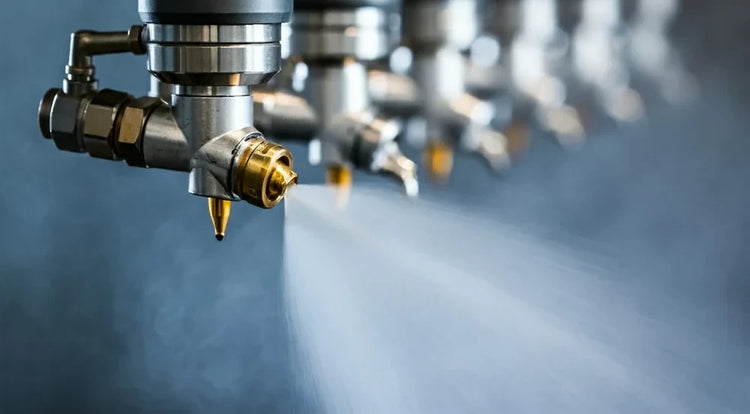
Sieben Schritte vom Anwendungsziel bis zur endgültigen Spezifikation. Arbeiten Sie jeden Schritt der Reihe nach durch – am Ende haben Sie das Sprühmuster, die Durchflussrate, den Druck, das Material und die Anschlussgröße, die Sie benötigen, um die richtige NozzlePro-Düse für Ihre Anwendung zu finden.
Anwendungsziel definieren
Was muss das Spray leisten? Die Antwort bestimmt, welche Sprüheigenschaften am wichtigsten sind – Aufprallenergie, Abdeckgleichmäßigkeit, Tröpfchengröße oder Flüssigkeitsvolumen pro Flächeneinheit.
Jede Auswahl einer Sprühdüse beginnt hier, denn das Anwendungsziel bestimmt, welche Leistungsvariablen am wichtigsten sind. Eine Reinigungsdüse benötigt ausreichend Aufprallenergie, um Schmutz von einer Oberfläche zu lösen – Abdeckgleichmäßigkeit und Tröpfchengröße sind sekundär. Eine Beschichtungsdüse benötigt eine präzise, gleichmäßige Filmdicke auf der Zieloberfläche – Aufprallenergie ist weitgehend irrelevant. Eine Staubbindedüse benötigt Tröpfchen, die so dimensioniert sind, dass sie luftgetragene Partikel effizient abfangen – ein hoher Aufprall würde Partikel eher wegstoßen, als sie einzufangen.
Die falsche Identifizierung des Anwendungsziels ist die häufigste Ursache für eine schlechte Düsenwahl. Eine Düse, die für eine maximale Durchflussrate in einer Kühlanwendung gewählt wurde, kann einen zu groben Sprühnebel für die erforderliche Verdunstung haben. Eine Düse, die für feinen Nebel in einer Befeuchtungsanwendung gewählt wurde, kann eine zu geringe Durchflussrate für die Wärmebelastung haben. Beginnen Sie damit, das Ziel präzise zu formulieren – nicht nur „Reinigen“, sondern „Entfernen von getrockneten Produktrückständen von einem Edelstahlförderband bei 6 Fuß pro Minute“.
Sprühmuster wählen
Das Sprühmuster bestimmt die Form und Verteilung des Sprühfußabdrucks. Jedes Muster hat eine spezifische Geometrie, die für bestimmte Oberflächentypen und Anwendungsziele geeignet ist.
Die fünf grundlegenden Sprühmuster decken das gesamte Spektrum industrieller Sprühanwendungen ab. Die Wahl des falschen Musters – selbst bei korrekter Durchflussrate und richtigem Druck – führt zu inkonsistenten Ergebnissen, da die Sprühgeometrie nicht zur behandelten Oberfläche passt.
Sie sind sich nicht sicher, welches Muster passt? Lesen Sie den Leitfaden für Sprühmuster.
Der Leitfaden für Sprühmuster geht tiefer auf jedes Muster ein – Abdeckungsgeometrie-Diagramme, Aufprall- vs. Tröpfchengrößenvergleiche und Entscheidungskriterien für die Wahl zwischen ähnlichen Mustern.
Sprühwinkel und Abstand zum Ziel bestimmen
Sprühwinkel und Montageabstand bestimmen zusammen die Abdeckungsbreite an der Zieloberfläche. Für Mehrfachdüseninstallationen legen diese beiden Parameter auch den erforderlichen Düsenabstand für eine gleichmäßige Abdeckung fest.
Der Sprühwinkel ist der eingeschlossene Winkel des Sprühkegels, gemessen an der Düsenspitze. Eine 90°-Flachstrahldüse erzeugt einen Sprühstrahl, der beim Austritt aus der Düse 90° breit ist. Die Abdeckungsbreite an der Zieloberfläche wird durch den Winkel und den Abstand von der Düse zur Oberfläche bestimmt: Breite = 2 × Abstand × tan(Winkel ÷ 2). Eine 90°-Düse in 12 Zoll Entfernung von der Oberfläche deckt ca. 24 Zoll ab. Dieselbe Düse in 24 Zoll Entfernung deckt ca. 48 Zoll ab.
Der Kompromiss: Mit zunehmendem Abstand nimmt die Abdeckungsbreite zu, aber der Aufpralldruck auf der Oberfläche nimmt ab. Bei Reinigungsanwendungen, bei denen die Aufprallenergie wichtig ist, ist der optimale Abstand die nächste Position, die eine ausreichende Abdeckungsbreite bietet – nicht der maximal mögliche Abstand. Bei Beschichtungs- und Befeuchtungsanwendungen, bei denen eine gleichmäßige Verteilung wichtiger ist als der Aufprall, ist ein größerer Abstand oft vorzuziehen, da der Sprühstrahl mehr Raum hat, um ein gleichmäßiges Muster zu entwickeln, bevor er die Oberfläche erreicht.
Planen Sie einen Verteiler mit mehreren Düsen?
Verwenden Sie das Planungstool für Sprühbereiche, um die Abdeckungsbreite bei Ihrem Montageabstand zu schätzen und den Düsenabstand für Ihren gewünschten Überlappungsprozentsatz zu berechnen. Eine Überlappung von 10–15 % zwischen benachbarten Düsenabdeckungsbereichen ist Standard für eine gleichmäßige Abdeckung auf ebenen Flächen.
Betriebsdruck und erforderliche Durchflussrate bestätigen
Diese beiden Parameter bestimmen die Größe der Düsenöffnung. Sie können nicht unabhängig voneinander gewählt werden – eine Düse, die für eine bestimmte Durchflussrate ausgelegt ist, liefert diese Durchflussrate nur bei dem Referenzdruck. Ändert sich der Druck, ändert sich auch die Durchflussrate.
Bei hydraulischen Sprühdüsen sind Durchflussrate und Betriebsdruck durch eine feste Beziehung miteinander verbunden: Die Durchflussrate skaliert mit der Quadratwurzel des Drucks. Verdoppelt man den Druck, steigt die Durchflussrate um ca. 41 %, nicht um 100 %. Das bedeutet, dass Sie nicht einfach den Versorgungsdruck erhöhen können, um den Durchfluss zu steigern – die Beziehung begrenzt, wie viel Durchflusserhöhung allein durch den Druck verfügbar ist, und bei höheren Drücken beginnt die Düse auch, feinere Tröpfchen und höhere Aufprallenergie zu erzeugen, was möglicherweise nicht das ist, was die Anwendung erfordert.
Der richtige Ansatz: Bestimmen Sie den Betriebsdruck, den Ihr System zuverlässig am Düseneingang liefert – unter Berücksichtigung des Druckabfalls in den Versorgungsleitungen – und dann die für Ihre Anwendung erforderliche Durchflussrate. Die Kombination dieser beiden Werte bestimmt die Öffnungsgröße. Verwenden Sie den Durchflussratenrechner, um zu überprüfen, wie Ihre erforderliche Durchflussrate bei Ihrem Betriebsdruck im Vergleich zu den Katalogreferenzbedingungen abschneidet.
Auswahl einer Düse bei Katalog-Referenzdruck (typischerweise 40 PSI), wenn Ihr System bei einem anderen Druck arbeitet. Eine Düse, die für 1,5 GPM bei 40 PSI ausgelegt ist, liefert 1,84 GPM bei 60 PSI – eine Erhöhung um 23 %, die bei einem Beschichtungsprozess zu viel Flüssigkeit auftragen oder die Pumpenkapazität des Systems überschreiten kann, wenn mehrere Düsen gleichzeitig laufen.
- Messen oder berechnen Sie den Druck am Düseneingang – nicht an der Pumpe oder dem Verteiler. Der Druckabfall in den Versorgungsleitungen kann erheblich sein, insbesondere bei Leitungen mit kleinem Durchmesser oder langen Strecken.
- Bestimmen Sie die gesamte erforderliche Durchflussrate für die Anwendung – nicht nur pro Düse. Wenn 12 Düsen gleichzeitig laufen, muss Ihre Pumpe das 12-fache der Durchflussrate pro Düse bei dem Betriebsdruck liefern.
- Überprüfen Sie die Katalog-Durchflussrate bei Ihrem Betriebsdruck, nicht unter den Referenzbedingungen. Verwenden Sie die Durchfluss-Druck-Formel oder den Durchflussratenrechner zur Anpassung.
- Wenn es sich bei der Flüssigkeit nicht um Wasser handelt, passen Sie die Katalog-Durchflussrate an die spezifische Dichte an. Dichte Flüssigkeiten fließen bei gleichem Druck mit geringerer Rate durch dieselbe Öffnung.
Das Düsenmaterial auswählen
Das Düsenmaterial muss mit der zu sprühenden Flüssigkeit, der Betriebstemperatur und den mechanischen Anforderungen der Anwendung kompatibel sein. Die Materialauswahl bestimmt die Lebensdauer mehr als jeder andere einzelne Faktor.
Bei jeder Düse sind zwei Materialaspekte zu berücksichtigen: das Düsenkörpermaterial und die (eventuell vorhandenen) internen Dichtungen. Beides muss mit der Chemie und der Temperatur der Flüssigkeit kompatibel sein. Eine Düse aus Messing, die mit einem Reinigungsmittel kompatibel ist, kann EPDM-Dichtungen haben, die es nicht sind – und das Versagen der Dichtung führt zu einem Leck, noch bevor der Körper korrodiert. Überprüfen Sie beides.
Dichtungsmaterial ist genauso wichtig wie das Gehäusematerial.
EPDM-Dichtungen sind Standard für wässrige und alkalische Anwendungen. PTFE bietet eine breite chemische Kompatibilität für Säuren, Lösungsmittel und Oxidationsmittel. Viton (FKM) eignet sich für Erdölprodukte, Kraftstoffe und viele Lösungsmittel. Überprüfen Sie immer die Kompatibilität von Gehäuse und Dichtung mit Ihrer spezifischen Flüssigkeit. Der Leitfaden zur Materialkompatibilität deckt die gesamte Palette der NozzlePro Düsenmaterialien und Dichtungsoptionen ab.
Anschlussgröße und Gewindeart auswählen
Der Düsenanschluss muss zu Ihrer vorhandenen Rohrleitung oder Ihrem Verteiler passen. Wenn dies nicht der Fall ist, passt die Düse bei Lieferung nicht – und es können Adapterstücke erforderlich sein, die Leckagen verursachen können.
Die meisten NozzlePro Sprühdüsen verwenden NPT-Gewinde (National Pipe Taper) – den Standard in der nordamerikanischen Industrieinstallation. NPT-Gewinde sind konisch, was bedeutet, dass sie sich beim Verschrauben selbst abdichten und festziehen. Die Gewindegröße bezieht sich auf die Nennrohrgröße, nicht auf den tatsächlichen Gewindedurchmesser. Eine 1/4" NPT-Düse hat keine 0,25" Gewinde – der tatsächliche Gewindeaußendurchmesser beträgt ca. 0,540". Dies ist eine häufige Quelle für Verwechslungen beim Messen vorhandener Fittings.
Die zuverlässigste Methode zur Identifizierung eines vorhandenen Anschlusses besteht darin, ein bekanntes NPT-Fitting in den Anschluss zu schrauben und die korrekt passende Größe zu bestätigen. Der Versuch, den Gewindedurchmesser mit einem Lineal zu messen, ist unzuverlässig, da die Nennrohrgrößen bei keiner Standardgröße den tatsächlichen Abmessungen entsprechen.
Wartung und Austausch planen
Jede Sprühdüse verschleißt mit der Zeit. Abgenutzte Düsen liefern mehr Durchfluss als angegeben, erzeugen verzerrte Sprühbilder und verringern die Effektivität der Anwendung – oft ohne sichtbare Anzeichen, dass sich die Leistung geändert hat.
Die Öffnung einer Sprühdüse ist präzise dimensioniert, um eine bestimmte Durchflussmenge bei einem bestimmten Druck zu liefern. Wenn die Öffnung durch flüssigkeitsbedingte Abrasion, Kavitation oder Korrosion verschleißt, vergrößert sie sich. Eine Düse, deren Öffnung sich um 15 % vergrößert hat, liefert ungefähr 15 % mehr Durchfluss als angegeben – und das in einem breiteren und weniger gleichmäßigen Muster als das ursprüngliche. In einer Reinigungsanwendung bedeutet dies mehr Flüssigkeits- und Wasserverschwendung. In einer Beschichtungsanwendung bedeutet dies eine zu dicke oder ungleichmäßige Schicht. In einem Befeuchtungssystem bedeutet dies eine Überbefeuchtung.
- Legen Sie ein Austauschintervall fest, das auf Betriebsstunden und nicht auf dem Aussehen basiert. Eine abgenutzte Düse, die noch intakt aussieht, kann 10-20 % über der Spezifikation liegen. Testen Sie den Durchfluss regelmäßig – wenn der Durchfluss um mehr als 10-15 % über der Spezifikation für neue Düsen liegt, ersetzen Sie sie.
- Halten Sie Ersatzdüsen auf Lager. Die Kosten für eine Produktionsunterbrechung durch eine defekte oder verschlissene Düse übersteigen in fast jeder industriellen Anwendung die Kosten für einen Jahresvorrat an Ersatzteilen.
- Installieren Sie ein Sieb vor den Düsen in jedem System, das Flüssigkeiten mit Partikelanteil verarbeitet. Eine verstopfte Öffnung führt zu einem sofortigen Leistungsversagen. Ein 50–100 Mesh Sieb vor der Düse verhindert die meisten Verstopfungen.
- Notieren Sie sich für jede Position die Düsenmodellnummer, die Düsengröße und das Installationsdatum. Wenn eine Position eine unzureichende Leistung erbringt, entfällt mit dieser Aufzeichnung die Spekulation, ob die installierte Düse die richtige Spezifikation aufweist.
- Wenn Sie eine verstopfte Düse reinigen, verwenden Sie eine weiche Sonde oder ein Einweichen – niemals einen Metallpickel oder eine Drahtbürste. Eine Vergrößerung der Öffnung mit einem harten Werkzeug beschädigt die Düse dauerhaft und erhöht den Durchfluss über die Spezifikation hinaus.
Die sieben Schritte zur Düsen-Auswahl-Checkliste
Verwenden Sie dies als Spezifikations-Arbeitsblatt. Füllen Sie jede Zeile aus, bevor Sie ein Angebot anfordern – wenn Sie alle sieben Parameter bereit haben, beschleunigt dies den Auswahlprozess erheblich.
| Schritt | Parameter | Was zu bestimmen ist | Wo Sie eine Anleitung finden |
|---|---|---|---|
| 1 | Anwendungsziel | Was der Sprühstrahl erreichen muss – Reinigung, Kühlung, Beschichtung, Tankreinigung, Befeuchtung, Staubunterdrückung usw. | Anwendungshandbücher |
| 2 | Sprühbild | Flachstrahl, Vollkegel, Hohlkegel, Vollstrahl oder Luftzerstäuber – abgestimmt auf Anwendungsgeometrie und Ziel | Sprühbild-Leitfaden |
| 3 | Sprühwinkel & Abstand | Inkludierter Sprühwinkel; Abstand von der Düsenspitze zur Zielfläche; erforderliche Abdeckungsbreite am Ziel | Sprühwinkel-Leitfaden |
| 4 | Betriebsdruck & Durchfluss | Versorgungsdruck am Düseneingang (PSI oder Bar); erforderliche Durchflussmenge pro Düse (GPM oder L/min) | Durchfluss- & Druck-Leitfaden |
| 5 | Düsenmaterial | Gehäusematerial und Dichtungsmaterial, kompatibel mit Flüssigkeitschemie, Temperatur und Abrasivität | Materialauswahl-Leitfaden |
| 6 | Anschlussgröße | NPT-Gewindegröße (1/8", 1/4", 3/8", 1/2"); Stecker- oder Buchsenanschluss; ggf. Adapteranforderungen | Gewinde- & Anschluss-Leitfaden |
| 7 | Wartungsplan | Erwartetes Austauschintervall; Ersatzdüsenbestand; Siebspezifikation; Zeitplan für Durchflusskontrolle | Wartungshandbuch |
Haben Sie Ihre Parameter bereit?
Wir helfen Ihnen, die richtige Düse zu finden.
Teilen Sie uns Ihr Anwendungsziel, Ihre bevorzugte Sprühform, Ihren Betriebsdruck, Ihre Durchflussanforderung, die Flüssigkeitsart und die Anschlussgröße mit. Das NozzlePro-Anwendungsteam identifiziert die passenden Optionen aus unserem Produktsortiment.