
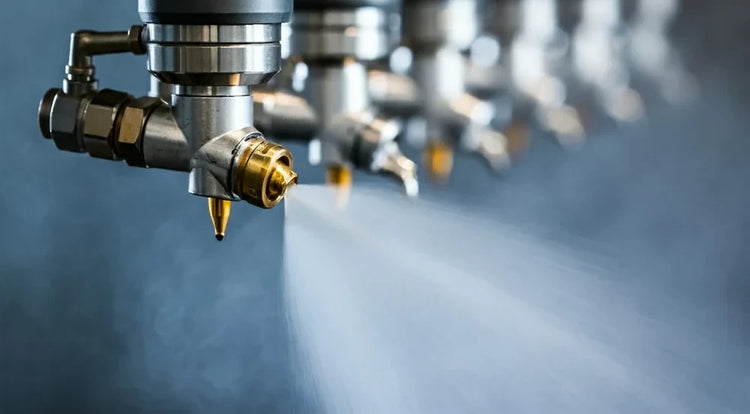
Filz- & Gewebereinigungsdüsen
Hochdruck-Filzreinigungsdüsen, Siebgewebe-Reinigungssprühdüsen, Filz-Konditionierungs-Sprühbalken und Siebreinigungssysteme – zur Bekämpfung der drei Filzverblindungsmechanismen (Füllerverdichtung, Pechablagerungen und Faserverfilzung), die die Filzpermeabilität reduzieren, die Lebensdauer des Filzes verkürzen und den Dampfbedarf der Pressenpartie an Papier- und Tissue-Maschinen erhöhen
Filzverblindung ist die Hauptursache für ungeplante Produktionsausfälle in der Pressenpartie von Papiermaschinen. Jeder Pressenfilz beginnt seinen Dienst mit seiner konstruktionsbedingten Permeabilität – typischerweise 80–160 cfm/ft² bei 0,5 Zoll Wassersäule für Nasspressenfilze – und nimmt kontinuierlich ab, da Calciumcarbonatfüller, Titandioxid, Pechablagerungen, Leimstärke und verdichtete Fasern in der Vernadelungsstruktur des Filzes akkumulieren. Wenn die Permeabilität 30–40 % unter den Ausgangswert fällt, kann der Filz das Wasser aus der Bahn im Pressspalt nicht mehr effizient entfernen: Der Spaltdruck muss erhöht werden, was die Bahnstruktur komprimiert; der Dampfbedarf des Trockners steigt, da die Bahn feuchter ankommt; und die Querprofilvariation der Feuchte nimmt zu, da der Filz nicht mehr gleichmäßig über seine Breite entwässert.
Das Duschensystem ist das einzige verfügbare Werkzeug, um den Permeabilitätsabfall ohne Filzwechsel aufzuhalten. Ein korrekt ausgelegtes und gewartetes Filzreinigungsprogramm – Hochdruck-Hydraulikreinigung nach Plan, chemische Reinigung mit der richtigen Frequenz für den jeweiligen Verschmutzungstyp und Konditionierungsduschen, die den Filz zwischen den Reinigungsereignissen in einem funktionierenden Feuchtezustand halten – verlängert die Lebensdauer des Filzes und hält das Permeabilitätsniveau aufrecht, für das die Pressenpartie ausgelegt ist. NozzlePro liefert alle Düsenhardware für das komplette Filzreinigungsprogramm: Hochdruck-Flachstrahl-Nadeldüsen (40–80 bar, TC-Einsätze), Konditionierungs-Duschenbalkendüsen (0,5–3 bar, TC-Einsätze, Schleifenrücklaufverteilerdesign), Siebgewebereinigungsdüsen und Siebreinigungssysteme. ISO 9001 zertifizierte Fertigung mit ±1 % durchflussgeprüften Ersatzsätzen.
Filz- und Gewebereinigungssysteme behandeln drei verschiedene Verblindungsmechanismen, die unterschiedliche Düsenansätze erfordern: Die Füllerverdichtungs-Verblindung (Calciumcarbonat, Kaolin, TiO₂-Verpackung in Filznadelhohlräume) wird durch Hochdruck-Hydraulikreinigung mit engwinkligen Flachstrahl-Nadeldüsen (15°–25°, 40–80 bar) in oszillierenden Duscharmen behandelt – der Hochgeschwindigkeitsstrahl löst Füllerpartikel mechanisch; die Pech- und Sticky-Ablagerung (Harz, synthetische Klebstoffe und Hot-Melt-Verunreinigungen aus Recyclingfasern oder mechanischem Zellstoff) wird durch chemische Reinigung mit alkalischen Reinigungsmitteln oder lösungsmittelbasierten Filzreinigungsmitteln behandelt, die über Niederdruck-Duschenbalken (1–3 bar) aufgetragen werden, gefolgt von einer Hochdruck-Hydraulikspülung – hydraulische Reinigung allein kann Klebstoffablagerungen nicht entfernen; und die Faserverfilzung und -verdichtung (Fasermattenbildung, die das Hohlraumvolumen in der Filzpolsterstruktur reduziert) wird durch konditionierte Hochdruckreinigung in Kombination mit einem geeigneten Filzkonditionierungs-Duschmanagement zur Aufrechterhaltung eines optimalen Filzfeuchtegehalts behandelt. Bei der Siebgewebereinigung (Draht) werden oszillierende Hochdruck-Flachstrahlduschen (40–60 bar) auf dem Siebrücklauf eingesetzt, die das Netz von der Drainage-Seite durchdringen, um Füller und Fasern, die sich auf der Formfläche angesammelt haben, auszuspülen. Alle Filz- und Gewebereinigungsdüsen erfordern Wolframkarbid-Öffnungseinsätze – das Weißwasser der Papiermaschine transportiert die Füllmineralien, die das primäre Verblendungsmittel sind, und dieselben Mineralien erodieren Standard-Edelstahlöffnungen innerhalb von 2–4 Wochen bei Reinigungsdrücken.
Filz- & Gewebereinigungsdüsenkollektionen
Nach Anwendung oder Düsentyp einkaufen
Die drei Filzverblindungsmechanismen — und die Duschreaktion auf jeden
Warum die Auswahl der Filzreinigungsdüse davon abhängt, was Ihren Filz tatsächlich verblindet
Füllerverdichtungs-Verblendung
Symptom: Stetiger Permeabilitätsabfall, gleichmäßig über die BreiteCalciumcarbonat-, Kaolin-, TiO₂-Partikel lagern sich in Nadelhohlräumen ab. Reagiert gut auf Hochdruck-Hydraulikreinigung (40–80 bar). Häufigster Mechanismus bei füllstoffintensiven Stoffen (>20 % Füllstoff).
Pech- und Störstoffablagerungen
Symptom: Schneller Permeabilitätsverlust, schlimmer bei Pick-up-Filz; Bahnverklebung oder -aufnahmeHarz, Klebstoffe, Hot-Melt aus Recyclingfasern haften an Filzfasern. Erfordert chemische Reinigung – alkalisches Reinigungsmittel oder Lösungsmittel – zusätzlich zur hydraulischen Reinigung. Hydraulische Reinigung allein ist unwirksam.
Faserverfilzung & -verdichtung
Symptom: Allmählicher Permeabilitätsverlust, Abflachung der Polsterstruktur, Filz "stirbt ab"Fasermatten reduzieren das Hohlraumvolumen des Filzpolsters durch mechanische Verdichtung. Hochdruckreinigung plus korrektes Feuchtigkeitsmanagement der Konditionierung verlangsamt den Fortschritt. Einmal fortgeschritten, kann es nicht vollständig rückgängig gemacht werden.
Kesselstein- & Mineralablagerungen
Symptom: Harte, krustige Ablagerungen; lokaler Permeabilitätsverlust in der Nähe der DuschpositionenCalciumcarbonat- oder Silikatskalierung durch hartes Wasser oder alkalisches Prozesswasser. Erfordert Säurereinigung (Zitronen- oder Phosphorsäure), um den Kesselstein aufzulösen – hydraulischer Druck allein kann gebundene mineralische Kesselstein nicht entfernen.
Leim- & Stärkeablagerungen
Symptom: Filzsteifigkeit, Permeabilitätsverlustzyklus mit Sortenwechseln; schlimmer bei Pressfilzen in der Nähe der LeimpresseStärke und Oberflächenleimungsmittel wandern vom Papierbogen zur Filzoberfläche. Reagiert auf Heißwasserreinigung (über 60°C) plus enzymatische oder alkalische Reinigungsmittel, die über Konditionierungs-Duschbalken aufgetragen werden.
Biologischer Schleim
Symptom: Periodische Permeabilitätsverluste, Geruch, Bahnabrisse an der Filzoberfläche; schlimmer im SommerMikroorganismenkolonien in der Filzstruktur – häufig in Mühlen mit warmem Prozesswasser und unzureichender Biozidbehandlung. Erfordert Biozidanwendung über Duschbalken plus Hochdruck-mechanische Zerstörung etablierter Schleimmatten.
Anwendungen von Filz- & Gewebereinigungsdüsen
Anwendungsspezifische Düsenempfehlungen für jedes Reinigungsregime und jeden Gewebetyp
Hochdruck-Filzreinigungsdüsen
Engwinklige Flachstrahldüsen (15°–25°, 40–80 bar, TC-Öffnungseinsätze) in oszillierenden Duscharmen sind das primäre hydraulische Werkzeug zur Wiederherstellung der Filzpermeabilität, indem sie Füllpartikel, Feinfasern und verdichtete Ablagerungen aus der Filznadelstruktur lösen. Der Reinigungsmechanismus ist vollständig auf Aufprall angewiesen: Der 40–80 bar Strahl muss einen ausreichenden dynamischen Druck an der Filzoberfläche liefern, um die Adhäsionskräfte zu überwinden, die Füllpartikel in Nadelhohlräumen halten. Der dynamische Druck an der Filzoberfläche nimmt mit dem Quadrat des Abstands von der Düse zum Filz ab – eine Düse mit einem Abstand von 150 mm, die 60 bar Versorgungsdruck liefert, erzeugt etwa 45 bar dynamischen Druck am Filz; dieselbe Düse mit einem Abstand von 200 mm liefert etwa 35 bar. Der Abstand ist wichtig und muss genau angegeben, nicht geschätzt werden. Position der Filzreinigungsdüse: Die Hochdruckdusche ist am effektivsten auf dem Rücklauf des Filzes, wo der Filz den Spalt verlassen hat und die Bahn nicht vorhanden ist, um die Reinigungsenergie aufzunehmen – die Reinigung auf der Filzanlaufseite kann Füllstoff tiefer in die Struktur treiben, anstatt ihn zu entfernen. Chemische Verträglichkeit: TC-Einsätze sind nicht nur verschleißfest – sie sind chemisch inert gegenüber den alkalischen und sauren chemischen Reinigungsmitteln, die in Filzreinigungsprogrammen verwendet werden, im Gegensatz zu einigen keramischen Alternativen, die sich in sauren Reinigungslösungen auflösen.
HochdruckdüsenDüsen zur chemischen Reinigungsanwendung
Niederdruck-Flachstrahl- oder Vollkegeldüsen (1–3 bar, TC-Einsätze) in speziellen Chemikalienauftrags-Duschbalken tragen Filzreinigungsmittel – alkalische Reiniger (pH 11–13), saure Entkalker (pH 2–4), enzymatische Reiniger oder lösungsmittelbasierte Pechentferner – mit kontrollierter Konzentration und Verweilzeit auf die Filzoberfläche auf, bevor eine Hochdruck-Hydraulikspülung erfolgt. Die chemische Reinigung ist der einzige wirksame Ansatz bei Pech- und Störstoffverunreinigungen, Kesselsteinablagerungen, Stärkeablagerungen und biologischem Schleim – eine hydraulische Reinigung mit beliebigem Druck kann Klebstoff- oder chemisch gebundene Ablagerungen ohne vorherige chemische Erweichung nicht entfernen. Die Chemikalienauftragsdusche muss so positioniert werden, dass eine ausreichende Verweilzeit zwischen der Chemikalienanwendung und der Hochdruckspülung gewährleistet ist – typischerweise 3–8 Filzumdrehungen bei Betriebsgeschwindigkeit, abhängig vom Reinigungsmittel und der Art der Verunreinigung. Die Durchflussmenge der Chemikaliendusche muss die erforderliche Lösungskonzentration an der Filzoberfläche aufrechterhalten: Eine zu geringe Durchflussmenge führt zu unzureichendem chemischen Kontakt an den Verunreinigungsstellen; eine zu hohe Durchflussmenge verdünnt die Chemikalie durch Feuchtigkeitseintrag des Filzes unter die wirksame Konzentration. Trennen Sie spezielle Chemikalienduschbalken vom Konditionierungs-Duschsystem – das Mischen von chemischen Reinigungsmitteln mit dem kontinuierlichen Konditionierungswasser beeinträchtigt sowohl die Reinigungsmittelkonzentration als auch die Qualität des Konditionierungswassers.
FlachstrahldüsenFilzkonditionierungs-Duschdüsen
Weitwinklige Flachstrahldüsen (65°–90°, 0,5–2 bar, TC-Einsätze) in stationären Duschbalken halten den optimalen Filzfeuchtegehalt und die offene Struktur zwischen den Hochdruckreinigungszyklen aufrecht. Die Filzkonditionierung ist nicht die gleiche Funktion wie die Filzreinigung – die Konditionierung hält den Filz in dem Feuchtezustand, in dem er als Entwässerungsmedium am effektivsten arbeitet, während die Reinigung Verunreinigungen entfernt, die sich in der Struktur angesammelt haben. Ein zu trockener (unterkonditionierter) Filz wird steif, verliert seine Anpassungsfähigkeit an die Pressspaltgeometrie und erzeugt eine ungleichmäßige Druckverteilung über die Spaltbreite. Ein zu nasser (überkonditionierter) Filz transportiert überschüssige Feuchtigkeit in den Pressspalt, wodurch der für die Bahnentwässerung verfügbare effektive Druck verringert und der Feuchtegehalt der gepressten Bahn erhöht wird. Die Zielfilzfeuchte am Spalteintritt ist pressenspezifisch und wird vom Pressenkonstrukteur angegeben – typischerweise 70–80 % Feuchtegehalt für moderne Schuhpressen. Die Durchflusskalibrierung der Konditionierungsdusche muss die Feuchtigkeitsaufnahme aus der nassen Bahn im Pressspalt und die Feuchtigkeitsentfernung durch den Saugkasten berücksichtigen – die Konditionierungsdusche gleicht das Defizit im Feuchtigkeitshaushalt aus, nicht den gesamten Feuchtigkeitsbedarf. TC-Einsätze für alle Konditionierungsduschenpositionen – Weißwasser ist die Standard-Konditionierungswasserversorgung in den meisten Mühlen und trägt dieselbe Füllerbelastung, die den Filz verblendet.
FlachstrahldüsenFormgewebe (Sieb) Reinigungsdüsen
Oszillierende Flachstrahldüsen (15°–25°, 40–60 bar, TC-Einsätze), die auf dem Siebrücklauf unter dem Formtisch positioniert sind, reinigen Formgewebe, indem sie das Siebgeflecht von der Entwässerungsseite durchdringen – der Richtung, aus der Füllstoff und Feinanteil während der Bahnformung eindringen. Die Siebreinigung von der Entwässerungsseite ist effektiver als die Oberflächenreinigung, da sich der Füllstoff und die Fasermatten hauptsächlich auf der Entwässerungsseite der Sieböffnungen ansammeln: Füllpartikel gelangen während der Bahnformung durch die Oberseite, lagern sich aber auf der Unterseite des Siebgeflechts an der Entwässerungselement-Schnittstelle ab. Das Richten des Hochdruckstrahls von unten bei 40–60 bar spült diese angesammelte Matte nach außen durch dieselben Öffnungen, durch die sie eingetreten ist. Siebreinigungsdüsenabstand auf dem Rücklauf: 100–200 mm Abstand ist typisch, wobei ein kürzerer Abstand eine höhere Aufprallkraft pro Flächeneinheit erzeugt. Das Sieb bewegt sich auf dem Rücklauf mit voller Maschinengeschwindigkeit – der Strahleinschlag auf der bewegten Sieboberfläche erzeugt einen dynamischen Reinigungseffekt, bei dem die relative Geschwindigkeit zwischen Strahl und Sieb die Spülwirkung verstärkt. Niederdruck-Siebschmierduschen (0,5–1,5 bar, 65°–80°) auf der Oberseite des Siebes in der Formzone halten den hydrodynamischen Film zwischen Sieb und Formbrett aufrecht, wodurch die Reibung der Entwässerungselemente und der Siebverschleiß unabhängig von der Reinigungsfunktion reduziert werden.
HochdruckdüsenPermeabilitätsüberwachung & Duschplanung
Die Messung der Filzpermeabilität – unter Verwendung tragbarer oder fest installierter Permeabilitätsprüfer, die den Luftstrom durch den Filz bei einem standardisierten Druckunterschied messen – liefert die quantitative Basis für die Planung von Hochdruckreinigungszyklen und chemischen Reinigungsereignissen. Der Permeabilitätszielwert für jede Filzposition und Maschine sollte während des Inbetriebnahmebetriebs oder mit einem neuen, gut erhaltenen Filz festgelegt werden: Dies ist die Basislinie, mit der nachfolgende Messungen verglichen werden. Die Hochdruck-Hydraulikreinigung ist am effektivsten, wenn sie durchgeführt wird, bevor die Permeabilität um mehr als 15–20 % unter die Basislinie gesunken ist – der Versuch, einen Filz, der um 40–50 % unter die Basislinie gefallen ist, allein mit hydraulischer Reinigung wiederherzustellen, ist selten erfolgreich, da der Füllstoff unter wiederholter Spaltbelastung so stark verdichtet wurde, dass der hydraulische Aufprall ihn nicht lösen kann. Chemische Reinigungsereignisse sollten durch Permeabilitätsmessungen ausgelöst werden, die einen Rückgang zeigen, der nicht auf die geplante hydraulische Reinigungsfrequenz reagiert, oder durch die spezifischen Verunreinigungssymptome, die in den oben beschriebenen Verblindungsmechanismus-Kacheln beschrieben sind. Die Überwachung der Permeabilität zweimal pro Schicht an einem festen Ort über die Filzbreite liefert einen Frühindikator für den Reinigungsbedarf – das Warten, bis die Leistung der Pressenpartie sichtbar nachlässt, bedeutet, dass der Filz bereits 30–40 % unter der Basislinie liegt und die Wiederherstellung schwieriger ist.
FlachstrahldüsenTissue-Maschinen Filz- & TAD-Gewebe-Reinigung
Flachstrahl- und Vollkegeldüsen für die Reinigung von Geweben in Tissue-Maschinen mit Crescent-Former und Through-Air-Dried (TAD) – die Betriebsanforderungen unterscheiden sich erheblich von denen konventioneller Papiermaschinenfilze. Tissue-Maschinen-Gewebe arbeiten mit höheren Geschwindigkeiten (1.200–2.000 m/min bei modernen Tissue-Maschinen), geringeren Bahngewichten (10–35 g/m²) und einem höheren Füllstoffgehalt in Away-from-Home-Qualitäten, was zu aggressiven Verblindungsbedingungen führt. TAD-Gewebe haben offene dreidimensionale Netzstrukturen, die bei übermäßigem Druck anfällig für Hochdruckreinigungsschäden sind – die typische TAD-Gewebe-Reinigung erfolgt bei 20–40 bar statt der 40–80 bar, die für Pressfilze verwendet werden. Die geringe Aperturgröße von TAD-Geweben (typischerweise 0,8–2,0 mm Öffnungen) macht sie anfällig für Blockaden durch Faserfeinanteile, die bei Standard-Papiermaschinen-Geweben durchgelassen werden – die chemische Reinigung mit enzymatischen Mitteln ist oft der effektivste Ansatz für TAD-Gewebe, die Faserfeinanteile ansammeln. Die Reinigung von Crescent-Former-Geweben erfolgt im gleichen Druckbereich wie die konventionelle Siebreinigung von Papiermaschinen (40–60 bar), aber das Gewebe selbst ist empfindlicher als konventionelle Formgewebe – Drücke über 60 bar können die feinen Filamente von Crescent-Former-Geweben in verschlissenem Zustand beschädigen.
HochdruckdüsenFilz- & Gewebereinigungsdüsenerfassungstabelle
Empfohlener Düsentyp, Betriebsparameter, Richtlinien für die Reinigungsfrequenz und wichtige Designhinweise nach Position
| Position / Gewebetyp | Düsentyp | Druck | Spritzwinkel | Reinigungshäufigkeit (Richtwerte) | Wichtiger Hinweis zum Design |
|---|---|---|---|---|---|
| Pressfilz — HP-Hydraulische Reinigung | Oszillierende Flachstrahl-HD | 40–80 bar | 15°–25° | Kontinuierlich während der Produktion; Oszillationsgeschwindigkeit an Maschinengeschwindigkeit angepasst. Häufigkeit erhöhen, wenn Permeabilität >15% unter dem Basiswert liegt. | Position auf dem Filzrücklauf (nach dem Nip) – Reinigung auf der Einlaufseite treibt Füllstoffe tiefer ein; Abstand 100–200 mm; TC-Einsatz; Oszillationsgeschwindigkeit berechnet aus Maschinengeschwindigkeit und Düsenwinkel |
| Pressfilz — Chemische Reinigung | Stationärer Flachstrahl oder Vollkegelbalken | 1–3 bar | 40°–65° | Ereignisgesteuert: wenn die hydraulische Hochdruckreinigung die Basispermeabilität nicht aufrechterhalten kann oder bei Sortenwechsel, wenn Harz-/Klebrigkeitsverunreinigungen bekannt sind. | Dedizierter chemischer Duschbalken – nicht mit Konditionierwasser teilen; 3–8 Filzumdrehungen Verweilzeit vor der HD-Spülung; alkalisches Reinigungsmittel (pH 11–13) für Harz; Säure (pH 2–4) für Ablagerungen; enzymatisch für Stärke |
| Pressfilz — Konditionierdusche | Stationärer Flachstrahl-Balken | 0,5–2 bar | 65°–90° | Kontinuierlich; Durchflussrate kalibriert, um den Zielfilzfeuchtegehalt am Nip-Eintritt zu erreichen (typischerweise 70–80%). Saisonale Anpassung bei sich ändernder Siebwassertemperatur. | Volle Filzbreitenabdeckung ±5% Gleichmäßigkeit; Schleifenrücklauf-Header-Zufuhr; TC-Einsätze; Durchfluss kalibriert aus Filzfeuchtemessung – nicht aus fester Spezifikation; Überschussfluss erhöht den Vakuumenergiebedarf an den Saugkästen |
| Aufnahmefilz — HD-Reinigung | Oszillierende Flachstrahl-HD | 40–70 bar | 15°–20° | Kontinuierlich; Aufnahmefilz erfordert typischerweise eine höhere chemische Reinigungsfrequenz als Nasspressfilz – größere Kontaktfläche mit der Bahn und feinere Nadelstruktur akkumulieren Klebrigkeiten schneller. | Aufnahmefilz ist am anfälligsten für Harz/Klebrigkeiten – der Zeitplan für die chemische Reinigung ist genauso wichtig wie die hydraulische; Position nach dem Nip im Rücklauf; TC-Einsatz obligatorisch; Permeabilitätsüberwachung als Auslöser für chemische Reinigungsereignisse |
| Sieb — HD-Reinigung (Rücklauf) | Oszillierende Flachstrahl-HD | 40–60 bar | 15°–25° | Kontinuierlich während der Produktion. Siebpermeabilität erfordert typischerweise weniger häufige chemische Reinigung als Pressfilze – die Kontaktdauer mit der Bahn ist kürzer. | Unter dem Sieb im Rücklauf positioniert – Strahl dringt von der Entwässerungsseite ein; Abstand 100–200 mm; TC-Einsatz obligatorisch (Siebgruben-Siebwasser enthält 15–40% Füllstoffbelastung); Oszillation deckt die gesamte Siebbreite ab |
| Sieb — Schmierdusche | Stationärer Flachstrahl-Balken | 0,5–1,5 bar | 65°–110° | Kontinuierlich; Durchflussrate kalibriert nach Siebreibungsmessung – nicht nach maximalem Auslegungsdurchfluss. Reduzieren auf das Minimum, das Grenzflächenkontakt verhindert. | Erhält den hydrodynamischen Film zwischen Sieb und Formbrett; Überfluss erhöht den Vakuumenergiebedarf; TC-Einsatz; Schleifenrücklauf-Header; Durchflussschwelle bestimmt durch Siebreibungsüberwachung an Entwässerungselementen |
| TAD-Gewebe — Reinigung | Oszillierender Flachstrahl | 20–40 bar | 15°–25° | Häufig – TAD-Gewebe verstopfen schnell durch Faserfeinanteile bei hohen Tissue-Maschinengeschwindigkeiten. Chemische Reinigung (enzymatisch) typischerweise effektiver als hydraulische allein. | Niedrigerer Druck als Pressfilz – feine TAD-Filamente werden bei mehr als 40 bar im verschlissenen Zustand beschädigt; enzymatische Reinigung bevorzugt bei Faserfeinanteilansammlungen; TC-Einsatz; Zustand des Gewebes prüfen, bevor der Druck über 30 bar erhöht wird |
| Transferband / Schuhpresseband | Oszillierende Flachstrahl-HD | 30–60 bar | 15°–25° | Kontinuierliche HD-Reinigung im Bandrücklauf; Konditionierdusche am Einlauf zum Transfer-Nip. | Transferbänder akkumulieren Harz schneller als Pressfilze – glatte Oberfläche bietet weniger mechanische Auflösung von Klebstoffablagerungen; alkalische chemische Reinigung bei Sortenwechsel oder bei Permeabilitätsalarm; durchgängig TC-Einsätze |
Auswahlprinzipien für Filzreinigungsduschen
Warum die Identifizierung des Filzverstopfungsmechanismus die Voraussetzung für die Auswahl von Düse und Reinigungsprogramm ist
- Identifizieren Sie den Verstopfungsmechanismus, bevor Sie die Reinigungsdüse spezifizieren – hydraulische Reinigung kann chemische oder adhäsive Ablagerungen nicht entfernen — Der häufigste Fehler bei Filzreinigungsprogrammen ist die Anwendung von mehr hydraulischem Reinigungsdruck auf einen Filz, der durch Harz, Klebrigkeiten oder Ablagerungen verstopft ist – Verunreinigungen, die der hydraulische Druck allein, unabhängig von der Einstellung, nicht entfernen kann. Mit Füllstoff verstopfte Filze (Calciumcarbonat, Kaolin, TiO₂) reagieren gut auf hydraulische Hochdruckreinigung, da die Partikel mechanisch durch Kompression in den Nadellücken festgehalten werden und durch ausreichende Aufprallkraft verdrängt werden können. Harzverstopfte Filze haben adhäsive Harzablagerungen, die chemisch an die Filzfasern gebunden sind – der Aufprall eines 70-bar-Wasserstrahls stört die Oberfläche der Ablagerung physikalisch, löst oder lockert die Klebebindung jedoch nicht. Der richtige Ansatz für Harz ist eine alkalische Reinigung mit Detergens, die die Fettsäurekomponenten des Harzes verseift und die Ablagerung wasserdispergierbar macht, gefolgt von einer hydraulischen Spülung. Die Diagnose des Verstopfungsmechanismus vor der Spezifikation des Reinigungsprogramms vermeidet die Verschwendung von Produktionszeit durch intensive hydraulische Reinigungszyklen, die keine Verbesserung bringen, da der Mechanismus chemisch und nicht mechanisch ist. Diagnosemethode: Entnehmen Sie eine Filzprobe aus der verstopften Zone und untersuchen Sie sie unter Vergrößerung – dichte Füllstoffpartikel zwischen den Fasern deuten auf Füllstoffverstopfung hin; klebrige, harzige Ablagerungen ohne freie Partikel deuten auf Harz hin; starre, kristalline Ablagerungen deuten auf Ablagerungen hin; verfilzte, komprimierte Fasern ohne sichtbare Fremdpartikel deuten auf Kompression oder Faserverfilzung hin.
- Die Messung der Filzpermeabilität ist der einzig zuverlässige Indikator für die Reinigungswirksamkeit – das Aussehen des Filzes und der Pressfeuchtegehalt sind nachlaufende Indikatoren — Papiermaschinenbediener beurteilen den Filzzustand üblicherweise durch Sichtprüfung (Überprüfung auf offensichtliche Verunreinigungen, Spuren oder Verformungen) und den Feuchtegehalt des Pressenabschnitts am Pressenaustritt. Beides sind nachlaufende Indikatoren – sichtbare Verunreinigungen und messbare Bahnfeuchtigkeitsänderungen treten erst auf, nachdem die Permeabilität bereits um 20–35% unter den Basiswert gesunken ist. Ein Filzpermeabilitätsprüfgerät (tragbar oder installierter Querschnittsscanner), das den Luftstrom durch den Filz unter standardisierten Bedingungen misst, liefert direkte Permeabilitätswerte, die den Beginn der Verstopfung erkennen, während der Rückgang noch gering und auf Korrekturmaßnahmen ansprechbar ist. Legen Sie den Basiswert der Filzpermeabilität in der ersten Woche einer neuen Filzinstallation fest – messen Sie an 5–7 Positionen über die Breite und notieren Sie den Mittelwert und das Querprofil. Planen Sie hydraulische Hochdruckreinigungsereignisse basierend auf Permeabilitätsabnahme-Auslösern (10–15% unter dem Basiswert für hydraulische Reinigung, 20–25% für chemische Reinigung) statt in festen Zeitintervallen. Zeitbasierte Reinigungspläne sind ineffizient: Sie reinigen zu viel, wenn die Maschinenbedingungen günstig sind (hochwertiger frischer Stoff, geringe Füllstoffbelastung, kühle Jahreszeit) und zu wenig, wenn die Bedingungen anspruchsvoll sind (hoher Recyclingfaseranteil, Sommerbetrieb, Sortenwechsel mit hohem Leimpressenstärkeanteil).
- Der Abstand der Hochdruckreinigungsdüse beeinflusst die Aufprallkraft im Quadrat der Entfernung – nicht linear — Der dynamische Druck, der von einer Hochdruck-Filzreinigungsdüse an der Filzoberfläche abgegeben wird, nimmt mit dem Quadrat des Abstands von der Düsenöffnung zum Filz ab. Die Beziehung: dynamischer Druck an der Zieloberfläche ≈ Versorgungsdruck × (Düsenöffnungsdurchmesser / (2 × Abstand × tan(halber Sprühwinkel)))². Bei einer 15°-Düse mit 60 bar und 150 mm Abstand beträgt der Aufprall des Strahlenkerns in der Filzmitte ca. 40–45 bar. Dieselbe Düse bei 250 mm Abstand liefert ca. 15–20 bar am Filz – unterhalb der Schwelle, die zum Entfernen von verdichtetem Füllstoff erforderlich ist. Das bedeutet, dass der Abstand eine primäre Spezifikationsvariable ist, keine mechanische Annehmlichkeit. Wenn festgestellt wird, dass oszillierende Duschbalken aufgrund von Maschinenmodifikationen oder Schutzblechänderungen seit der Erstinstallation mit einem erweiterten Abstand laufen, kann der tatsächliche Reinigungsdruck am Filz einen Bruchteil des eingestellten Versorgungsdrucks betragen – und die unwirksame Reinigung tarnt sich als "Filzverstopfungsproblem", obwohl es sich tatsächlich um ein Abstandsproblem handelt. Überprüfen Sie den Abstand bei jeder Wartungsinspektion des Duschbalkens und nach allen mechanischen Arbeiten im Bereich des Duschbalkens. Der korrekte Abstand für die HP-Reinigung des Pressfilzes beträgt 100–180 mm, abhängig vom Düsentyp und der erforderlichen Reinigungsbandbreite.
- Die Planung von Konditionierduschen muss saisonale Schwankungen der Siebwassertemperatur berücksichtigen – feste Durchflussraten erzeugen unterschiedliche Filzfeuchte in verschiedenen Jahreszeiten — Das Konditionierwasser für Filzduschen in den meisten Mühlen ist Prozesssiebwasser oder recyceltes Pressenabschnittswasser. Die Siebwassertemperatur variiert saisonal – typischerweise 35–45°C im Sommer und 20–30°C im Winter in nordischen Mühlen. Die Temperatur beeinflusst die Rate, mit der Wasser aus dem Filz zwischen der Konditionierdusche und dem Pressnip verdunstet: Höhere Siebwassertemperaturen bei gleicher Durchflussrate liefern im Sommer mehr Konditionierfeuchte pro Meter Filzweg als im Winter, da in der wärmeren Mühlumgebung weniger Verdunstungsverluste auftreten. Das Ergebnis: Eine Konditionierdusche, die für eine optimale Filzfeuchte im Winter kalibriert ist, überfeuchtet den Filz im Sommer, wenn die Durchflussrate nicht angepasst wird. Überfeuchtete Filze im Sommer tragen zu einem überdurchschnittlichen Dampfbedarf des Pressenabschnitts bei und können zu Presspickings führen, wenn die Filzfeuchte am Nip-Eintritt den Zielwert überschreitet. Überprüfen und kalibrieren Sie die Durchflussraten der Konditionierduschen bei saisonalem Wechsel – mindestens, wenn die Siebwassertemperatur um mehr als 5°C vom Kalibrierzustand abweicht. Der präziseste Ansatz ist die direkte Messung der Filzfeuchte mit einem tragbaren Feuchtemessgerät am Austrittspunkt der Konditionierdusche, wobei der Durchfluss so angepasst wird, bis die gemessene Feuchte dem vom Pressendesigner vorgegebenen Ziel für die Filzfeuchte am Nip-Eintritt entspricht.
- Der gleichzeitige Austausch kompletter Filzreinigungsduschbalken ist wichtiger als die Düsenmarke – Durchflussungleichmäßigkeiten durch gemischte Verschleißzustände untergraben das Reinigungsdesign — Ein Hochdruck-Filzreinigungsduschbalken, dessen Düsensatz eine Mischung aus verschlissenen Öffnungen der vorherigen Installation und neuen Ersatzteilen enthält, liefert keine gleichmäßige Reinigung über die Filzbreite. Eine verschlissene TC-Öffnung mit 12% Durchmesservergrößerung liefert ungefähr 25% mehr Durchfluss als eine neue Öffnung – bei 60 bar Versorgungsdruck liefert diese einzelne Position ungefähr 25% mehr Reinigungsenergie an ihren Filzstreifen als benachbarte Positionen. Der Filzstreifen unter der Hochflussposition wird überreinigt (Gefahr mechanischer Schäden an der Nadelung durch übermäßige Aufprallenergie), während benachbarte Positionen unterreinigen. Diese Ungleichmäßigkeit zeigt sich als Querprofil-Permeabilitätsvariation, die eine entsprechende Feuchtigkeitsprofilvariation in der gepressten Bahn erzeugt – ein Problem, das korrekterweise dem Duschsystem zugeschrieben wird, aber oft fälschlicherweise durch Anpassung des Versorgungsdrucks anstatt durch Identifizierung und Korrektur der verschlissenen Düsenursache behoben wird. Der Reinigungsduschbalken sollte als komplette Baugruppe behandelt werden: Ersetzen Sie den vollständigen Satz bei jedem Serviceintervall, behalten Sie den entfernten Satz als Notersatz (er ist besser als nichts) und mischen Sie alte und neue Düsen nicht im selben Balken, außer im Notfall. Das Serviceintervall für TC-Einsätze im Filzreinigungsdienst beträgt typischerweise 4–8 Monate, abhängig von Füllstofftyp und Druck – verfolgen Sie dies durch Messung der einzelnen Öffnungsdurchmesser statt durch feste Zeit, ersetzen Sie den vollständigen Satz, wenn eine Position eine Durchmesserzunahme von 10% gegenüber dem Nennwert erreicht.
Warum NozzlePro für Filz- und Gewebereinigung wählen?
Durchflussangepasste Sets, mechanismusspezifische Reinigungsanleitung und TC-Konstruktion für gleichmäßige Reinigung über die gesamte Filzbreite
Durchflussangepasste ±1% Filzreinigungssets & Reinigungsprogramm-Unterstützung — ISO 9001 zertifiziert
NozzlePro liefert Filz- und Gewebereinigungsdüsen als komplette, durchflussangepasste Ersatzsets, wobei jede Öffnung vor dem Versand auf ±1% des Satzmittelwerts bei Betriebsdruck geprüft wird. Bei einem Filzreinigungsduschbalken bedeutet eine Durchflussgleichmäßigkeit von ±1% eine Gleichmäßigkeit der Reinigungsenergie von ±1% über die gesamte Filzbreite – die Voraussetzung für die Aufrechterhaltung eines gleichmäßigen Permeabilitätsprofils und einer gleichmäßigen Entwässerung im Pressenabschnitt. Ein Balken mit einer Durchflussvariation von ±15% aufgrund gemischter Verschleißzustände erzeugt eine Reinigungsenergievariation von ±15%, die den Querprofil-Permeabilitätsgradienten erzeugt, der zu einem Problem des Bahnfeuchtigkeitsprofils wird.
Anleitung zum Verstopfungsmechanismus: Wir helfen Ihnen dabei, basierend auf den Kontaminationssymptomen, der Stoffbeschreibung und der Reinigungshistorie zu identifizieren, welcher der sechs Verstopfungsmechanismen an jeder Position dominant ist – und empfehlen den Düsentyp und das Reinigungsprogramm (hydraulischer Zeitplan, Art des chemischen Mittels, Anwendungsmethode) für den spezifischen Mechanismus. Dies ist eine Anwendungsberatung, die auf der veröffentlichten Filzreinigungspraxis und den Erfahrungen der Mühle basiert – Ihre Prozessentwicklung und Ihr PM-Team führen das Reinigungsprogramm aus und validieren die Wirksamkeit durch Permeabilitätsmessungen.
Kompatibilität mit Chemikalienduschbalken: Spezielle Duschbalkendüsen für chemische Anwendungen in TC-Konstruktion – TC-Einsätze sind chemisch inert gegenüber alkalischen (pH 11–13) und sauren (pH 2–4) Filzreinigungsmitteln, die einige keramische Einsatzmaterialien angreifen. Separate Chemikalienduschbalken von Konditionierwasser-Verteilern, mit individuellen Versorgungsventilen, die chemische Ereignisse ermöglichen, ohne den kontinuierlichen Konditionierwasserfluss zum Filz zu unterbrechen.
Vollständige Abdeckung des Filz- und Gewebesystems: Jede Duschposition vom Sieb bis zum Transferband – HD-Reinigungsbalken, Chemikalienduschbalken, Konditionierbalken und Siebreinigungsbalken – alle in TC-Konstruktion von einer einzigen ISO 9001-zertifizierten Quelle, mit konsistenter Öffnungsqualität und ±1% durchflussangepassten Ersatzsätzen.
Häufig gestellte Fragen
Häufige Fragen zur Filzverstopfung, Gewebereinigungsdüsen, Permeabilitätsmanagement und Duschprogrammen im Pressenabschnitt
Woher weiß ich, ob mein Pressfilz hydraulische Reinigung, chemische Reinigung oder einen Austausch benötigt?
Die Entscheidung zwischen hydraulischer Reinigung, chemischer Reinigung und Filzersatz hängt von drei Messungen ab: der aktuellen Permeabilität im Vergleich zum Basiswert, der Permeabilitätsreaktion auf hydraulische Reinigung und dem Querprofil der Permeabilität. Wenn die aktuelle Permeabilität 10–25 % unter dem Basiswert liegt und sich nach einer hydraulischen Hochdruckreinigung auf 5–10 % des Basiswerts erholt, reagiert der Filz normal auf sein Reinigungsprogramm und die Häufigkeit des Programms muss möglicherweise erhöht werden. Wenn die aktuelle Permeabilität 10–25 % unter dem Basiswert liegt und nicht auf hydraulische Hochdruckreinigung innerhalb von 2–3 Reinigungszyklen anspricht, ist die Verunreinigung chemischer oder adhäsiver Natur (Harz, Ablagerungen, Stärke) und nicht mechanische Füllstoffverdichtung – wechseln Sie zum entsprechenden chemischen Reinigungsmittel und lassen Sie es 4–8 Stunden einwirken, bevor Sie hydraulisch spülen. Wenn die aktuelle Permeabilität 40–50 % unter dem Basiswert liegt und weder auf hydraulische noch auf chemische Reinigung anspricht, hat der Filz sein Lebensende durch Verdichtung oder physikalische Faserschäden erreicht – eine Reinigung stellt die nützliche Permeabilität nicht wieder her und der weitere Betrieb mit dem verstopften Filz kostet Pressendampf und Bahnsqualität. Das Permeabilitätsprofil über die Filzbreite liefert diagnostische Informationen: ein gleichmäßiger Permeabilitätsrückgang über die gesamte Breite deutet auf Füllstoff oder allgemeine Verunreinigung hin; lokalisierte Zonen mit geringer Permeabilität, die mit bestimmten Duschpositionen übereinstimmen, deuten auf ungleichmäßige Reinigung hin (abgenutzte Düse, blockierte Position, falscher Abstand); lokalisierte Zonen, die nicht mit Duschpositionen übereinstimmen, deuten auf lokalisierte Kontaminationsquellen hin (Abrisse, Sortenwechsel, Dosierstellen für Chemikalien). Messen Sie die Filzpermeabilität mindestens an 5 Positionen über die Breite zweimal pro Schicht – nicht nur an einem einzigen Punkt in der Maschinenmitte.
Wie ist die richtige Reihenfolge für die chemische Filzreinigung und wie sollte sie über Duschdüsen angewendet werden?
Die chemische Filzreinigung folgt einer festen Reihenfolge, die ohne Effektivitätsverlust nicht verkürzt werden kann: Vorwässern, Chemikalienauftrag, Einwirkzeit, Hochdruckspülung, Permeabilitätsprüfung. Vorwässern: Konditioniertes Wasser (nicht die Chemikalie) wird mit erhöhtem Durchfluss durch die Konditionierungsdusche aufgetragen, um die Filzstruktur zu öffnen und trockene Ablagerungen von der Nadeloberfläche zu entfernen – 5–10 Filzumdrehungen bei erhöhtem Konditionierungsdurchfluss. Dieser Schritt verhindert, dass das chemische Mittel sofort durch trockenen Filz verdünnt wird, der das gesamte verfügbare Wasser aufnimmt, bevor die Chemikalie zu den Verunreinigungsstellen gelangen kann. Chemikalienauftrag: Das Reinigungsmittel wird über eine spezielle chemische Duschleiste in der erforderlichen Konzentration (typischerweise 1–5 % für alkalische Reiniger, 0,5–2 % für saure Entkalker) und mit einem Durchfluss, der die Ziel-Chemikalienbelastung pro Flächeneinheit des Filzes liefert, aufgetragen. Der erforderliche Durchfluss = (Ziel-Chemikalienkonzentration × Ziel-Auftragsmenge pro Flächeneinheit × Maschinengeschwindigkeit × Filzbreite). Die Zufuhrtemperatur muss bei oder über der minimalen effektiven Temperatur der Chemikalie liegen – die meisten alkalischen Filzreiniger erfordern Wasser bei 40–60 °C für eine effektive Harzverseifung; das Auftragen von kaltem Reinigungsmittel in hoher Konzentration führt zu geringer Reinigungswirkung. Einwirkzeit: 4–10 Filzumdrehungen zwischen Chemikalienauftrag und Hochdruckspülung – längere Einwirkzeit bei stärkerer Verschmutzung und höherviskosen Ablagerungen. Während der Einwirkzeit die Maschinengeschwindigkeit, wenn möglich, reduzieren, um die Kontaktzeit pro Umdrehung zu erhöhen. Hochdruckspülung: Die Hochdruckreinigungsdusche (40–80 bar) wird unmittelbar nach der Einwirkzeit angewendet, um die aufgeweichten Verunreinigungen mechanisch aus der Filzstruktur zu spülen, während sie chemisch dispergiert sind. Mehrere Durchgänge des Hochdruckreinigers während des Spülens sind effektiver als ein einziger langer Durchgang. Permeabilitätsprüfung: Die Permeabilität wird an 5+ Positionen über die Breite gemessen, bevor zur normalen Produktionsgeschwindigkeit zurückgekehrt wird – die Permeabilität nach der Reinigung bildet die neue Basislinie für die Entscheidung über das nächste Reinigungsintervall.
Warum werden Harz- und Stickies-Verschmutzungen auf Papiermaschinenfilzen immer häufiger?
Harz- und Stickies-Verschmutzungen auf Filzen haben in den letzten 15–20 Jahren aus zwei strukturellen Gründen erheblich zugenommen: der steigende Altpapieranteil in den Stoffen und der zunehmende Einsatz von Haftklebstoffen in den Altpapiersorten. Altpapierstoffe weisen eine wesentlich höhere Stickies-Belastung auf als Frischfasern – jede Tonne Altkarton (OCC), gemischter Büroabfälle (MOW) oder Zeitungspapier enthält Klebstoffrückstände von Etiketten, Klebebändern und Beschichtungen, die den Auflösungsprozess als Mikro-Stickies und Makro-Stickies im Stoff überlebt haben. Diese klebrigen Partikel lagern sich bevorzugt auf Pressfilzen ab (die bei Temperaturen und Drücken arbeiten, die die Klebstoffausbreitung fördern) und sind, einmal abgelagert, durch hydraulische Reinigung allein praktisch nicht zu entfernen. Die chemische Reinigungsreaktion auf Stickies hängt von der spezifischen Klebstoffart ab: Schmelzklebstoffe (EVA, Polyurethan-basiert) reagieren am besten auf lösungsmittelbasierte Filzreinigungsmittel; Haftklebstoffe (Acryl-basiert) reagieren auf alkalische Reinigungsmittel; synthetische Kautschukklebstoffe erfordern spezielle enzymatische oder lösungsmittelbasierte Reiniger. Die praktische Implikation für Düsensysteme zur Filzreinigung: Mühlen, die ihren Altpapieranteil erhöht haben, müssen ihre chemische Reinigungsduschenkapazität aufrüsten – durch Hinzufügen spezieller Duschleisten für den Chemikalienauftrag mit individueller Ventilsteuerung, Verdrängungsdosierpumpen für eine präzise Chemikalienkonzentrationskontrolle und Permeabilitätsüberwachung, die chemische Reinigungsereignisse basierend auf Permeabilitätsantwortkurven und nicht auf festen Zeitplänen auslöst. Die Spezifikationen der hydraulischen Reinigungsduschleiste (Druck, Düsenwinkel, Oszillationsgeschwindigkeit) müssen sich für mit Stickies kontaminierte Filze nicht ändern – das hydraulische System kann den chemischen Mechanismus nicht beeinflussen. Die chemische Duschleiste ist das erforderliche Upgrade.
Wie unterscheidet sich die Siebverstopfung von der Pressfilzverstopfung, und welche Reinigungsmethode ist für jede davon korrekt?
Sieb- und Pressfilzverstopfungen unterscheiden sich in drei wichtigen Aspekten: dem Verstopfungsmechanismus, den Auswirkungen der Verstopfung auf die Maschinenleistung und der Zugänglichkeit für die Reinigung. Mechanismus der Siebverstopfung: Siebe verstopfen hauptsächlich durch die Ansammlung von Füllstoffpartikeln auf der Entwässerungsoberfläche des Siebs – Calciumcarbonat, Kaolin und feine Fasern sammeln sich in den Sieböffnungen an, während sich die Faserbahn auf der Oberseite bildet. Das Sieb unterliegt nicht der mechanischen Kompression eines Pressspalts, so dass Faserfilzung und strukturelle Verdichtung weniger schwerwiegend sind. Der dominierende Verstopfungsmechanismus am Sieb sind Füllstoff- und Feinanteile, nicht Harz. Auswirkungen der Siebverstopfung: Ein verstopftes Sieb reduziert die Entwässerungsrate in der Siebpartie, erfordert einen höheren Unterdruck in den Saugladen und erhöht den Feuchtigkeitsgehalt des Papiers vor dem Pressen. Es führt auch zu Bildungsproblemen, wenn die Verstopfung über die Siebbreite ungleichmäßig ist – Entwässerungsschwankungen zeigen sich als Bildungstreifen im fertigen Papier. Der Effekt ist in der Regel gradueller als bei der Pressfilzverstopfung. Reinigungsmethode für Siebe: Eine oszillierende Hochdruckdusche (40–60 bar) im Siebrücklauf unter dem Siebtisch ist das primäre Reinigungswerkzeug – diese Position ermöglicht es dem Strahl, das Sieb von der Entwässerungsseite (wo sich der Füllstoff ansammelt) zu durchdringen und Ablagerungen durch dieselben Öffnungen auszuspülen. Die chemische Reinigung von Sieben ist viel seltener als bei Pressfilzen, da der dominante Verstopfungsmechanismus (Füllstoff und Faserfeinanteile) auf hydraulische Reinigung anspricht und Harzverunreinigungen ohne den Klebstoffübertragungsmechanismus vom Papierblatt weniger schwerwiegend sind. Ausnahme: Recycelte Fasersorten mit hoher Stickies-Belastung sammeln Stickies auf Sieboberflächen an und können eine regelmäßige alkalische chemische Reinigung erfordern. Zugänglichkeit für die Siebreinigung: Der Siebrücklauf ist für die Installation von Hochdruckduschen an den meisten Maschinen zugänglich – die Herausforderung besteht darin, den richtigen Abstand (100–200 mm) und die Oszillationsabdeckung über die gesamte Siebbreite trotz der Maschinenschutzvorrichtungen und strukturellen Einschränkungen im Siebgrubenbereich aufrechtzuerhalten.
Was verursacht Querprofil-Permeabilitätsschwankungen bei Filzen und wie werden die verschiedenen Ursachen unterschieden?
Querprofil (CD) Filzpermeabilitätsschwankungen – bei denen die Permeabilität an verschiedenen Stellen über die Filzbreite signifikant unterschiedlich ist – verursachen CD-Feuchtigkeitsprofilschwankungen im gepressten Bogen, die sich durch die Trockenpartie fortsetzen und als CD-Flächengewichts- und Dickenabweichungen im fertigen Papier erscheinen. Die Ursachen für CD-Permeabilitätsschwankungen lassen sich in drei Kategorien einteilen, die sich durch ihr Muster und ihre Beziehung zu Maschinenereignissen unterscheiden. Duschbezogene CD-Variationen: Trockene Streifen im Permeabilitätsprofil, die mit Lücken zwischen den Düsenabdeckungsbereichen der Reinigungsduschleiste übereinstimmen, weisen auf Probleme mit der Duschleistenabdeckung hin – zu großer Düsenabstand, verschlissene Düsen, die engere Sprühbilder erzeugen, oder eine blockierte Düsenposition. Diese Art von Variation zeigt ein periodisches Muster mit Abständen, die der Düsensteigung an der Duschleiste entsprechen, und sie ändert sich, wenn der Düsensatz der Duschleiste ausgetauscht wird. Maschinenbezogene CD-Variationen: Ein Permeabilitätsgradient von Kante zu Mitte (Kanten deutlich niedriger als Mitte oder umgekehrt) weist auf systematische Feuchtigkeitsmanagementprobleme hin – der Konditionierungsduschfluss an den Kanten ist niedriger als in der Mitte (keine Schleifenrücklaufzufuhr implementiert) oder die Filzkante erhält weniger Uhle-Box-Vakuum als die Mitte. Dieses Muster ist in Richtung und Position von Lauf zu Lauf konsistent. Kontaminationsbezogene CD-Variationen: Unregelmäßige, nicht-periodische Permeabilitätszonen, die nicht mit Duschpositionen oder Maschinengeometrie übereinstimmen, weisen auf lokalisierte Kontaminationen hin – Bruchereignisse, die Fasern auf bestimmten Abschnitten des Filzes ablagern, lokalisierte Harzablagerungen durch Ungleichmäßigkeiten im Stofffluss oder chemische Dosierung an bestimmten Punkten im Kurzschluss, die lokalisierte Kontaminationen verursachen. Dieses Muster ändert sich mit dem Stoff und den Betriebsbedingungen und nicht mit der Wartung des Duschsystems. Die Unterscheidung dieser drei Ursachen erfordert sowohl eine Permeabilitätskartierung über die Filzbreite unter verschiedenen Betriebsbedingungen als auch eine Korrelation mit Maschinenereignissen (Wartungshistorie der Duschleiste, Bruchereignisse, Stoffwechsel) – eine einzelne Permeabilitätsmessung liefert nicht genügend Informationen, um die Ursache zu unterscheiden.
Sprechen Sie mit einem NozzlePro Spezialisten für Filz- und Siebreinigung
Teilen Sie uns Ihren Maschinentyp, Ihre Filzposition, Stoffdetails (Füllstofftyp und -belastung, Altpapieranteil), aktuelle Permeabilitätsdaten und Reinigungshistorie mit – wir spezifizieren durchflussangepasste TC-Reinigungsdüsengarnituren, empfehlen das Reinigungsprogramm für Ihren spezifischen Verstopfungsmechanismus und unterstützen die komplette Auslegung des Filzduschsystems.