
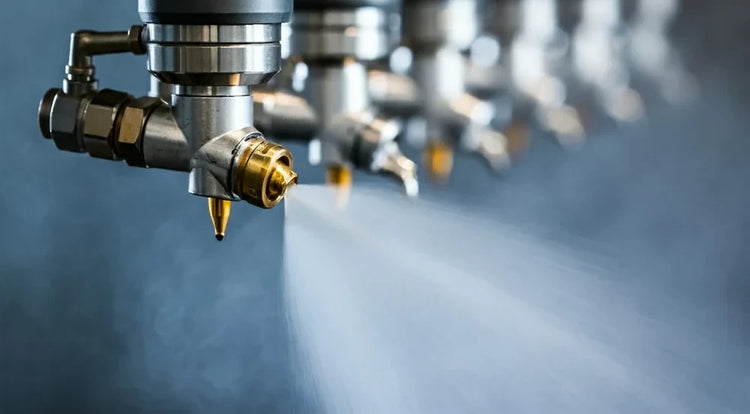

In the dairy industry, the margin for error in sanitation is non-existent. With milk proteins and fats providing the ideal nutrient base for pathogens like Listeria monocytogenes, the hardware used in your washdown routine is just as critical as the chemicals in your CIP (Clean-In-Place) cycle.
To maintain a sterile environment, dairy processors are moving beyond "standard" industrial nozzles toward specialized equipment engineered specifically for high-hygiene milk-handling environments.
The Science of Bacterial Resistance: Defeating Biofilms
Bacterial resistance in a dairy plant isn't just about the chemicals you use; it’s about the surfaces you provide. Biofilms—complex colonies of bacteria that adhere to surfaces—thrive in microscopic cracks, pits, and crevices.
Why Surface Finish Matters:
Standard industrial nozzles often feature rough internal casts. NozzlePro dairy solutions utilize electropolished 316L stainless steel with a surface roughness (Ra) of less than 32 microinches. This ultra-smooth finish eliminates the "micro-caverns" where bacteria hide, ensuring that your final rinse actually reaches and removes every organism.
What makes a washdown nozzle "bacterial resistant"?
A bacterial-resistant nozzle must feature a non-porous, crevice-free design, typically using 316L stainless steel. It must meet 3-A Sanitary Standards, which require smooth surface finishes (Ra < 32) and self-draining geometries to prevent the stagnant water pooling that leads to biofilm formation.
CIP Compatibility: Withstanding the Cycle
A true Dairy Washdown Solution must be fully compatible with the aggressive nature of CIP cycles. These cycles involve a punishing sequence of:
-
Pre-Rinse: 70°F–100°F water to remove loose solids.
-
Caustic Wash: 140°F–180°F (using Sodium Hydroxide) to break down fats and proteins.
-
Acid Rinse: To neutralize the caustic and remove "milk stone" (calcium deposits).
NozzlePro equipment is engineered with EPDM and Nitrile seals that resist degradation from these specific chemicals and thermal shocks. Furthermore, our White Cover nozzle series is specifically designed for the dairy industry—the white housing makes it immediately obvious if organic soil or "yellowing" from milk residue is present on the tool itself, providing an extra layer of visual safety.
Technical Specifications for Dairy Washdown
| Feature | Requirement | NozzlePro Specification |
| Material | 316L Stainless Steel | Grade 316L (ASTM A276) |
| Surface Finish | < 32 Ra microinches | Electropolished 25–30 Ra |
| Max Temperature | 180°F–200°F | Rated to 200°F (93°C) |
| Compliance | 3-A / FDA / HACCP | 3-A Sanitary Standard 78-01 |
| Cover Color | High-Visibility / Hygiene | Industrial White (Food-Safe Polymer) |
The Importance of 3-A Sanitary Standards
Choosing a 3-A certified nozzle isn't just about compliance; it's about validation. The 3-A Sanitary Standards are developed jointly by the USDA and the FDA to ensure that equipment is "Cleanable to a Microbiological Level."
At NozzlePro, our 3-A compliant designs focus on self-draining geometry. This ensures that once the washdown is complete, no liquid remains trapped inside the nozzle head or the hose swivel. In a milk-handling environment, stagnant water is a breeding ground for thermophilic bacteria; our self-draining tech ensures your equipment stays dry and sterile between shifts.
Conclusion: Choosing the Right Partner for Dairy Hygiene
Sanitation is the foundation of dairy product shelf-life and consumer safety. By integrating 316L stainless steel hardware and CIP-compatible white-cover nozzles into your facility, you reduce the risk of contamination and streamline your inspection process.
Ready to upgrade your dairy facility's washdown stations?
Browse our 3-A Certified Dairy Nozzles or Contact our Engineering Team for a custom facility audit.


