

In meat and poultry processing, the primary challenge of sanitization is the removal of lipids (fats) and proteins. Unlike dairy residue, which is often liquid-based, animal fats in slaughterhouses and processing floors are semi-solid at room temperature.
To achieve a "visually clean" and microbiologically safe environment, your washdown system must hit two critical benchmarks: high thermal energy and calibrated impact force.
The 180°F Threshold: Why Temperature is Non-Negotiable
Animal fats, particularly bovine and porcine lipids, have high melting points. Cold or lukewarm water simply moves fat around the floor, redepositing it into drains and crevices.
Thermal Breakdown:
At 180°F (82°C), the chemical bonds in animal fats begin to destabilize. This temperature is also the USDA-recognized standard for "sanitizing" equipment without the immediate need for chemical intervention. NozzlePro’s high-temp series is engineered with heavy-duty internal seals that won't degrade under the constant expansion and contraction of boiling-point water.
What temperature is required for meat plant washdown?
To effectively melt and remove animal fats (tallow and lard), washdown water must be at least 180°F (82°C). This temperature acts as a physical degreaser, liquifying lipids so they can be flushed into drainage systems while simultaneously providing thermal sanitization.
Impact vs. Flow: The Mechanics of Scouring
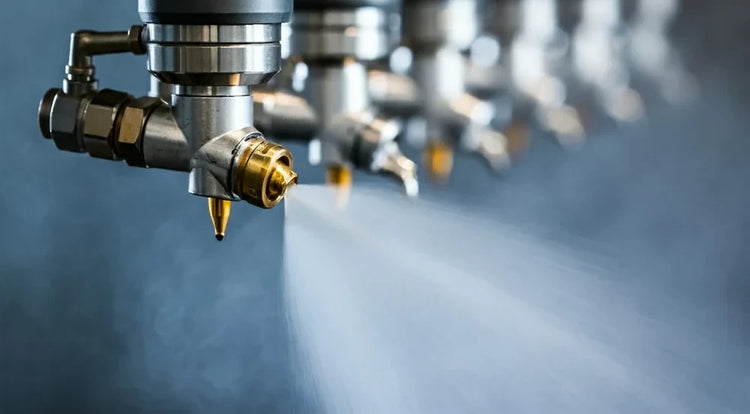
In poultry plants, where "bio-slick" surfaces are a safety hazard, the velocity of the water is as important as the heat. You need a nozzle that offers a "hard" spray pattern to physically scour protein fibers from stainless steel conveyors.
NozzlePro Engineering Specs:
-
Adjustable Spray Patterns: Transition from a wide fan for floor rinsing to a concentrated jet for deep-cleaning bone saws and grinders.
-
316L Stainless Steel Internals: While bronze is common, it cannot handle the corrosive nature of the acidic detergents often paired with high-temp poultry washes. Our 316L bodies are immune to this "pitting."
Safety in High-Heat Environments
Operating at 180°F+ presents a significant burn risk to employees. A standard nozzle becomes a liability at these temperatures.
-
Thermal Insulation: Our meat-processing nozzles feature a double-layered, White Cover polymer housing. This provides a "cool-to-the-touch" barrier, even when the internal water temperature exceeds 190°F.
-
Trigger Protection: A heavy-duty rear trigger guard prevents accidental discharge if the nozzle is dropped, protecting staff from high-pressure steam or boiling water.
-
Visual Hygiene: As with our dairy line, the White Cover is essential for meat plants to ensure no blood or tissue residue remains on the tool itself after the shift.
Fat Removal Performance Matrix
| Challenge | Solution | NozzlePro Advantage |
| High Lipid Load | 180°F+ Heat Rating | Seals rated to 200°F+ |
| Protein Scouring | High-Velocity Impact | Precision-machined jet orifices |
| Operator Safety | Thermal Barricade | Insulated White Cover (Heat-Resistant) |
| Chemical Wear | Acid/Caustic Resistance | Full 316L Stainless Steel Construction |
The Bottom Line for Meat Processors
If your current nozzles are failing every few months, it’s likely due to "thermal fatigue." Standard equipment isn't built for the 24/7 high-temperature cycles required in meat and poultry plants. Upgrading to 316L stainless hardware with high-visibility white covers doesn't just improve your food safety audits—it reduces your annual replacement costs.
Equip your facility for high-heat success.
View High-Temp Meat & Poultry Nozzles | Request a Technical Quote
How do you remove animal fat from processing floors?
The most effective method for removing animal fat from processing floors is using a high-temperature washdown nozzle rated for at least 180°F. The heat liquifies the fat, while a high-impact spray pattern provides the mechanical force necessary to strip lipids and proteins from the surface. 316L stainless steel nozzles are recommended to resist the chemicals and thermal stress of this environment.


