
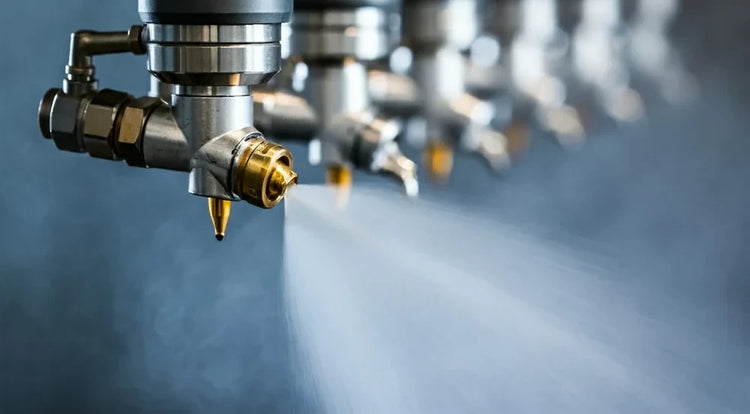

Spray Ball Tank Cleaning:
The Complete Industry Guide
How spray ball technology works, how to choose the right design for your vessel, and how to get the most out of every cleaning cycle—across food, pharmaceutical, and industrial applications.
Key Takeaways
- Spray balls clean tank interiors automatically—without disassembly, manual entry, or scrubbing—making them the most efficient option for high-frequency cleaning operations.
- Rotary designs deliver superior mechanical impact for large vessels or heavy soiling; static designs excel where simplicity and validation ease are priorities.
- Material selection—316L stainless, PTFE, specialty alloys—must match your cleaning chemistry, operating temperature, and industry hygiene requirements.
- Correct installation angle and supply pressure are the two most common factors that determine whether a spray ball fully covers its target vessel.
- Modern spray ball systems use significantly less water and cleaning chemistry than flood-fill or manual methods, reducing both operating cost and environmental footprint.
- Routine inspection and proactive seal replacement are the lowest-cost investments for preventing contamination risk and unplanned downtime.
Every production vessel accumulates residue. Sugars caramelize. Proteins denature. Fats oxidize. Biofilms form. In any industry where process equipment contacts product—food, beverage, pharmaceutical, chemical—cleaning that vessel reliably and repeatedly is not optional. It is a prerequisite for product quality, regulatory standing, and the safety of what you make.
Spray ball tank cleaning solves that problem with precision. Rather than flooding a vessel with solution and draining it, spray balls deliver cleaning chemistry exactly where it is needed—at the interior surfaces of the tank—with enough velocity and coverage to displace soiling without manual labor or equipment disassembly. The result is a faster cycle, better repeatability, lower resource consumption, and a process that scales from a 50-gallon pilot vessel to a 50,000-gallon production tank without fundamentally changing in approach.
This guide covers the full picture: the underlying physics, the selection decisions that matter most, installation and maintenance best practices, and a clear map of which industries rely on this technology and why.
How Spray Ball Technology Works
A spray ball is a hollow sphere or cylindrical device drilled with precision orifices and installed inside a tank through a top or side fitting. When cleaning solution is pumped through the nozzle's inlet at a specified pressure and flow rate, it exits the orifices as a series of spray streams directed outward and downward in a pattern engineered to contact every point of the tank's interior surface.
The physics are straightforward: cleaning effectiveness at any given surface point is a function of chemical action (the cleaning agent's concentration and dwell time), thermal action (temperature), mechanical action (the kinetic energy of the spray), and time. Spray balls are primarily designed to optimize mechanical action and coverage—delivering sufficient impact velocity across the entire interior—while allowing the operator to control chemistry, temperature, and cycle time through the broader CIP system.
Spent cleaning solution drains by gravity through the tank's lowest outlet, flows back to a collection tank or drain, and the cycle advances to the next phase: intermediate rinse, sanitize, or final rinse, depending on the cleaning protocol.
Key Components of a Spray Ball System
A spray ball does not operate in isolation. Its cleaning performance is determined equally by the quality of the nozzle itself and the competence of the surrounding system that supplies and recovers cleaning solution.
| Component | Function | What to Verify |
|---|---|---|
| Spray Ball | Distributes cleaning solution across tank interior in a designed spray pattern | Coverage diameter, orifice size, material, operating pressure range |
| Supply Pump | Delivers cleaning solution at the required pressure and flow rate | Pump capacity (GPM / L/min) matches nozzle specification at operating pressure |
| Piping & Valves | Routes solution from supply to spray ball; sequences phases | Sanitary fittings; material compatibility; no dead legs or trapped volumes |
| Heat Source (where used) | Maintains cleaning solution at the required wash temperature | Temperature is held for the full wash dwell time per your cleaning protocol |
| Control System | Automates and sequences all cleaning phases; logs cycle data | Cycle timing, phase sequencing, sensor integration, data recording |
| Drain / Recovery Line | Removes spent solution from the tank after each phase | Gravity drainage feasibility; pumped recovery for recirculation loops |
Browse NozzlePro's full tank cleaning range. Static spray balls, rotary spray heads, and specialty CIP nozzles for every vessel size and application.
Rotary vs. Stationary Spray Balls
The fundamental design choice in every spray ball selection is whether you need a static (stationary) ball or a rotary (dynamic) head. The distinction goes deeper than just moving parts—it reflects different strategies for delivering cleaning energy to tank surfaces.
Stationary Spray Ball
- No moving parts — inherently reliable
- Minimal maintenance requirements
- Straightforward to validate and inspect
- Lower acquisition cost
- Effective at lower and higher flow rates
- Requires dense orifice pattern for full coverage
- May need higher total flow for equivalent impact
- Less effective in complex geometries
Rotary Spray Head
- Targeted jet sweep delivers high mechanical impact
- Superior coverage in large or baffled vessels
- Lower total liquid volume for equivalent cleaning
- More effective against viscous or dried-on residues
- Requires regular bearing and seal inspection
- Rotation must be verified during cleaning validation
- Higher upfront cost; more complex specification
Choosing Based on Application
| Application Scenario | Best Fit | Key Reason |
|---|---|---|
| Small vessel (<500 gal), water-soluble soils | Stationary spray ball | Simple, validated, effective at modest pressure |
| Large fermentation or blending tank | Rotary spray head | Greater coverage radius with less total solution volume |
| Heavy soiling (pastes, syrups, starch) | Rotary spray head | Impact force of directed jet displaces viscous residue |
| Pharmaceutical / biotech vessel | Stationary spray ball (typically) | Fixed geometry simplifies cleaning validation |
| Tanks with agitators, baffles, or coils | Rotary spray head | Sweeping action navigates internal obstructions |
| High-frequency cleaning, 8+ cycles/day | Stationary spray ball | No bearings to wear; lower maintenance burden |
"The right choice isn't about which type is 'better'—it's about matching the cleaning mechanism to the soiling challenge. Static balls are reliability workhorses; rotary heads are power tools. Know which problem you're solving."
Choosing the Right Spray Ball
Selecting a spray ball without quantifying your operating conditions is one of the most common reasons CIP systems underperform. Five variables should drive every selection decision:
1. Tank Volume & Geometry
Coverage diameter is a function of spray ball design and operating pressure. Every manufacturer publishes coverage specifications at defined flow rates—always confirm the nozzle's rated coverage radius reaches all interior points of your vessel, accounting for height, diameter, and any internal features. A tall, narrow vessel presents different challenges than a wide, shallow one.
2. Soil Characterization
Light, water-soluble soils require far less mechanical energy than viscous, dried-on, or polymerized residues. If your process handles syrups, starch slurries, fat-based products, or materials that dry and harden between production runs, the mechanical impact of a rotary head at sufficient pressure is often essential—not optional.
3. Supply Pressure & Flow Rate
Every spray ball has an optimal operating window. Underfeeding flow to a rotary head prevents consistent bearing rotation. Oversupplying pressure to a static ball creates atomization and wasted energy without improving cleaning. Before ordering, verify that your pump's delivered flow and pressure at the spray ball inlet match the nozzle's specification sheet. Factor in pressure drop across supply piping—a nozzle rated at 20 PSI inlet needs a pump that delivers that pressure at the nozzle, not at the pump outlet.
4. Material Compatibility
The nozzle body, seals, and any internal bearing components all must be compatible with your cleaning chemistry, operating temperature, and the products your vessel processes. 316L stainless handles most standard caustic and acid CIP programs. Aggressive oxidizing agents, concentrated solvents, or high-temperature steam applications may require specialty alloys or PTFE-lined designs. Verify compatibility for every wetted material—not just the body.
5. Cleanability & Hygienic Design
In regulated industries, the spray ball itself must be cleanable, inspectable, and in some cases disassembled without tools. Look for crevice-free external geometry, self-draining installation capabilities, and smooth surface finishes. These design characteristics directly support the hygiene and validation requirements of food, pharmaceutical, and other sensitive production environments.
Not sure which spray ball fits your tank? Contact the NozzlePro team for application-specific guidance on sizing, pressure, and material selection.
Material Selection Guide
Material selection is one of the highest-stakes decisions in spray ball specification. A nozzle exposed to an incompatible cleaning agent or process residue will degrade, creating contamination risk and requiring early replacement.
| Material | Best For | Limitations |
|---|---|---|
| 316L Stainless Steel | Most food, beverage, pharmaceutical, and chemical CIP applications; standard caustic and acid cleaning programs | May corrode under prolonged exposure to chloride-rich or highly concentrated oxidizing agents |
| 304 Stainless Steel | General-purpose industrial applications; less chemically aggressive environments | Lower corrosion resistance than 316L; avoid in halide-containing chemistry |
| PTFE (Teflon®) | Highly aggressive acids, solvents, or oxidizers; ultra-pure or semiconductor applications | Lower mechanical strength; not suitable for high-pressure or high-impact applications |
| Polypropylene (PP) | Mild acids and alkalis; cost-sensitive industrial applications | Limited temperature range; lower chemical resistance than PTFE or stainless |
| Hastelloy C-276 | Highly corrosive environments; concentrated acids; chloride-rich streams | Significantly higher cost; specify only where stainless has demonstrated inadequacy |
Seal and O-ring material must be selected independently of the nozzle body. EPDM handles most alkaline cleaners and hot water well. Viton (FKM) provides better resistance to acids, fuels, and solvents. PTFE seals offer the broadest chemical compatibility but require higher compressive force and may require special fitting design to seal reliably.
Installation & Alignment
Even the most capable spray ball delivers substandard results if it is incorrectly positioned, inadequately supported, or misaligned relative to the tank geometry. Installation quality is a one-time investment that determines every subsequent cleaning cycle's effectiveness.
Critical Installation Parameters
- Centering: For spherical or cylindrical tanks, the spray ball should be installed as close to the geometric center as possible (horizontally), allowing the spray pattern to reach all walls at approximately equal distance.
- Vertical Height: Position the spray ball so that downward-directed streams reach the bottom of the vessel without excessive loss of velocity. Manufacturer coverage data specifies the minimum and maximum recommended distance from nozzle to wall.
- Drainage Angle: The installation fitting should be oriented so spent solution drains back through the supply line or into the tank rather than pooling in the nozzle body between cycles. Standing liquid inside the nozzle between runs creates contamination risk.
- Fitting Integrity: Use the correct sanitary fitting type (tri-clamp, threaded, or flanged) for your application. Verify that the connection is leak-free at operating pressure before the first production cycle.
- Obstruction Assessment: Before finalizing position, map any internal features—agitator shafts, baffles, coils, ladders, temperature probes—that could shadow surfaces from spray contact. Supplement with additional nozzles or adjust positioning to eliminate shadow zones.
Note: For tanks with significant internal obstructions, a single spray ball may not achieve complete coverage regardless of operating pressure. Consult NozzlePro or conduct spray coverage verification (such as a riboflavin fluorescence test) to confirm your installation achieves full surface contact before relying on the system for production cleaning.
Maintenance & Troubleshooting
Spray balls are designed for durability under high-frequency, chemically demanding conditions—but that durability depends on systematic maintenance. Most operational failures trace to a small number of predictable causes that are straightforward to prevent.
Common Problems & Solutions
| Symptom | Most Likely Cause | Corrective Action |
|---|---|---|
| Incomplete tank coverage | Insufficient supply pressure; incorrect positioning; obstruction | Confirm pump output at nozzle inlet; reposition nozzle; map shadow zones |
| Clogged orifices | Particulate in supply water; mineral scale; chemical carryover | Disassemble; clear with soft brush or low-pressure air; add in-line strainer to supply |
| Uneven spray pattern | Partial clog; worn orifice; pressure outside spec | Inspect each orifice individually; replace worn components; verify operating pressure |
| Rotation failure (rotary heads) | Worn bearing; pressure below minimum; chemical bearing degradation | Replace bearing assembly; verify minimum operating pressure; check material compatibility |
| Leakage at fitting | Worn O-ring or gasket; loose connection; thread damage | Replace seals; torque to manufacturer specification; inspect thread condition |
| Residue after cleaning cycle | Soiling exceeds nozzle's mechanical capacity; chemistry issue; short cycle time | Upgrade to rotary design; reassess cleaning chemistry; extend dwell time or increase temperature |
Maintenance Best Practices
Flush After Every Cycle
Rinse with clean potable water immediately after each cleaning sequence to prevent chemical residues from crystallizing inside orifices during downtime between production runs.
Inspect Orifices Weekly
Hold the nozzle up to a light source and verify that each orifice is clear and round. Any irregular shape or partial blockage affects spray distribution and should be corrected immediately.
Replace Seals Proactively
Schedule O-ring and gasket replacement on a fixed interval rather than waiting for visible failure. A failed seal mid-cycle compromises that run's cleaning effectiveness and risks contamination.
Verify Bearing Rotation
For rotary heads, observe or instrument rotation at operating pressure periodically. A sluggish or non-rotating head cleans like a static ball with poor orifice geometry—far below its designed performance.
Maintain a Service Log
Record every inspection, finding, and replacement event. A written maintenance history is the earliest warning system for emerging wear patterns and makes scheduling proactive service straightforward.
Keep Spare Parts On Hand
Stock a supply of O-rings, gaskets, and bearing kits for every spray ball model in service. Eliminating the lead time for a replacement part prevents production delays during a scheduled or emergency maintenance event.
Water & Chemical Efficiency
One of the strongest operational arguments for spray ball tank cleaning—beyond cleaning quality—is resource efficiency. Compared with flood-fill or manual washing methods, a well-designed spray ball system substantially reduces the volume of water and cleaning chemistry consumed per cycle, with direct impact on operating cost and environmental footprint.
| Metric | Flood-Fill / Manual Method | Spray Ball CIP |
|---|---|---|
| Water per Cycle | Must fill vessel to cover all surfaces | Only supply line, nozzle, and drain volume |
| Chemical Consumption | Proportional to total water volume | Significantly reduced; concentration held in smaller volume |
| Cleaning Time | Long fill, soak, drain cycles | Shorter spray-and-drain cycles; less total time |
| Labor Requirement | High; operator monitoring or manual entry | Minimal; automated once set up and validated |
| Repeatability | Operator-dependent; variable between shifts | Consistent when operating parameters are fixed |
| Wastewater Load | High volume; higher disposal cost | Reduced; supports closed-loop recovery in some systems |
For tanks where spray ball coverage alone doesn't fully address stagnant zones in the bulk liquid volume—common in large chemical dosing or blending applications—eductor nozzles complement spray ball cleaning by driving liquid circulation during the wash phase, accelerating rinse dilution without adding pumps or complexity.
Reduce Water Use Without Compromising Cleanliness
NozzlePro's tank cleaning portfolio includes precision-engineered spray balls and rotary heads designed to minimize cycle volume while maximizing surface coverage and mechanical impact.
Shop Tank Cleaning Nozzles All Cleaning NozzlesTechnology Innovations in Spray Ball Design
Spray ball technology has progressed significantly from its origins as a simple drilled sphere. Current and emerging developments are pushing performance upward while reducing resource demand and maintenance burden.
Self-Cleaning Orifice Designs
A significant maintenance pain point for spray balls in particulate-heavy environments is orifice clogging. New designs incorporate self-cleaning mechanisms—internal wiper elements or reverse-flush passages—that prevent buildup during operation, extending service intervals and reducing unplanned downtime.
Low-Pressure Rotary Bearings
Earlier rotary heads required relatively high supply pressures to initiate and maintain consistent bearing rotation. Advances in low-friction bearing materials—including sintered PTFE and engineered ceramics—now allow rotary heads to achieve full rotation at significantly lower operating pressures, reducing pump energy consumption and enabling their use in supply systems that previously could only support static designs.
Precision Orifice Geometry
CNC-drilled and laser-cut orifice patterns have replaced cast or rough-drilled configurations, enabling more consistent spray distribution and controlled droplet size. The result is better coverage uniformity, less variation between individual units of the same model, and more predictable cleaning performance across production scale-up.
Automation & Smart CIP Integration
Modern automated CIP systems pair spray balls with PLCs, flow sensors, pressure transducers, and conductivity probes that monitor and adjust cleaning parameters in real time. Cycle data is logged automatically, creating auditable cleaning records and enabling condition-based maintenance scheduling rather than fixed-interval replacement programs.
"Automation removes the single largest source of variability in tank cleaning: the human operator. When chemistry, time, temperature, and flow are controlled precisely by a PLC, every cycle is as good as your best-designed one."
Industry Applications
Spray ball tank cleaning serves a wide range of industries, each with distinct residue types, cleaning frequencies, and regulatory contexts. Understanding how the technology adapts to each setting helps clarify the selection decisions relevant to your operation.
Food & Beverage Processing
In food manufacturing—from sauces and dressings to juices and dairy products—production tanks are cleaned multiple times per day with caustic wash followed by acid rinse and sanitize sequences. Residues range from water-soluble sugars to fat-based soils and protein deposits. Rotary spray heads at appropriate pressure deliver the mechanical energy needed to dislodge these residues consistently, while automated cycle control ensures every run meets the same hygiene standard. See NozzlePro's collections for food and beverage, bottling and packaging, and bakery and confectionery facilities.
Brewing & Winemaking
Fermenters, brite tanks, and bright beer tanks in breweries present particular cleaning challenges: variable vessel sizes, yeast cake and beer stone deposits, and the need to return vessels to production quickly after cleaning. A rotary spray head sized to the fermenter diameter—typically positioned at the top dome—achieves complete interior coverage including the sidewalls, bottom cone, and internal fittings. Explore NozzlePro's brewery and winery nozzle collection for purpose-built options.
Dairy Processing
Dairy applications demand high-temperature CIP to address protein and fat fouling—conditions that push both the spray ball body and its seals to their operating limits. 316L stainless construction with EPDM seals rated for continuous high-temperature service is standard. Rotary designs are preferred for large milk silos and blending tanks; static balls remain common in smaller processing vessels. See NozzlePro's dairy nozzle collection.
Meat & Poultry Processing
Processing environments in meat and poultry facilities combine high protein and fat loading with aggressive cleaning chemistries—hot caustic, chlorinated rinses, and high-pressure washdown. Spray balls used in vessels in these environments must be specified for both chemical resistance and mechanical durability under high-frequency cycling. Visit NozzlePro's meat and poultry collection.
Pharmaceutical Manufacturing
Pharmaceutical vessel cleaning operates under strict process validation requirements. The spray ball's geometry, surface finish, and installation position must be documented, and the cleaning process must be validated to demonstrate consistent reduction of residues to accepted limits. Static spray balls are often favored for their validation simplicity. See NozzlePro's pharmaceutical spray nozzle page for application-specific details.
Chemical Processing
Chemical processing vessels may require spray balls that withstand aggressive acids, concentrated caustics, chlorinated solvents, or oxidizing agents that would rapidly degrade standard stainless construction. Material selection is the primary engineering challenge in these applications. Explore NozzlePro's chemical processing collection.
Safety & Compliance Considerations
Operating a spray ball system safely requires attention to both the physical hazards of pressurized systems and cleaning chemicals, and the compliance obligations that define what "clean" means in your regulatory context.
Operator Safety
- Personal Protective Equipment: Always wear appropriate PPE—chemical-resistant gloves, safety glasses or face shield, and protective clothing—when handling cleaning chemicals, connecting or disconnecting supply lines, or performing maintenance on a recently operated system.
- Lockout/Tagout: Before performing any maintenance on a spray ball system, isolate and lock out the pump and supply line to prevent accidental pressurization during service activities.
- Chemical Handling: Concentrated caustic and acid cleaners are hazardous. Follow SDS instructions for handling, dilution, and spill response. Ensure adequate ventilation in enclosed processing spaces where cleaning chemicals are mixed or used.
- Pressure Awareness: High-pressure supply lines can cause serious injury if connections fail or are disconnected under pressure. Always depressurize the system before connecting or disconnecting fittings.
Regulatory & Industry Compliance
- OSHA Guidelines: Compliance with OSHA standards for chemical handling, confined space entry, and hazardous energy control (Lockout/Tagout) applies directly to CIP operations in most US facilities.
- Food Safety Requirements: In food and beverage processing, cleaning processes must satisfy applicable food safety management standards. Your facility's HACCP or food safety plan defines the acceptable cleaning outcomes for each vessel type.
- Process Validation: In pharmaceutical and other regulated industries, cleaning processes must be formally validated. The spray ball's documented operating parameters become part of the validation record for that vessel's cleaning procedure.
- Environmental Regulations: Spent cleaning solution and rinse water must be managed in accordance with local wastewater regulations. High-volume or high-pH effluents may require neutralization or pretreatment before discharge.
Explore NozzlePro's Complete Cleaning Portfolio
From spray balls and rotary heads for tank CIP to washdown, disinfection, and specialty nozzles—NozzlePro supplies precision spray technology across every cleaning application and industry.
Disinfection & Sanitization Specialty NozzlesFrequently Asked Questions
Spray ball tank cleaning is a method of cleaning the interior of process tanks using a nozzle device—installed inside the vessel—that distributes cleaning solution across all interior surfaces under controlled pressure, without disassembly or manual entry. The spray ball connects to a CIP supply system that pumps cleaning solution through a timed sequence of wash, rinse, and sanitize phases.
A stationary spray ball has no moving parts and relies on a dense pattern of drilled orifices to achieve full coverage. It is simple, low-maintenance, and well-suited to smaller vessels with water-soluble soiling. A rotary spray head spins under liquid pressure, directing a targeted cleaning jet across the entire tank interior in a sweeping motion that delivers greater mechanical impact—making it the preferred choice for large tanks, heavy or dried-on residues, and vessels with complex internal geometry.
316L stainless steel is the industry standard, providing excellent corrosion resistance and compatibility with typical CIP cleaning chemistries including caustic and phosphoric acid. For highly corrosive environments, PTFE-lined designs or specialty alloys such as Hastelloy offer broader chemical resistance. Seal materials—typically EPDM or Viton—should be selected based on your specific cleaning chemistry and operating temperature. Confirm compatibility for all wetted components, not just the body.
Spray balls direct cleaning solution precisely onto the surfaces that need cleaning, rather than filling the entire vessel. This targeted delivery means a much smaller volume of liquid achieves the same—or better—cleaning result compared to flood-fill methods. Optimized orifice geometry minimizes overspray, and closed-loop CIP systems can recirculate and reuse cleaning solution across multiple cycles, further reducing both chemical cost and wastewater volume.
Spray ball tank cleaning is standard practice in food and beverage manufacturing, brewing and winemaking, dairy processing, meat and poultry facilities, pharmaceutical manufacturing, and chemical processing—anywhere vessel hygiene, repeatable cleaning outcomes, and efficient resource use are operational priorities.
Perform a visual inspection after every cleaning cycle where practical, or at minimum on a weekly schedule under regular production conditions. Flush with clean water after each use to prevent orifice crystallization. Replace O-rings and gaskets on a scheduled interval—not reactively when they fail. For rotary heads, verify bearing rotation periodically at operating pressure. Maintain a service log to identify wear patterns early and schedule proactive maintenance before failures affect production.
Find the Right Spray Ball for Your Tank
NozzlePro carries static spray balls, rotary heads, and complete CIP accessories for every vessel type, cleaning challenge, and industry—ready to ship to your facility.
Browse Tank Cleaning Nozzles Contact Our Team


