
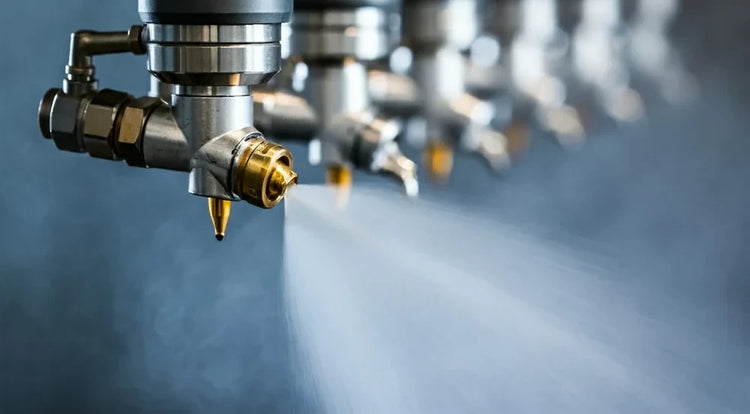

Un buen lavado de autos no se trata de lanzar agua al vehículo. Se trata de control. La presión, el patrón de pulverización y el caudal deciden si se levanta la suciedad de la pintura de forma segura o si se daña lentamente la capa transparente, los embellecedores y los sellos. Aquí es donde una boquilla de alta presión para lavar coches marca una verdadera diferencia en comparación con una boquilla de manguera básica.
El lavado de coches implica tareas muy diferentes dentro del mismo ciclo de lavado. Enjuagar la suciedad suelta requiere una cobertura amplia y suave. La formación de espuma requiere un flujo controlado, no fuerza. La limpieza dirigida alrededor de las ruedas, los neumáticos y los bajos necesita un mayor impacto, pero solo en zonas específicas. Una sola pulverización fija no puede manejar todo esto de forma segura.
Esta guía está escrita para propietarios que lavan sus propios coches, detallistas profesionales que necesitan resultados repetibles y operadores de lavaderos de coches que gestionan flotas o bahías de lavado comerciales. Si está eligiendo una boquilla de alta presión para lavar coches y desea claridad en lugar de suposiciones, este artículo está diseñado para usted.
Puntos clave
-
Una boquilla de alta presión para el lavado de coches se trata de control, no de fuerza máxima
-
Los patrones de pulverización ajustables protegen la pintura al tiempo que mejoran la eficiencia de limpieza
-
Las boquillas metálicas superan a las de plástico en durabilidad y estabilidad de la presión
-
La presión y el caudal correctos importan más que los PSI brutos
-
La boquilla adecuada reduce el desperdicio de agua y el tiempo de lavado
¿Qué es una boquilla de alta presión para el lavado de coches?
Una boquilla de alta presión para lavado de coches es un dispositivo de pulverización que se acopla a la manguera y que está diseñado para aumentar la velocidad del agua manteniendo el control sobre el patrón de pulverización y la distribución de la presión. A diferencia de las boquillas de manguera de jardín estándar que simplemente restringen el flujo, las boquillas de pulverización para lavado de coches están diseñadas para equilibrar la presión, la cobertura y la seguridad.
Es importante separar esto de dos productos que a menudo se confunden. Una boquilla de manguera estándar se centra en la comodidad, no en la gestión de la presión. Una punta de hidrolavadora, por otro lado, está diseñada para máquinas que operan a un PSI muy alto y a menudo no es segura para el contacto directo con la pintura. Una boquilla de alta presión para el lavado de coches se sitúa entre estos dos, ofreciendo una pulverización más fuerte que una manguera abierta sin la fuerza agresiva de una hidrolavadora.
El principio de funcionamiento es simple. La presión del agua de la línea de suministro pasa a través de un orificio controlado dentro de la boquilla. El diseño interno da forma al patrón de pulverización manteniendo una salida constante. Esta restricción controlada aumenta la eficacia de la limpieza sin depender de una presión extrema.
La presión controlada es fundamental en el lavado de coches. Las superficies pintadas, las capas transparentes, los sellos de goma y los embellecedores de plástico son sensibles a los impactos puntuales. Una boquilla de agua de alta presión incontrolada puede eliminar la cera, forzar la entrada de agua en los sellos o causar microrrasguños. Una boquilla de lavado de coches correctamente diseñada mejora la eficiencia del enjuague al tiempo que protege las superficies.
Características clave a buscar en una boquilla de alta presión para lavar coches
Materiales y construcción duraderos
La calidad del material es uno de los factores más pasados por alto al elegir una boquilla de alta presión para lavar coches. Las boquillas de plástico son económicas pero se deforman con el tiempo, especialmente cuando se exponen a detergentes y cambios de temperatura.
El latón ofrece buena resistencia a la corrosión y un equilibrio de peso, lo que lo hace adecuado para un uso doméstico frecuente. El acero inoxidable proporciona una resistencia superior a los productos químicos y al desgaste, por lo que se prefiere en entornos profesionales y comerciales. El aluminio es ligero, pero puede sufrir desgaste de las roscas si los accesorios se conectan y desconectan con frecuencia.
Los cuerpos metálicos superan consistentemente al plástico en entornos de lavado de coches. La durabilidad de las roscas es más importante de lo que la mayoría de los usuarios creen. Una boquilla resistente con roscas reforzadas resiste fugas y desalineaciones incluso después de cientos de ciclos de lavado.
Patrones de pulverización y control de presión
Una boquilla de alta presión ajustable es mucho más valiosa que un diseño de chorro fijo. El lavado de coches requiere múltiples comportamientos de pulverización dentro de una sola sesión.
Un chorro estrecho es útil para ruedas, neumáticos y bajos donde se necesita impacto. Un chorro en abanico funciona mejor para el enjuague de la carrocería, distribuyendo el agua de manera uniforme sin concentrar la fuerza. Los patrones de ducha o niebla son ideales para los enjuagues finales donde un flujo suave ayuda a prevenir las manchas de agua.
La capacidad de ajuste importa más que la presión bruta. Una presión excesiva con un patrón de pulverización incorrecto hace más daño que bien. Una buena boquilla de alta presión para el lavado de coches permite adaptar la forma del pulverizado al instante sin cambiar de equipo.
Comodidad y ergonomía para un uso repetido
Lavar el coche no es una tarea corta. La fatiga del gatillo y la incomodidad del agarre se convierten en problemas reales, especialmente para los detallistas y los operadores de flotas.
Las boquillas controladas por gatillo proporcionan un control preciso de encendido y apagado, pero pueden causar tensión en los dedos. Los diseños de control con el pulgar reducen la fatiga durante los lavados largos. La textura del agarre es igualmente importante. Un mango resbaladizo se vuelve inseguro cuando las manos están mojadas o enjabonadas.
Una boquilla de manguera de alta presión para limpieza bien diseñada equilibra la fuerza, el agarre y el control para que el operador mantenga la consistencia durante todo el lavado.
Beneficios de usar una boquilla de alta presión para lavar coches
El uso de una boquilla de alta presión para el lavado de coches mejora tanto los resultados como la eficiencia. El enjuague se vuelve más rápido porque el agua llega a las superficies con suficiente energía para levantar la suciedad en lugar de simplemente moverla. El jabón y la espuma se eliminan de forma más completa, reduciendo las rayas y los residuos.
La eficiencia del agua es otro beneficio importante. En comparación con una manguera abierta, una boquilla controlada reduce el desperdicio al enfocar el rocío donde se necesita. Un mejor control alrededor de los espejos, los embellecedores y los distintivos reduce el riesgo de daños sin dejar de limpiar eficazmente.
Para los usuarios domésticos, esto significa lavados más rápidos con menos agua. Para las operaciones de detallado de flotas y profesionales, significa resultados consistentes, reducción del tiempo de mano de obra y menores costes operativos.
Cómo elegir la mejor boquilla de alta presión para lavar coches
Adaptar la boquilla a su caso de uso de lavado de coches
El lavado de coches en casa se beneficia de la versatilidad. Una boquilla ajustable que maneje el enjuague, la limpieza ligera y el lavado final es ideal. El detallado profesional exige durabilidad, control fino del pulverizado y comodidad ergonómica para un uso diario repetido. El lavado de flotas y vehículos comerciales a menudo requiere una boquilla de alta resistencia que soporte largas horas de funcionamiento y condiciones más duras.
Si la boquilla también se utilizará para tareas generales de lavado, como limpiar entradas de vehículos o equipos, la versatilidad se vuelve aún más importante.
Comprender la presión y el caudal del agua
Muchos compradores asumen que una mayor presión significa una mejor limpieza. En realidad, una presión excesiva aumenta el riesgo de dañar la pintura sin mejorar los resultados. La mayoría de los sistemas de agua residenciales operan entre 40 y 60 PSI. Una boquilla de alta presión para el lavado de coches optimiza esta presión dando forma al flujo, no multiplicando la fuerza.
Restringir el flujo de forma demasiado agresiva reduce la eficiencia del enjuague. Una buena boquilla mantiene un flujo adecuado a la vez que da forma a la energía del pulverizado. Este equilibrio protege la pintura, los sellos y los revestimientos a la vez que proporciona una limpieza eficaz.
Consejos de instalación y mantenimiento para boquillas de lavado de coches
La instalación debe ser sencilla pero segura. Los accesorios de conexión rápida permiten una fijación veloz, pero deben estar clasificados para la presión. Las conexiones roscadas proporcionan estabilidad, pero nunca deben apretarse en exceso.
Los residuos de detergente se acumulan dentro de las boquillas con el tiempo. El enjuague periódico con agua limpia evita la obstrucción y el rociado desigual. El almacenamiento también es importante. Dejar la presión en los sellos acorta la vida útil. Durante el invierno, el agua congelada puede agrietar los componentes internos, por lo que se recomienda drenar y almacenar en interiores.
El cuidado adecuado prolonga la vida útil de cualquier boquilla de alta presión para lavado de coches, especialmente los diseños de cuerpo metálico.
Errores comunes a evitar al usar una boquilla de lavado de coches de alta presión
Uno de los errores más comunes es usar un chorro de agua demasiado cerca de la pintura. Incluso un chorro de presión moderada puede dañar la capa transparente a corta distancia. Dejar la presión activada cuando está en reposo estresa los sellos y los componentes internos.
El apriete excesivo de los accesorios metálicos causa daños en las roscas y fugas. Omitir la limpieza regular permite la acumulación de detergente que altera los patrones de pulverización y reduce el rendimiento.
Evitar estos errores mantiene su boquilla de agua a alta presión eficaz y segura.
Principales usos de una boquilla de alta presión en el lavado de coches
Una boquilla de alta presión para lavado de coches no se limita al enjuague de la carrocería. También es útil para limpiar ruedas y neumáticos, lavar los bajos, eliminar espuma y limpiar vehículos de exterior como bicicletas, quads y equipos.
La capacidad de cambiar entre patrones de pulverización hace que una boquilla sea adecuada para múltiples etapas de lavado sin cambiar de herramienta.
Por qué los profesionales eligen NozzlePro para boquillas de lavado de coches de alta presión
Los profesionales valoran la fiabilidad por encima de los trucos. NozzlePro diseña boquillas utilizando materiales de grado industrial en lugar de plásticos de consumo. La clara guía de selección elimina las conjeturas, y el soporte técnico se centra en la idoneidad de la aplicación en lugar de recomendaciones genéricas.
En comparación con las marcas de consumo típicas, las boquillas NozzlePro priorizan la durabilidad, la estabilidad de la presión y el valor a largo plazo. Esto las convierte en una opción práctica para usuarios que lavan con frecuencia o operan en condiciones exigentes.
Preguntas frecuentes sobre boquillas de alta presión para lavado de coches
1. ¿Cuál es la mejor boquilla de alta presión para el lavado de coches?
La mejor opción es una boquilla ajustable de alta presión que ofrezca patrones de chorro, abanico y ducha, manteniendo una presión controlada adecuada para un uso seguro en la pintura.
2. ¿Las boquillas de alta presión dañan la pintura del coche?
Pueden hacerlo si se usan incorrectamente. El uso de chorros estrechos demasiado cerca de la pintura o una presión excesiva aumenta el riesgo. La selección adecuada del patrón de pulverización y la distancia previenen daños.
3. ¿Cuánta presión es segura para lavar un coche?
La mayoría de los lavados de coches son seguros por debajo de 1200 PSI en la superficie. Las boquillas de alta presión alimentadas por manguera operan bien dentro de los límites seguros cuando se usan correctamente.
4. ¿Puede una boquilla de manguera de jardín reemplazar una hidrolavadora?
Para el lavado regular de coches, sí. Una boquilla de alta presión bien diseñada para el lavado de coches proporciona suficiente poder de limpieza sin los riesgos de una hidrolavadora.
5. ¿Qué patrón de pulverización es mejor para enjuagar un coche?
Un patrón de abanico ancho o ducha proporciona una cobertura uniforme mientras protege la pintura y la capa transparente.
6. ¿Cómo aumento la presión del agua de forma segura para lavar el coche?
Utilice una boquilla que optimice el flujo y la geometría del pulverizado en lugar de aumentar la presión de suministro. Esto mejora la limpieza sin riesgo de daños.


