
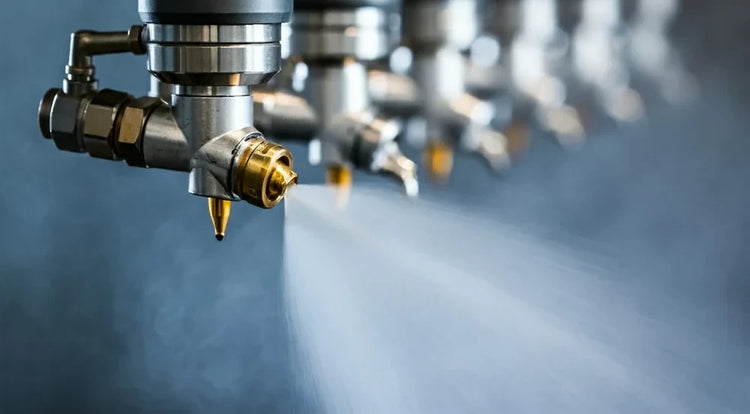
Drone Spray Nozzles
Precision spray nozzles for agricultural drone spraying — row crops, specialty crops, vineyards, orchards, pastures, and fungicide & pesticide application

Agricultural drone spraying has fundamentally changed crop protection economics — a single drone operator can cover 100+ acres per day at a fraction of the cost and chemical use of ground rigs, with access to steep terrain, saturated fields, and growing areas that ground equipment cannot reach. The spray nozzle on the drone is the component that determines whether that economic advantage translates into effective, compliant, and residue-free crop protection.
NozzlePro supplies specialized spray nozzles for agricultural drone platforms including DJI Agras, XAG, Yamaha, and other commercial systems — matched to your crop type, target pest or disease, flight parameters, and regulatory requirements. Air-induction (low-drift) nozzles, flat-fan, hollow-cone, and precision atomizing options available.
Agricultural drones use several spray nozzle types depending on the crop, application target, and regulatory requirements: air-induction (AI) nozzles produce large droplets (200–400 µm) with air bubbles that dramatically reduce drift — required or recommended for most pesticide and herbicide applications near sensitive areas; flat-fan nozzles provide uniform coverage across the spray boom width for general fungicide, insecticide, and herbicide application on row crops; hollow-cone nozzles deliver fine droplets with high surface coverage for canopy penetration in orchards, vineyards, and dense crop structures; and rotary atomizers on some drone platforms produce a very narrow, controlled droplet size spectrum for precision applications. Nozzle selection on drones is governed by the same principles as ground equipment — match droplet size and spray pattern to the target, chemistry, and environmental conditions — but with the additional constraint of the drone's operating speed, altitude, rotor wash, and onboard pump pressure range.
Drone Nozzle Types & Collections
Shop by nozzle type — each matched to specific drone spray applications and crop types
Drone Spray Application Guides
Detailed nozzle guidance for each agricultural drone spray application type
Agricultural Drone Nozzles — Overview
Complete nozzle selection guide for agricultural drone platforms
Master the fundamentals of drone spray nozzle selection — droplet size, spray pattern, flow rate at drone operating pressure, and how rotor wash affects actual deposition on the target crop.
Agricultural Drone NozzlesLow-Drift Air-Induction (AI) Nozzles
Advanced anti-drift technology for responsible agricultural spraying
Air-induction nozzles produce large droplets (200–400 µm) with internal air bubbles that dramatically reduce drift. Essential for pesticide and herbicide applications near buffer zones, sensitive crops, and water bodies — and increasingly required by product label.
AI Nozzle GuideViticulture & Orchard Drone Nozzles
Specialized solutions for vineyards, tree fruits, and perennial plantings
Vines, apple, citrus, almond, and other tree crops require canopy penetration — not just surface coverage. Hollow-cone nozzles and specific spray angles are required to reach all leaf surfaces within dense canopy structures at drone flight speed and altitude.
Viticulture & Orchard GuideFungicide & Pesticide Application Nozzles
Precision nozzles for disease management and pest control across all crop types
Maximizing fungicide and pesticide efficacy from drone application requires matching droplet size to the target organism and chemistry — contact fungicides need fine droplets for surface coverage; systemic chemistries can use coarser droplets. Regulatory label compliance is a primary constraint.
Fungicide & Pesticide GuidePasture Spraying Nozzles
Efficient large-area coverage for weed control and forage treatment
Pasture and broad-acre applications require high-volume coverage at low cost per acre. Flat-fan nozzles with appropriate boom width and overlap are the standard for broad-spectrum herbicide application on pastures, roadsides, and rangeland.
Pasture Spraying GuideDrone Nozzle Selection Guide
Match nozzle type to your crop, chemistry, and environmental conditions
| Nozzle Type | Droplet Size Range | Drift Risk | Best Applications | Shop |
|---|---|---|---|---|
| Air-Induction (AI) | 200–400 µm (Coarse–Very Coarse) | Low Drift | Herbicides and pesticides near buffer zones; label-required low-drift applications; broad-acre row crops | Flat-Fan → |
| Flat-Fan | 150–300 µm (Medium–Coarse) | Moderate | General fungicide and pesticide application; row crops (corn, soybeans, cotton, wheat); uniform boom coverage | Flat-Fan → |
| Hollow-Cone | 100–250 µm (Fine–Medium) | Moderate–Higher | Canopy penetration in orchards, vineyards, and dense crops; foliar fungicide and insecticide; contact chemistry | Hollow-Cone → |
| Fog / Fine Mist | 50–150 µm (Fine–Medium) | Higher (use with caution) | Systemic fungicides requiring maximum surface contact; low-wind conditions only; glasshouse and enclosed applications | Fog & Mist → |
| Adjustable / Variable-Rate | Variable by setting | Variable | Multi-use drone platforms; variable application rate zones; switching between crops and chemistries | Adjustable → |
Agricultural Drone Spray Applications by Crop
Nozzle guidance for the most common drone spray crop and application combinations
Row Crops
Corn, soybeans, cotton, and wheat — flat-fan or AI nozzles for uniform fungicide, insecticide, and herbicide coverage at typical 3–5 m flight height.
Vineyards
Wine, table, and raisin grapes — hollow-cone nozzles for canopy penetration; multiple boom angles to reach front, back, and top of vine canopy structure.
Tree Fruits & Nuts
Apples, pears, citrus, almonds, pistachios — hollow-cone for canopy penetration; flight path and altitude adjusted for canopy height and density.
Pasture & Rangeland
Broad-acre weed control and pasture treatment — flat-fan or AI nozzles for maximum coverage rate and efficient large-area application.
Rice
Fungicide application (blast, sheath blight) and herbicide — flat-fan nozzles at low altitude; careful drift management near water bodies.
Specialty Vegetables
Tomatoes, peppers, leafy greens — precision coverage with appropriate droplet size for the specific disease or pest target; minimize leaf damage from impact.
Disease Management
Powdery mildew, downy mildew, botrytis, blast — contact fungicides require fine droplets; systemics can use coarser droplets. Match nozzle to chemistry mode of action.
Seed Treatment & Fertilizer
Foliar micronutrient and liquid fertilizer application — flat-fan for uniform distribution; low-drift operation to prevent off-target deposition.
Agricultural Drone Nozzle Selection Principles
What determines correct nozzle specification for drone spray applications
- Drone Rotor Wash Affects Effective Droplet Size — The downwash from drone rotors creates significant airflow below the aircraft that affects droplet transport and deposition. Droplets that would be too fine for ground equipment drift may still deposit adequately from a drone because rotor wash drives them into the canopy. Conversely, rotor wash can carry droplets past the target in wind. Nozzle selection for drone applications must account for the specific drone platform's rotor configuration and operating altitude — recommendations for ground equipment cannot be directly transferred.
- Product Label Governs Droplet Size and Drift Management — Pesticide and herbicide labels in most jurisdictions specify minimum droplet size categories (ASABE S572.1) and may require low-drift or air-induction nozzles for certain products or use situations. Label requirements override agronomic preferences — using a finer nozzle than the label permits is a regulatory violation even if it produces better canopy coverage. Always verify the product label's nozzle and droplet size requirements before selection.
- Drone Operating Pressure Is Lower Than Ground Equipment — Most agricultural drone spray systems operate at 15–60 PSI — significantly lower than the 30–90 PSI typical of ground sprayers. Many nozzles designed for ground equipment produce inconsistent patterns or inadequate atomization at drone operating pressures. Select nozzles with rated performance data at your specific drone platform's pump pressure range, not nozzle specifications that assume standard ground equipment pressure.
- Flight Speed and Boom Width Determine Coverage Rate — The area covered per unit time is determined by drone ground speed, boom width, and overlap between flight passes. Coverage rate (litres per hectare or gallons per acre) is controlled by adjusting these parameters and selecting the appropriate nozzle flow rate at operating pressure. Undersizing flow rate forces slower flight speeds to maintain coverage rate; oversizing forces higher speeds that may compromise uniformity or exceed drone flight envelope.
- Canopy Penetration Requires Specific Nozzle Angles and Droplet Sizes — For tree crops and vineyards where fungicide must reach interior canopy surfaces, nozzle angle and droplet size are critical. Flat vertical boom positions deliver top-of-canopy coverage; angled nozzle positions are required to reach side canopy surfaces. Hollow-cone nozzles with their wrap-around spray pattern provide better interior penetration than flat-fan in dense canopy structures. Vineyard and orchard drone spray effectiveness requires flight path planning aligned with canopy row orientation, not just nozzle selection.
Why Choose NozzlePro for Agricultural Drone Nozzles?
Drone-specific nozzle selection, platform compatibility, and regulatory guidance
Drone-Matched Nozzle Specifications
Agricultural drone spray nozzle selection is not identical to ground equipment nozzle selection — operating pressures differ, rotor wash affects deposition, and flight speed and altitude create constraints that don't apply to ground rigs. NozzlePro application specialists work with your specific drone platform and crop system to recommend nozzles with verified performance data at drone operating conditions.
Platform Compatibility: Nozzles compatible with DJI Agras (T40, T60, T10), XAG P Series, Yamaha RMAX, Freefly Alta, and other major agricultural drone platforms. Connection thread types and body dimensions matched to your specific boom configuration.
Regulatory Compliance Support: Pesticide label compliance for drone applications is an evolving regulatory area — many product labels specify droplet size categories and drift management requirements. NozzlePro can help identify nozzles that meet label requirements for specific pesticide products in your region.
Application Consultation: Share your drone platform, crop type, target pest or disease, chemistry, and operating region — our specialists will recommend nozzle type, orifice size, and operating parameters to maximize both efficacy and compliance for your specific application.
Frequently Asked Questions
Common questions about agricultural drone spray nozzle selection and performance
What is the difference between air-induction and standard nozzles for drone spraying?
Air-induction (AI) nozzles draw air into the spray stream through an internal venturi, producing large droplets (200–400 µm) with air bubbles that make them more resistant to evaporation and dramatically reduce drift compared to standard nozzles of equivalent flow rate. Standard flat-fan and hollow-cone nozzles produce smaller, denser droplets (100–250 µm) that provide better surface coverage per unit volume but drift more readily, especially at fine droplet sizes in even moderate wind. For drone applications near buffer zones, water bodies, or sensitive crops, AI nozzles are required or strongly preferred. For canopy penetration in orchards and vineyards where drift is less critical than coverage, hollow-cone nozzles are often preferred despite higher drift potential.
How does droplet size affect fungicide and pesticide efficacy from drone application?
Droplet size affects efficacy through two mechanisms — coverage density per unit area and deposition on the target surface. Fine droplets (100–150 µm) produce more droplets per millilitre, increasing the probability of contact coverage on leaf surfaces and pest targets — beneficial for contact-mode fungicides and insecticides that must physically touch the pathogen or pest. Coarse droplets (250–400 µm) deposit more reliably on target surfaces with less drift loss but provide lower contact coverage — acceptable for systemic chemistries that are absorbed through the cuticle and translocated within the plant. The practical rule: use the finest droplet size that meets the product label drift management requirements for your application conditions.
What nozzles work best for spraying in vineyards and orchards with drones?
Hollow-cone nozzles are the standard for vineyard and orchard drone spray applications because their circular spray pattern wraps around canopy structures from above, reaching interior leaf surfaces that flat-fan nozzles miss when spraying vertically downward. The flight path should be aligned parallel with crop rows, not perpendicular, so the boom tracks along the canopy length and the hollow-cone pattern has time to penetrate the canopy before moving to the next pass. Flight altitude is typically set to position the nozzles just above the canopy top, allowing rotor wash to drive droplets into the canopy interior. Multiple nozzle angles angled toward the sides of the canopy are used on some drone platforms to improve penetration into the mid-canopy and lower zones critical for bunch-zone fungicide coverage in grapes.
What operating pressure do drone spray nozzles need?
Most agricultural drone spray systems operate at 15–50 PSI (1–3.5 bar), significantly lower than the 30–90 PSI (2–6 bar) typical of ground boom sprayers. This is a critical constraint for nozzle selection — many nozzles designed for ground equipment require minimum pressures above 30 PSI to achieve their rated spray pattern and droplet spectrum. At lower drone pressures, these nozzles produce inadequate atomization, irregular patterns, and inconsistent flow. Select nozzles with rated performance data that includes your drone platform's specific pump pressure range — not general nozzle specifications that assume ground equipment pressure. NozzlePro can confirm nozzle performance at your specific drone operating pressure before selection.
How do I maintain drone spray nozzles for consistent performance?
Drone spray nozzle maintenance follows the same principles as ground equipment, with additional attention to the smaller orifice sizes typical of drone nozzles. Flush the spray system with clean water immediately after each application — pesticide and fungicide residue in drone nozzle orifices can polymerize or crystallize within hours in warm conditions, causing blockages that are difficult to remove without mechanical cleaning that risks orifice damage. Soak nozzles in appropriate solvent overnight for thorough chemical removal. Inspect spray pattern visually before each flight — hold the nozzle over a collection surface and observe pattern uniformity. Replace nozzles when measured flow rate at operating pressure deviates more than 10% from the rated value, or when the spray pattern shows visible distortion or streaking. Store drone nozzles dry — residual moisture in small-orifice nozzles promotes scale buildup from water hardness minerals.
Can NozzlePro customize nozzles for specific drone platforms?
Yes. Our engineering team can customize flow rates, spray angles, droplet size spectra, operating pressure ranges, and connection thread types to match specific drone platforms and application requirements. Custom nozzle configurations are available for operators who need specific performance characteristics not available in standard catalog configurations — including specialized orifice sizes for low-volume, high-concentration applications, and modified body geometry for non-standard drone boom connection points. Contact our specialists with your drone platform specifications, target flow rate at operating pressure, required spray pattern, and crop application to discuss custom options.
Optimize Your Drone Spraying Operations
Share your drone platform, crop type, target pest or disease, chemistry, and operating region — our specialists will recommend the right nozzle for maximum efficacy and regulatory compliance.