
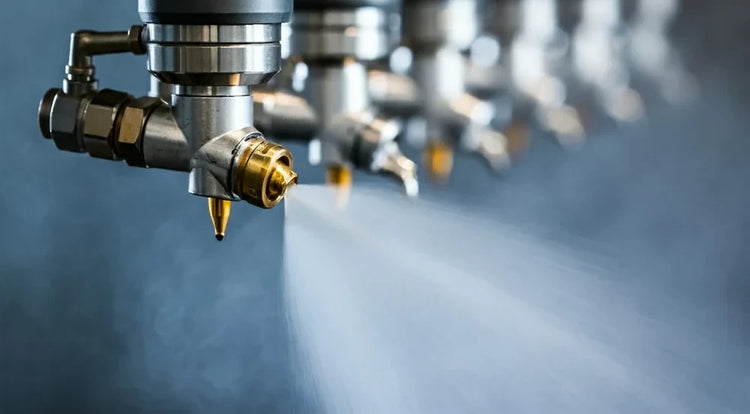
Air Atomizing
Air Atomizing Spray Nozzles
• Browse Air Atomizing Spray Nozzles by spray angle, flow capacity, and connection size.
• Choose materials (brass, 316L stainless, PVDF, polypropylene) to match chemicals, temperature, and wear.
• Use spray geometry to set nozzle spacing/overlap and hit coverage, impact, or droplet-size goals.
• Compare popular series: NPFA, NPFAS, NPMA, NPMAS, NPFD.
Liquid error (sections/np-series-hub line 659): Cannot render sections inside sections
Use Cases
Applications for Air Atomizing Spray Nozzles
1
Humidification
2
Coating
3
Evaporative cooling
4
Disinfection
5
Dust control
Common Questions
Frequently Asked Questions
Air Atomizing Spray Nozzles fine spray nozzles produce small droplets (20–100 microns) for humidification, evaporative cooling, dust suppression, and light coating. The fine mist evaporates quickly without wetting surfaces.
Hydraulic nozzles (NPFA, NPMA) use liquid pressure alone—simpler, no air required. Air-atomizing nozzles mix compressed air with liquid for even finer droplets at lower liquid pressures, but need air supply.
Yes—critical due to small orifices. Models like NPFAS and NPMAS include built-in strainers. For others, install upstream line strainers with mesh finer than the orifice diameter.
Hydraulic fog nozzles typically run 60–200 PSI. Higher pressure produces finer droplets. Low pressure causes larger droplets and potential dripping. Maintain consistent pressure at the nozzle.
Maintain adequate pressure, use anti-drip models like NPFD with check valves, install individual shutoffs, and ensure proper drainage during shutdown.
Related fine spray options include NPFA, NPFAS, NPMA, NPMAS, NPFD—compare by droplet size, flow rate, and strainer options.
Explore More
Related Products & Resources
Need Help Selecting the Right Air Atomizing Spray Nozzles?
Our spray experts can help match you with the right nozzle for your specific application, pressure, and flow requirements.
1 Product
Air Atomizing Spray Nozzles

Guide
Air Atomizing Spray Nozzles: Overview & Selection Tips
Air Atomizing Spray Nozzles air nozzles direct and control compressed air for blow-off, drying, and debris removal in industrial environments.
Popular series in this family: NPFA, NPFAS, NPMA, NPMAS, NPFD.
Common applications
- Humidification
- Coating
- Evaporative cooling
- Disinfection
- Dust control
How to choose Air Atomizing Spray Nozzles
- Start with required flow per nozzle and your operating pressure at the nozzle.
- Select spray angle to hit the target width at your mounting distance (spray width ≈ 2 × distance × tan(angle ÷ 2)).
- Choose the nozzle style and series that fits your mounting, clog-resistance, and droplet/impact goals.
- Confirm inlet size (NPT) and select materials compatible with chemicals, temperature, and wear.
- Use strainers/filters where water quality or debris can cause plugging.
Related application collections
Humidification & Conditioning | Evaporation Cooling | Coating & Surface Treatment | Cleaning & Washing
Air Atomizing
Air Atomizing Spray Nozzles
• Browse Air Atomizing Spray Nozzles by spray angle, flow capacity, and connection size.
• Choose materials (brass, 316L stainless, PVDF, polypropylene) to match chemicals, temperature, and wear.
• Use spray geometry to set nozzle spacing/overlap and hit coverage, impact, or droplet-size goals.
• Compare popular series: NPFA, NPFAS, NPMA, NPMAS, NPFD.
Liquid error (sections/np-series-hub line 659): Cannot render sections inside sections
Use Cases
Applications for Air Atomizing Spray Nozzles
1
Humidification
2
Coating
3
Evaporative cooling
4
Disinfection
5
Dust control
Common Questions
Frequently Asked Questions
Air Atomizing Spray Nozzles fine spray nozzles produce small droplets (20–100 microns) for humidification, evaporative cooling, dust suppression, and light coating. The fine mist evaporates quickly without wetting surfaces.
Hydraulic nozzles (NPFA, NPMA) use liquid pressure alone—simpler, no air required. Air-atomizing nozzles mix compressed air with liquid for even finer droplets at lower liquid pressures, but need air supply.
Yes—critical due to small orifices. Models like NPFAS and NPMAS include built-in strainers. For others, install upstream line strainers with mesh finer than the orifice diameter.
Hydraulic fog nozzles typically run 60–200 PSI. Higher pressure produces finer droplets. Low pressure causes larger droplets and potential dripping. Maintain consistent pressure at the nozzle.
Maintain adequate pressure, use anti-drip models like NPFD with check valves, install individual shutoffs, and ensure proper drainage during shutdown.
Related fine spray options include NPFA, NPFAS, NPMA, NPMAS, NPFD—compare by droplet size, flow rate, and strainer options.
Explore More
Related Products & Resources
Need Help Selecting the Right Air Atomizing Spray Nozzles?
Our spray experts can help match you with the right nozzle for your specific application, pressure, and flow requirements.